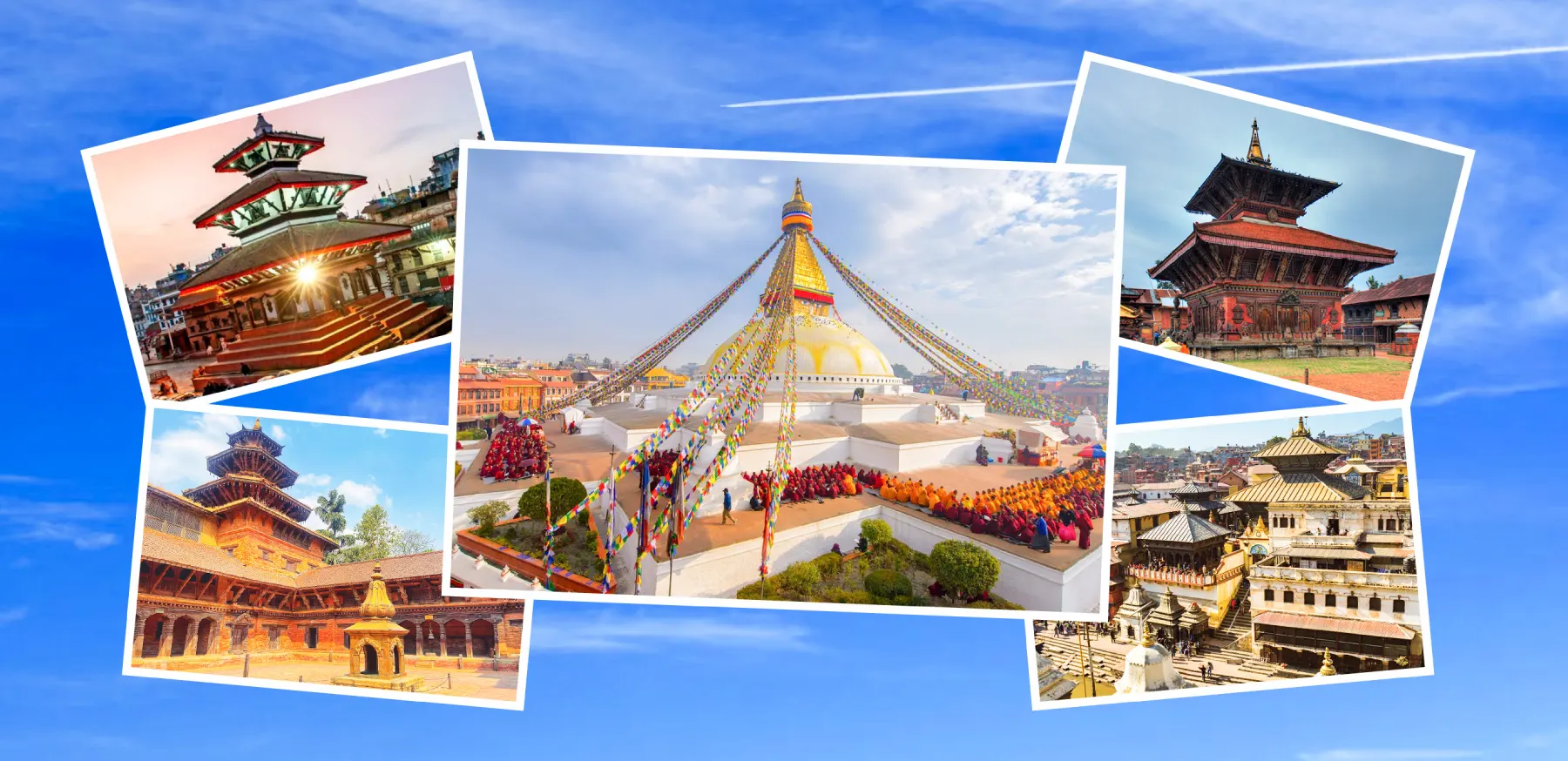
- Kathmandu Valley UNESCO World Heritage Sites
- 1. Kathmandu Durbar Square
- 2. Patan Durbar Square
- 3. Bhaktapur Durbar Square
- 4. Swayambhunath Stupa
- 5. Boudhanath Stupa
- 6. Pashupatinath Temple
- 7. Changunarayan Temple
- Kathmandu UNESCO Site Entrance Fee In 2026
- Best Tips For Visiting Kathmandu UNESCO Heritage Sites
- Best Time To Visit Kathmandu UNESCO Sites
- Conclusion
Kathmandu Valley, the cultural and economic hub of Nepal, is home to major religious, cultural, and spiritual destinations. The valley hosts seven UNESCO World Heritage Sites that showcase ancient monuments, historical buildings, religious landmarks, rich architectures, and spiritual traditions. These historical, religious, and cultural monuments and landmarks were enlisted as UNESCO World Heritage Sites in 1979 AD.
From medieval royal palaces of the Malla period to ancient temples and stupas of the Lichhavi period, the UNESCO World Heritage Site of Kathmandu Valley showcases traditional civilization, exceptional architectural structures, and the unique coexistence of Hinduism and Buddhism.
Whether you are visiting Kathmandu Valley for a religious and cultural tour or for historical exploration, knowing the entrance fees to the UNESCO sites, visit tips, and best time to visit helps in elevating your experience. In this blog, we provide detailed information about the UNESCO World heritage site, its entrance fees, tips to follow, and the best time to visit kathmandu valley.
Kathmandu Valley UNESCO World Heritage Sites
|
UNESCO Site in kathmandu valley |
Main Attraction |
Location |
|
Kathmandu Durbar Square |
|
Kathmandu |
|
Patan Durbar Square |
|
Lalitpur |
|
Bhaktapur Durbar Square |
|
Bhaktapur |
|
Swayambhunath Stupa |
|
Kathmandu hilltop |
|
Boudhanath Stupa |
|
Boudha, kathmandu |
|
Pashupatinath Temple |
|
Kathmandu |
|
Changu Narayan Temple |
|
Hilltop of Bhaktapur |
1. Kathmandu Durbar Square
Kathmandu Durbar Square is located in the capital district of Nepal, Kathmandu. This UNESCO World Heritage Site is known for its rich cultural heritage, sculptures, arts, and history that witnessed the rule of various dynasties. The site houses various popular historical buildings like Hanuman Dhoka Palace, Nautalle Durbar, and Gaddhi Bathak. Similarly, Kumari Ghar, Kasthamandap, the Taleju temple, and the statue of Kal Bhairab are major religious and cultural sites. The Kathmandu Durbar Square/Basantapur Durbar Square hosts various cultural and spiritual festivals, including Grand Indra Jatra, Holi, and Gaijatra (Sa:Paru), representing rich cultural practices of Nepalese.
2. Patan Durbar Square
The Patan Durbar Square is a UNESCO World Heritage Site within the Kathmandu valley known for rich art, sculptures, ancient monuments, and architecture. Patan Durbar Square is known for historic Malla palaces, rich Newari carvings and traditions, and homes to numerous hindu temples and buddhist stupas. The durbar square complex is home to the famous Krishna Mandir, dedicated to Lord Krishna; the Golden Temple, or Hiranya Varna Mahavihar; and the Mahaboudha temple.
3. Bhaktapur Durbar Square
Bhaktapur Durbar Square is the ancient city located on the eastern side of Kathmandu valley and is one among seven UNESCO Sites of the valley. The city is also known as the city of devotees, as the place is home to many temples, stupas, and spiritual sites. Bhaktapur is also known for being the best-preserved medieval city and is also regarded as a living museum where you can still observe traditional brick and stone-paved streets, taste authentic Newari cuisine, witness clay arts in Pottery square, learn about historical buildings and royal palaces. The historic 55 window palace, Nyatapola Temple (5-story temple), Dattatraya temple, and iconic golden gate represent the golden era of Bhaktapur during the Lichhavi and Malla dynasties.
4. Swayambhunath Stupa
Swayambhunath Stupa is one of the holy buddhist religious sites located in the western hilltop of the Kathmandu valley. This ancient buddhist stupa was believed to be self-formed, and many buddhist and hindu believers visit Swayambhunath Stupa for daily rituals, carry out mindfulness exercises, and worship Buddhist deities and hindu deities like Harari Mata. Swayambhunath Stupa is also known as the monkey temple, being home to numerous monkeys in the hilltops. The stupa complex gives a scenic view of the Kathmandu valley including the Himalayas, especially during sunrise and sunset. The Swayambhunath stupa was enlisted as a UNESCO World Heritage Site in 1997 AD.
5. Boudhanath Stupa
The Bouthanath stupa (Khasti Chaitya in Newari) is one of the largest spherical stupas in the world. This stupa is one of the important centers of Tibetan Buddhism that welcomes numerous religious tourists and visitors from throughout the world. This UNESCO World Heritage site is filled with numerous prayer wheels, prayer flags, buddhist monuments, and monasteries around the stupa complex. Visitors circumambulate the Stupa walking in a clockwise direction while spinning prayer wheels and chanting sacred buddhist manatras.
6. Pashupatinath Temple
Pashupatinath Temple is one of the oldest and most sacred temples dedicated to Lord Shiva. The temple is enlisted as a UNESCO World Heritage Site for culture and religious sanctity, rich Newari pagoda architecture, and preservation of spiritual heritage from centuries. The Pashupati temple is located at the bank of Bagmati river and attracts numerous hindu pilgrims from all over the world. The open cremating area, sandhya aarati, and numerous hindu monuments in the temple complex further enhance the importance of the place. The Pashupatinath temple complex also observes major hindu festivals like Mahashivaratri, Bala Chaturdashi, and Halitalika Teej when many hindu pilgrims visit the temple for blessings and protection from Lord Shiva.
7. Changunarayan Temple
The Changunarayan temple is one of the oldest hindu temples located on the northern hillside of Bhaktapur. The temple is believed to have been built around the 4th century by Licchavi King Mandev (464 - 505 AD). This pagoda-style temple dedicated to Lord Vishnu (Narayan) showcases rich architecture, carvings, and ancient inscriptions. The Changunarayan temple holds grand festivals during the days of Naagpanchami, Teej, and Haribodhini Ekadashi.
Kathmandu UNESCO Site Entrance Fee In 2026
|
UNESCO Site |
Foreign Nationals |
SAARC Nationals |
Nepali Citizens |
|
Kathmandu Durbar Square |
NPR 1000 |
NPR 500 |
Museum fee only |
|
Patan Durbar Square |
NPR 1000 |
NPR 250 |
Museum fee only |
|
Bhaktapur Durbar Square |
NPR 1800 |
NPR 500 |
Museum fee only |
|
Swayambhunath Stupa |
NPR 200 |
NPR 50 |
Free |
|
Boudhanath Stupa |
NPR 400 |
NPR 100 |
Free |
|
Pashupatinath Temple |
NPR 1000 |
NPR 1000 (Free for Indians) |
Free |
|
Changu Narayan Temple |
NPR 300 |
NPR 100 |
Museum fee only |
Best Tips For Visiting Kathmandu UNESCO Heritage Sites
If you are visiting the UNESCO Heritage Site of Kathmandu Valley, following the tips below can enhance your overall experience:
-
Carry Cash for Entry Tickets: Carry cash for purchasing tickets quickly at heritage sites, as many ticket counters prefer cash transactions.
-
Dress Respectfully at Religious Sites: UNESCO sites in the Kathmandu valley are religious and spiritual heritage sites that require proper dressing. So, considering the religious sentiments, we suggest you dress modestly by covering your shoulders and neck.
-
Start Early in the Morning: Visit the site early, as mornings are cool and give a refreshing experience. You can also witness the religious and spiritual involvement of locals in the UNESCO site during early mornings.
-
Hire a Local Guide: For better cultural understanding, we suggest you hire an experienced local guide so that you know about the religious, cultural, and historical importance of the place. Guides also ensure you miss no details during your visit to various UNESCO sites in the valley.
Best Time To Visit Kathmandu UNESCO Sites
You can visit the UNESCO sites of the Kathmandu valley throughout the years. But for comfortable and vibrant experiences, spring (March to May) and autumn (September to December) can be ideal times to visit.
During Spring and Autumn, the weather is pleasant with clear skies and a vibrant atmosphere. The chance of rain is low, and visibilities are clear, offering you a view of snowcapped mountains. Also, this season celebrates major festivals like Dashain and Tihar, Biska Jatra, Ghode Jatra, the Rato Machindranath Chariot festival, giving you an exciting and unique experience.
Conclusion
Kathmandu valley is home to seven UNESCO World Heritage Sites that showcase the rich history, arts, architecture, and religious heritages. From medieval palaces, ancient monuments, vibrant culture and festivals, to peaceful Buddhist stupas and sacred Hindu temples, every site gives you insight into the rich history and traditions of the valley.
Whether you are a traveler, explorer, or history enthusiast, understanding the importance, visiting hours, and entrance fees helps you travel with full preparation. Contact Mountain Delights for a guided tour of UNESCO World Heritage Sites in Kathmandu Valley if you want to learn about rich history, culture, arts, architecture, and centuries-old traditions.



.webp)