Trekking in Nepal means travelling on a journey of high passes and sky-high mountain peaks with wonderful views. The trek to these highlands in the mountains also brings the risk of altitude sickness or AMS. Nepal is home to eight of the world’s 14 highest peaks which lets it offer a range of different high altitude trekking close to the mountain's shadow. In these elevations above the ranges of 2,500 meters the oxygen level sees a dramatic drop, and many trekkers wishing to see the mountains feel these effects. For Example, the studies show with proof that roughly 40% of Everest Base Camp Trek trekkers experience altitude sickness due to the decreasing level of oxygen. However, trekkers do not need to fear the decreasing level of oxygen because understanding how altitude sickness occurs, knowing its warning signs, and taking the right steps can make the beautiful trekking experience to mountains highly safe and enjoyable.
What is Altitude Sickness or AMS?
Altitude sickness, known in medical terms as Acute Mountain Sickness (AMS), usually starts as mild headaches, feeling of nausea, increased fatigue or dizziness within 6 to 24 hours of ascending to high elevation in trekking routes in Nepal. In popular Nepal trekking regions like the Everest and Annapurna areas, even a slightly high or moderate altitude (around 3,000 to 4,000 meters) can cause symptoms for trekkers. Without proper care and safety, mild AMS can quickly change into serious life-threatening conditions like High-Altitude Pulmonary Edema (HAPE) or Cerebral Edema (HACE). It is important for trekkers to keep watch of early AMS signs like a persistent headache, loss of appetite, constant feeling of need to vomit, or difficulty in breathing while at rest.
How to prevent AMS while trekking?
Safe trekking depends highly on slow and gradual acclimatization. In simple terms, it means trekkers should ascend to higher elevation on mountain trekking trails very slowly and take rest days at key points to avoid the AMS. For example, spending 1 to 2 nights in Namche Bazaar (3,440m) on the Everest trail gives the body much needed time to adjust to lower levels of oxygen and increases the body's adaptation to the climate of the region. The “hike to hill tops and rest at the low land” approach of hiking to a higher altitude viewpoint and returning to spend the night at a lower altitude village is another acclimatization technique which allows the body to prepare for oxygen level in these regions. The regular stops for short breaks and an extra overnight at a lower altitude can greatly reduce the risk of AMS, HAPE and HACE.
The additional tips to prevent AMS in the high mountains are:
-
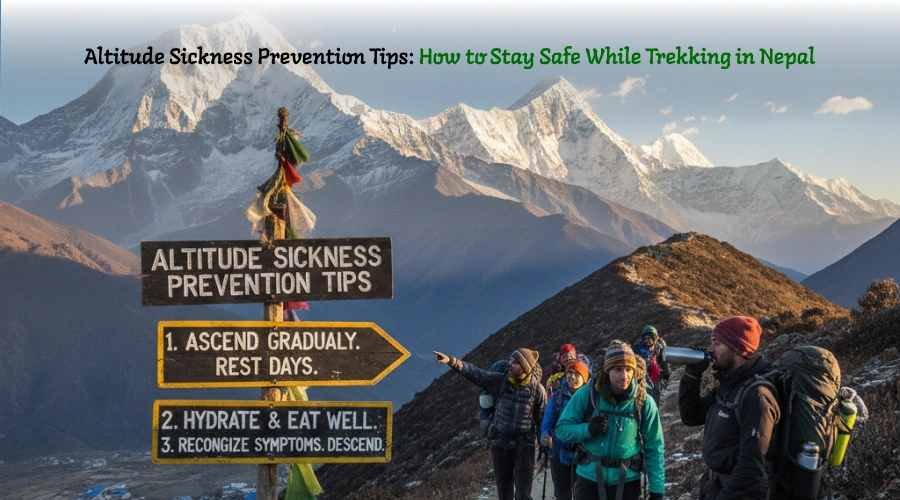
Ascend Slowly and Rest Often: Limit daily elevation gains above the range of 3,000m in the mountains (do not add more than 300m per day). Include the rest days every 3–4 days in your itinerary to acclimatize to the oxygen level in the mountains. Gradual ascent is very important, for example, lingering a day at 3,000–3,500m to acclimatize.
-
Stay Well Hydrated: Drink plenty of water, drink a minimum of 3–4 liters daily to keep your body revitalized by oxygen. Dehydration worsens altitude sickness as water can greatly recover the oxygen level in the blood, so drink small amounts of water regularly even without feeling thirsty. In order to improve and stabilize the level of oxygen in the blood avoid drinking alcohol and taking excessive amounts of caffeine. Alcohol and caffeine quickly dehydrate the body and increase the stress in the body.
-
Eat a Nutritious Diet: High-carbohydrate food gives you energy and helps in acclimatizing quickly in the trails. Hence, eat small snacks, and frequent portions even if appetite is low and avoid eating huge lunches and dinner. The light meals are easier to digest thin air and help ensure enough blood sugar to help you acclimatize to low oxygen levels in the mountains.
-
Use Medication If Needed: Many trekkers carry Acetazolamide (Diamox), a prescription drug which helps speed up the acclimatization process by increasing your breathing and oxygen levels during the trek. The doctors recommend starting a 125 to 250mg Acetazolamide tablet twice on a daily basis one day before trekking above 3,000m. However, you should take it with care, and it is not a magical cure-it-all medicine and needs to be taken to prevent symptoms with consultation of a physician before use.
-
Listen to Your Body: Never ignore the symptoms of AMS and look for warning signs right away. If you get a headache which does not go away with painkillers, or if you feel very weak or disoriented during walks, stop climbing uphill and rest. Descending even a few hundred meters down can provide you with a high amount of relief. Thus, don’t push through, do not take it on your ego and travel back to lower elevation to avoid severe symptoms. Descending back to lower elevation is the only definitive treatment for dangerous altitude sickness and always remember, living to climb another day is better than going through hospital with AMS.
Additional Safety Checklist for trekking in Nepal and Mountains
Gradual Climb, proper hydration, light snacking and acclimatization can help but there’s more safety measures to add when travelling in the Mountains. Our experienced trekking guides and climbers recommend you include following in your checklist to avoid additional costs and pain when trekking to mountains:
|
Particulars |
Why do you need it when travelling to the mountains? |
|---|---|
|
Professional Guides |
They know the routes and can realize the mountain altitude sickness you are going through early. They also carry oxygen and handle emergency plans for your safety. |
|
Travel Insurance |
Helicopter rescues from remote trails can cost you more than US $5,000. Always, make sure your travel policy covers high-altitude evacuation. |
|
Layered Clothing |
Temperatures drop quickly at night, and you need layers to stay warm when the sun goes down. Thus, get an inner base layer, mid layer and outer wind tech jackets. |
|
Sun Protection |
UV rays are highly stronger at high altitudes, and you always need to use sunscreen along with sunglasses to prevent difficulties. |
|
Nausea Relief |
Ginger tea or medicine like ondansetron helps if you feel sick to your stomach from the altitude. |
Conclusion
By preparing well and acclimatizing properly the trekkers can greatly minimize the risk caused by AMS. With planning and use of proper safety methods, altitude sickness becomes an easily manageable challenge rather than a big obstacle. Enjoy the stunning views available in the mountain but remember your safety and health comes before everything else. If there are any serious symptoms you should always make sure to descend immediately to avoid any problems. Ready to plan a safe adventure without AMS? Contact Mountain Delights Treks for expert guidance and support for your Nepal trek.



.webp)