


.png)
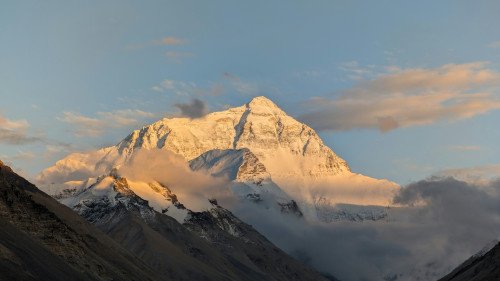
Everest Base Camp Trek offers a once-in-a-lifetime experience to trekkers and proves to be an iconic trip to the Himalayas. Everest Base Camp Trek is exactly the route that has been used by scores of famous mountaineers during their expedition adventure to the highest point on earth. Although this is quite a crowded trekking route, thousands of trekking aspirants want to be on this route to be at the base of Mt. Everest and experience the joy of seeing the highest mountain peak in the world along with other numbers of gigantic peaks.
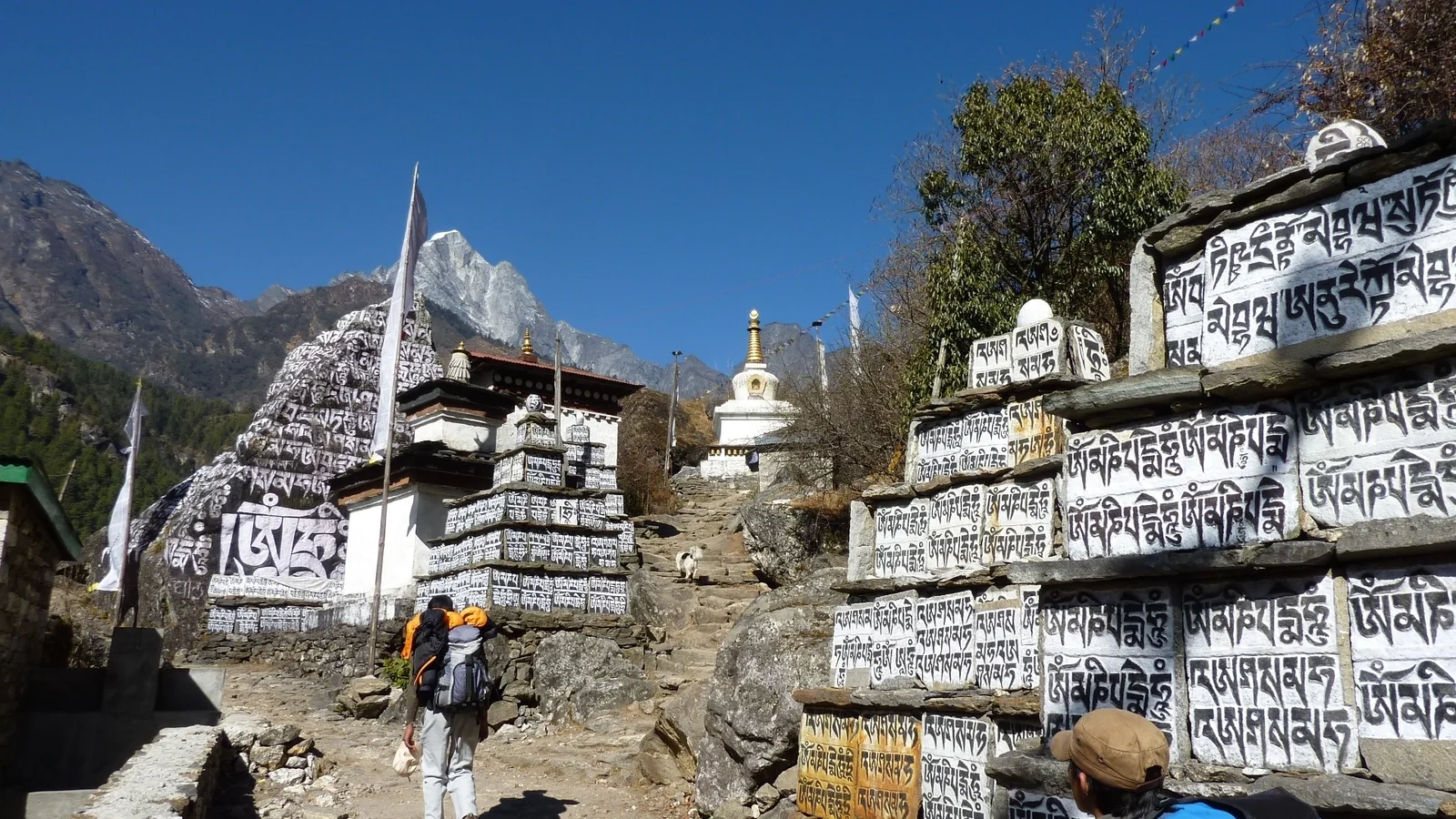
Several suspension bridges, prayer flags, main walls, and monasteries, in addition to the magnificent mountains that come across the trail, add to your trek experience. A closer look at the Sherpa lifestyle... living in a higher Himalayan region with their distinct culture is an attraction to the trip.
The real thrill of the adventure begins with the flight to Lukla. The flight along the Himalayan peaks, crossing various dotted settlements, forests, and streams, is really adventurous. The overall experience of this trekking tour to the Everest base camp is inexpressible in mere words. It’s a simply wonderful feeling that stays with you for a lifetime.
The Everest Base Camp Trek is a challenging trek that requires physical and mental preparation.The daily hikes averaging 5–6 hours, though some days may involve walking for upto 8 hours, especially during acclimatization, high passes, basecamp and Peak view point.
The most challenging part of the trek is the altitude. You will be trekking up to 5,545 meters (18,192 feet) to reach Everest Base Camp. At this altitude, the air is thin, and the temperatures can be extreme.It is important to take precautions such as drink water atleast 3 litre in a day.There is no need to worry, as our well-planned itinerary is designed with proper acclimatization days and gradual altitude gain to minimize the risk of altitude sickness and ensure a comfortable trekking experience.
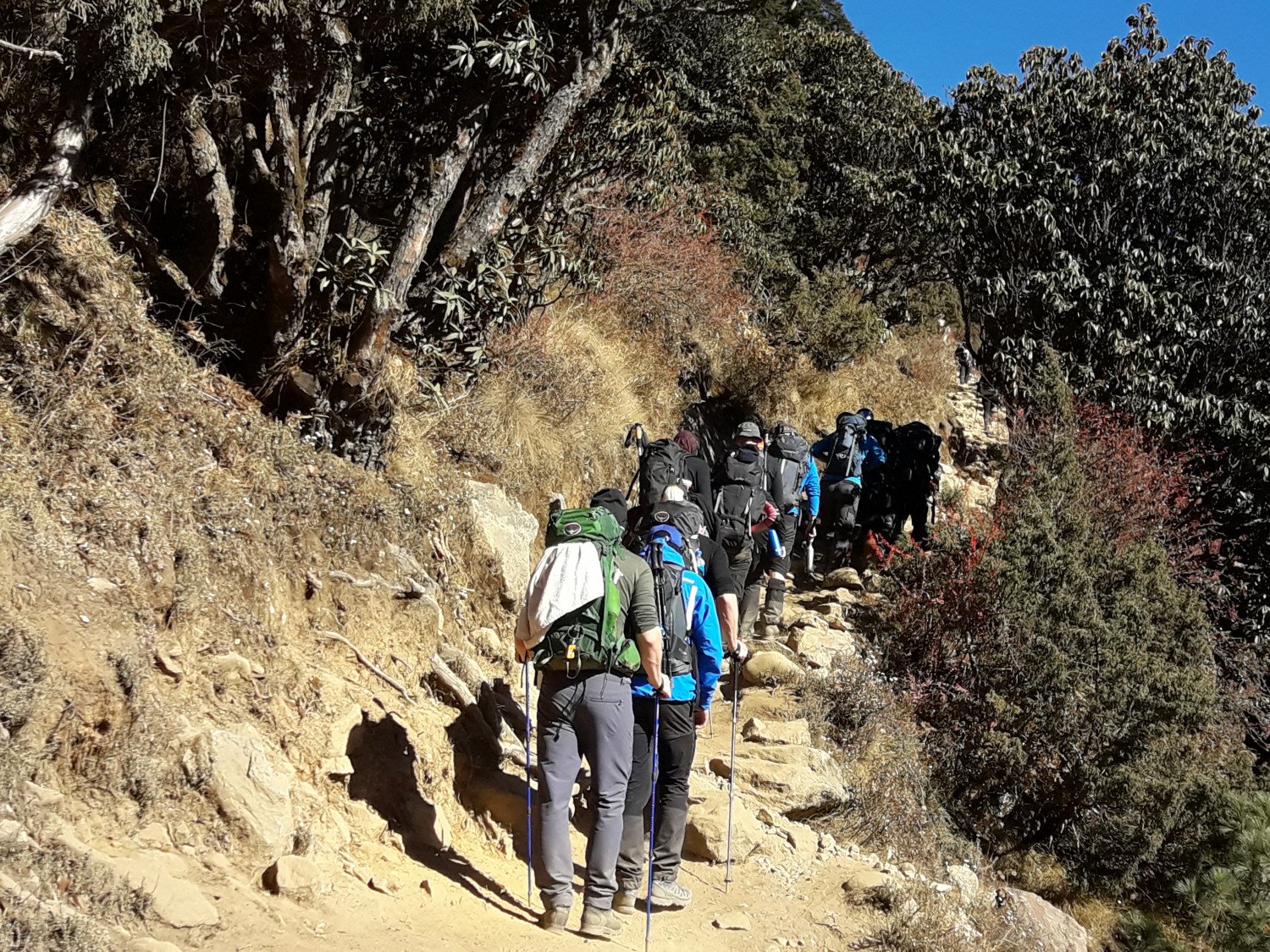
The trail is steep and rugged, and navigating it can be challenging. Rocks and boulders line the trail, and the footing can be slippery. You will also be crossing several high passes where the terrain is even more difficult. With regular exercise, endurance training, and a positive mindset, most healthy trekkers can successfully complete the journey. The breathtaking Himalayan scenery, rich Sherpa culture, and the achievement of reaching the base of the world's highest mountain make the challenges of the trek well worth the effort.Majorety of beggnirs and expereince person do this trek.
Everest base Camp Trek accommodation offers a range of lodging options for trekkers. Accommodations range from simple teahouses, the most common type of lodging along the trek, to luxury resorts in the Khumbu Valley. Bathrooms are generally shared, and hot showers are available at most teahouses for an additional cost. Most lodges also have a common dining hall where trekkers can enjoy freshly prepared meals, hot drinks, and relax after a day of hiking.
Standard Accommodation:
Standard teahouses provide basic but comfortable lodging with twin-sharing rooms, beds, mattresses, pillows, and blankets and shared bathrooms.However every lodge has some attached bathroom that you can upgrade. hot showers are available at most locations for an additional charge. Dining halls are heated with traditional stoves, creating a warm and social atmosphere for trekkers.
Comfort/Luxury Accommodation:
For trekkers seeking extra comfort, luxury lodges offer cozy rooms with attached bathrooms (expect few nights ), comfortable beds, hot showers, electric blankets in some locations, Wi-Fi access, and higher-quality dining facilities and better food.These lodges provide a more comfortable and relaxing experience while still maintaining the authentic mountain atmosphere.
About Lukla Flight:
we always try our best to arrange flights directly from Kathmandu.-lukla-kathmandu but As per the Civil Aviation Authority of Nepal (CAAN), most flights to Lukla, especially during the high trekking seasons (Spring and Autumn) are diverted to operate from Ramechhap Airport (Manthali) instead of Kathmandu Tribhuvan International Airport. In low trekking seasons (Monsoon and Winter) flights are operated directly from Kathmandu to Lukla.
If flight happned from ramechhap it is approximately 4 to 5 hours drive from Kathmandu. This is to reduce the air traffic congestion in Kathmandu and ensure the safety and efficiency of all flights.
Please be aware that all flights to Lukla are subject to weather conditions, and delays are common and might cancel due to the mountain region's unpredictable climate.
In the case that your scheduled flight is delayed for more than one day, we can help organize a helicopter flight to Lukla with additional cost.
 Hotel
Hotel
According to your arrival time, our representative will be there to greet you at the airport. You will then be taken to the respective hotel, where you check in. After a short rest and time to freshen up, we will then introduce you to Thamel—one of the popular tourist hubs in Kathmandu. You can look up for ATMs, money changer, shops, retailers, gears or any other necessities that you require. You will then be taken to our office for tour briefing. Overnight will be spent at the hotel. Delay on flight or late arrival will postpone the schedule for next feasible day.
 4-5
Hotel
4-5
Hotel
 B
B
You start your day with a yummy breakfast and proceed for the tour. We will show you three different religious/cultural sights – Pashupatinath Temple, Boudhanath Stupa. and Swyambhu (monkey temple):
Pashupatinath Temple: Known to be a space devoted to lord Shiva, a Hindu deity, Pashupatinath temple is one of the most famous destinations for Hindu pilgrims. Bagmati river – revered to be a holy river – where Hindu dead body are cremated is another attraction of the tour. It is a UNESCO world cultural heritage site and is famous for the celebration of Shivaratri”, which falls in between the stretch of February-March.
Boudhanath stupa: The stupa is one of the largest monuments of its form in Nepal. It is located in the eastern Kathmandu and stands with four pair of eyes keeping track of four directions of the city. The holy and serene environment will definitely leave you relaxed and calm. It is believed to be inspired by Mahayana philosophy.
If your flight going from ramechhap after thsi tour you are going to drive and spend overnight at ramechhap but if flight from kathamndu than you back teh hotel for Overnight.
3.5 Hours
Lodge
B/L/D
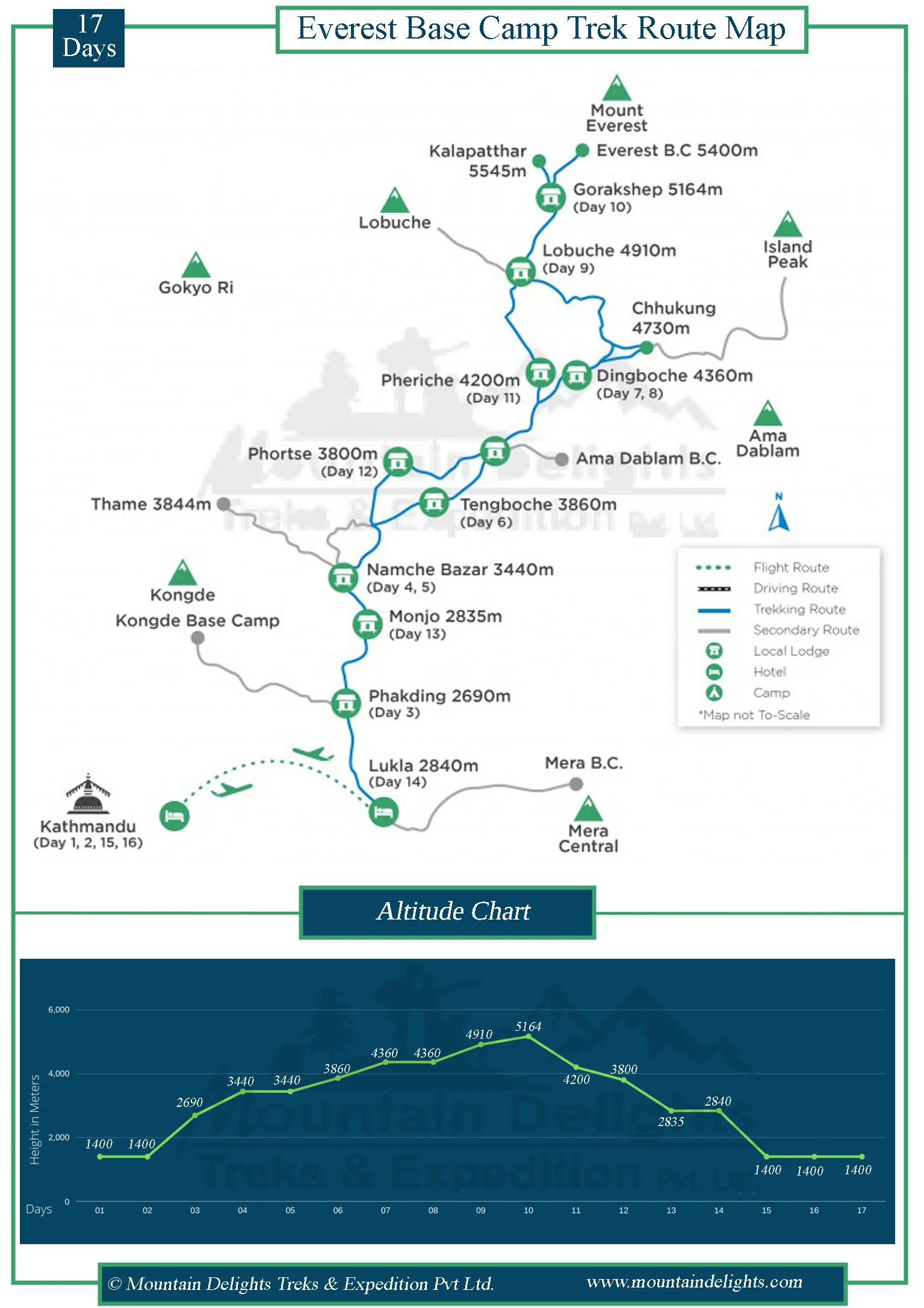
We drive you to the domestic airport early morning for a flight to Lukla. A flight of 30 minutes flying over Nepal’s mid-hills and mountains parallel to the Himalayan ranges will be an amazing adventurous experience on its own. Landing on an airstrip of a beautiful town Lukla – gateway to the Everest trek, you will stop for a short while to fix your luggage, meet with crew members, and have a cup of tea/coffee to start the day. After about 3.5 to 4 hours of trekking, you’ll reach the charming village of Phakding, nestled on the banks of the Dudh Koshi River, known for its crystal-clear, glacial-fed waters.
You’ll spend the night at a local teahouse in Phakding, resting up for the adventure ahead.Stay overnight in Lukla.
5 Hours
Hotel
B/L/D
The second day of your trek will be an exciting yet challenging walk and informative as well since you enter the Sagarmatha National Park. The first part of the walk is beautiful along the Dudh Koshi river in the pine and deodar cedar forest with a couple of small settlements. As you approach just below the ridge of Namche, you cross the highest hanging bridge – hold your breath if you suffer from Acrophobia or Gephyrophobia.
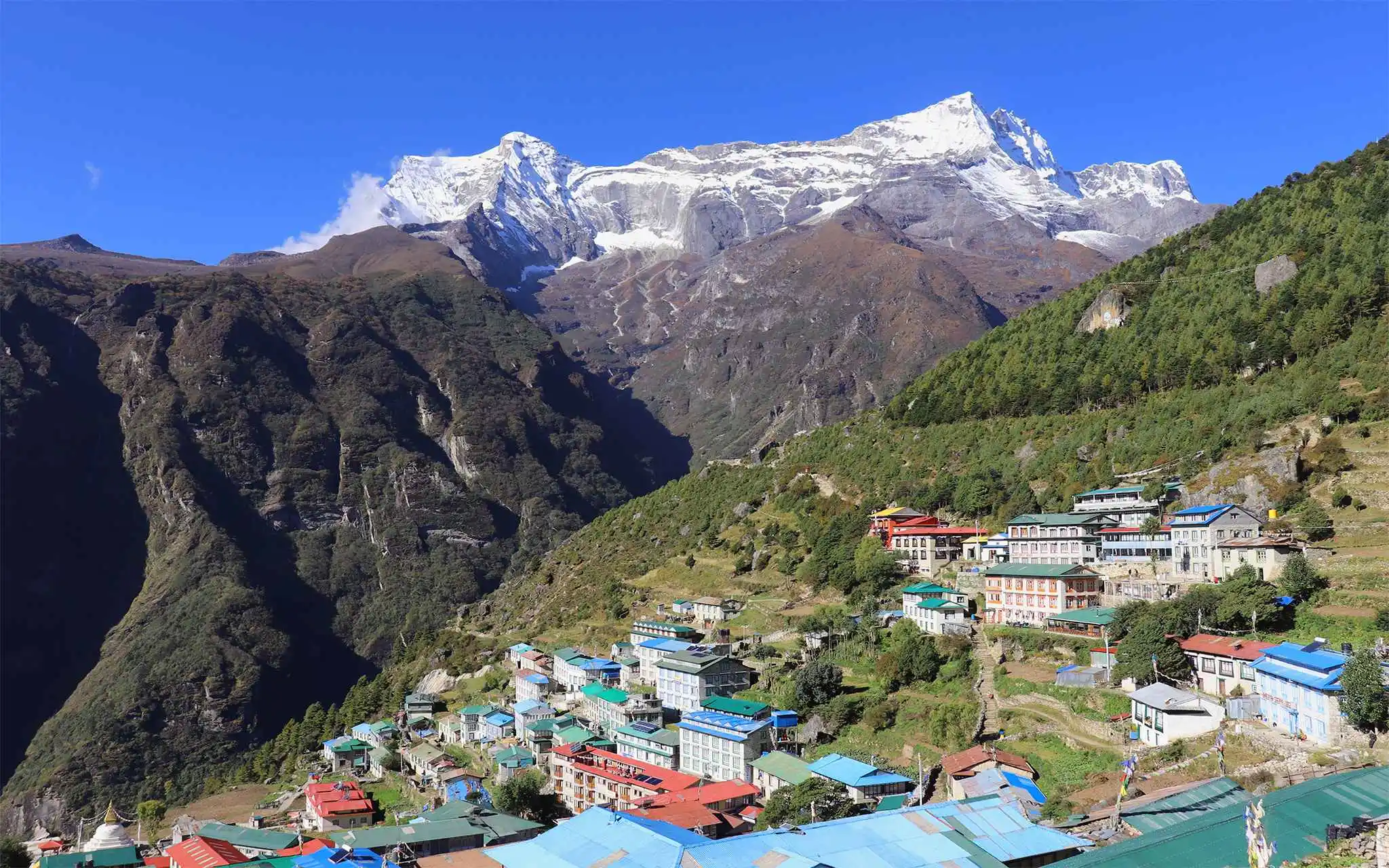
For the last part, you walk steep two to three hours uphill in the pine forest to reach Namche Bazaar. It used to be a trading post for Tibetan and Nepali merchants who cross over the high Himalayan pass called Nang Pa La pass (5,806 m/ 19,050 ft). Early transHimalayan trading place, Namche still holds its prominence for local market place.Overnight at Namche Bazar.
3-4 Hours
Lodge
B/L/D
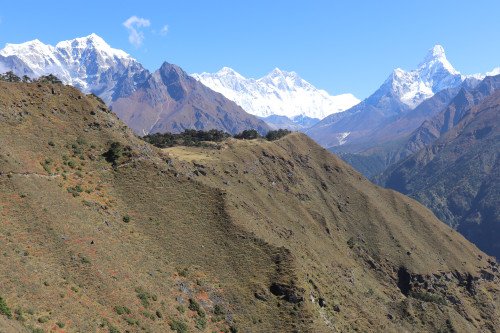
Today we take an early breakfast and then set out to acclimatize hiking. First, visit Namche Bazaar- to the top of Namche where the Sherpa Museum is located. You will then visit the Sagarmatha National Park headquarter from where you can enjoy breathtaking panoramas of the mountains. The peak you can view includes Mt. Everest (8,848 m /29,029 ft), Mt. Lhotse (8,516 m/ 27,940 ft), Mt. Ama Dablam (6,812 m/ 22,349 ft), Mt. Thamserku (6,608 m/ 21,680 ft), Kantenga (6,782 m/ 22,251 ft), Cho-Latse (6,440 m/ 21,128 ft), Tawache or Taboche (6,542 m/ 21,463 ft), Kongde Peak (6,187 m/ 20,298 ft) and others. If you are still energetic and want to go higher then we hike up the Syangboche Airport (Old Airport) and Everest View Hotel. After spending some time we will come back to your hotel in the afternoon and the Overnight at the local lodge.
5 Hours
Lodge
B/L/D
Trek to Tengboche comprises ascending, descending, and gentle walk along relatively flat terrain. The first walk for a couple of hours is beautiful with a rewarding view of the beautiful Himalayas. During transit, you will walk down to the river in Phungi Tenga River, where the lunch is served, and ascend a very steep hill for approximately two hours. After reaching Tengboche, and checking into a teahouse, you will have the chance to look around the area and visit the Tengboche monastery, which is the old Tibetan monastery located in the Khumbu region and is known to celebrate the fascinating festival of Mani Rimdu that falls in October- November (date is fixed according to the lunar calendar). Catch a glimpse of an awe-inspiring mountain view of the peaks including Mt. Everest, Mt. Lhotse, Mt. Ama Dabalam, Mt. Thmasreku, Gokyo Ri, Kongde Peak, Kantenga, Tawache, etc. Overnight at lodge.
4.5 Hours
Lodge
B/L/D
On this day we follow the trail into beautiful forest and trek down to the Imja Khola and continue passing through the village of Pangboche (3,900 m/12,795 ft). The hike is not that strenuous, and the view of the peaks make the day breathtaking. The sceneries along our path to Dingboche, known as the “summer valley”, is amazing. We spend our night at Dingboche.
4 Hours
Lodge
B/L/D
Today is a rest and acclimatization day in Dingboche, with two great hiking options to help you adjust to the altitude. After breakfast, you can take a gentle walk to Chukung Valley, following the Imja River. Along the way, enjoy beautiful views of Lhotse Shar, Ama Dablam, and Island Peak. Have lunch at Chukung before walking back to Dingboche in the afternoon.Or you can take option choose a steeper hike to Nangkartshang Peak (about 5,083 m). This climb is more challenging but offers amazing views of Makalu, Lhotse, Cho Oyu, and Ama Dablam. Return to Dingboche. Overnight at a local lodge.
4.5 Hours
Lodge
B/L/D
Trek starts to be a bit demanding from here. As you go to higher altitudes and deserted alpine glacial land, you will struggle to breathe more than in earlier days. On this day we pass through beautiful pastureland and the village of Pheriche where the Trekkers Aid Post that offers treatment and consultation to trekkers on altitude sickness can be seen along the river bed. We trek our way to the yak pastures of Lobuche (4,910m) crossing Dhugla pass where memorials of those who lost their life in the Himalayas are situated. Overnight at the lodge in Lobuche.
7-9 Hours
Lodge
B/L/D
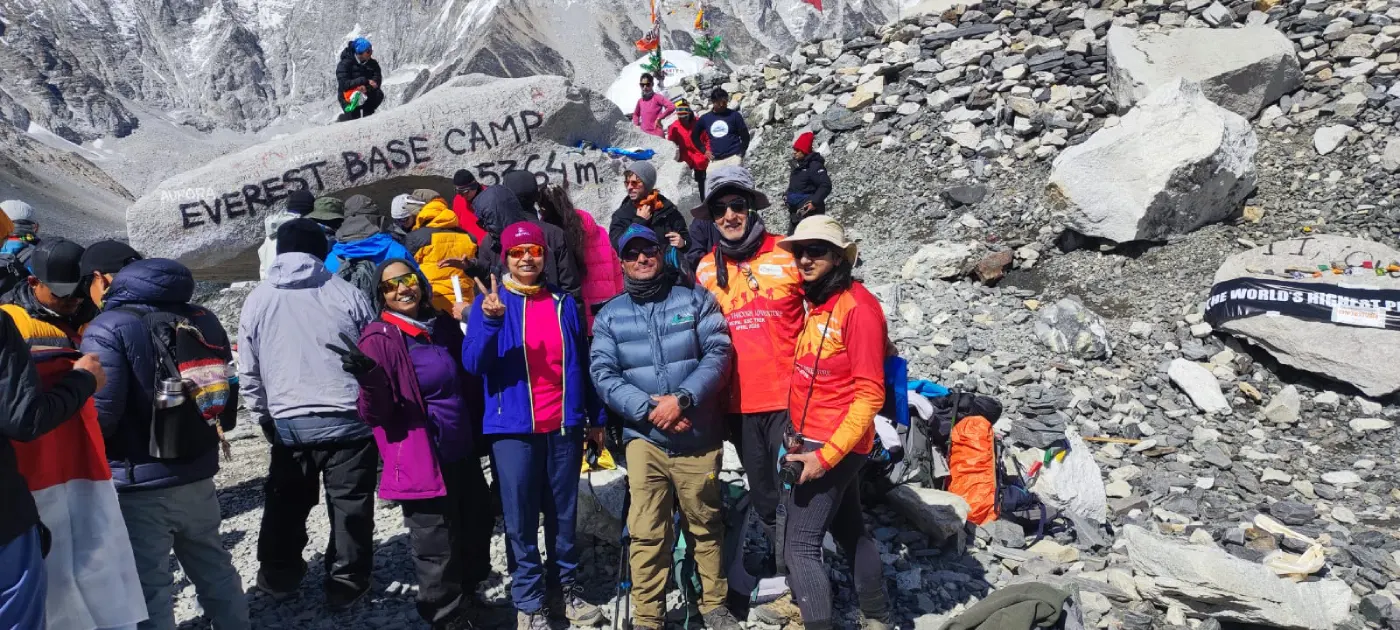
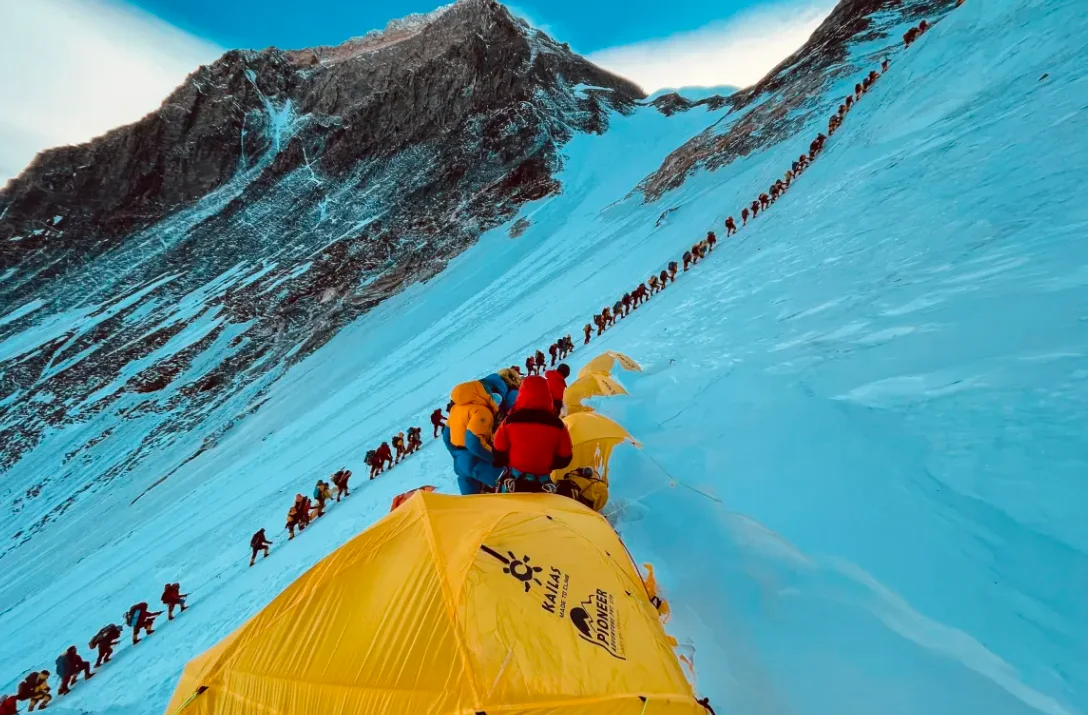
After breakfast, your big day begins. One of the most special treks alongside Everest is through the famous Khumbu Glacier to Gorak Shep – the last stop before Everest basecamp. Capture the moment in photos and joy as Everest Base Camp located at 5364 m elevation, is a place thousands dream of. If you reach here in March-May, you will see hundreds of colorful tents by climbers. It is an life time expereince .You will then return to Gorakhshep same way after spending some time at the Base Camp. Stay at the lodge in Gorakhshep for the night.
6 Hours
Lodge
B/L/D
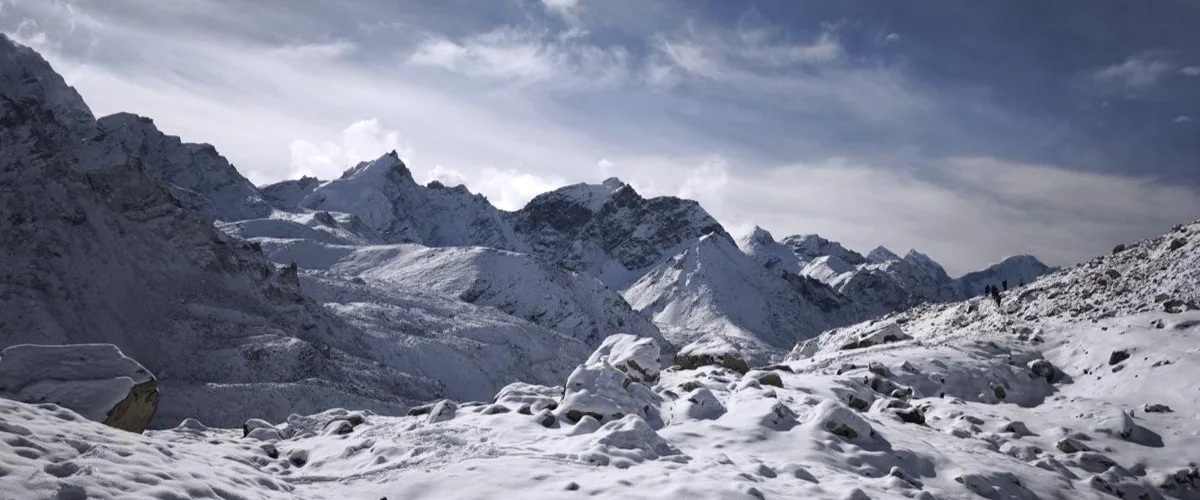
Wake up early, and start the thrilling day at pre-dawn by steep climb to Kalaptthar to catch the sunrise view over the Himalayan peaks. Kalapatthar offers 360 degree views of the mountains including the tallest south face of the Mt. Everest, Lhotse face, Nuptse, Ama Dablam, Taboche, Cholatse, Lobuche East, and Pumori. Indulge yourself with the view of the sunrise, mountain peaks, and Khumbu glaciers, and take photos. It is an indescribable moment when the world's highest mountain Everest luxuriates in its morning glory it is also heighest point of your trek. Go down to your hotel for breakfast and head in the direction of Pheriche. Stay at the lodge in Pheriche.
3.5 Hours
Lodge
B/L/D
Today is a comparatively short and rewarding day. Phortse is a Sherpa village, off the trail to base camp that remains less explored. Explore the unique cultural identity and spend the night in this village at a local lodge.
5.5 Hours
Lodge
B/L/D
After breakfast, we trek all the way to Namche Bazar for lunch. Then we trek down the trail to reach Monjo. The trekking is steeply down routed. We spend our night at a local lodge in Monjo.
4 Hours
Lodge
B/L/D
On the last day of the trek, walk along the Dudh Koshi River, cross the suspension bridge, and through pine forests lead back to Lukla. Upon reaching Lukla, we thank our crew members and celebrate the completion of our trip. We spend our final night in the mountain air staying at a local lodge.
Hotel
B
After an early breakfast in Lukla, you'll head to the Tenzing- Hillary Airport for your scenic flight back to Ramechhap (or Kathmandu, depending on the season and flight schedule). The flight will bring changes in air and leave mountain fresh air back, but you get to rest your body after a long trek. If flight goes to Ramechhap you need to drive for 4-5 hrs.
You will get good food after weeks of limited optioned meal in the Himalayas. We transfer you to hotel and leave you free for the day to explore nearest market and relax. You will spend the night at hotel.
4 Hours
Hotel
B
Today we will have a trip around the local places in Kathmandu Valley to get a sense of the historical, cultural, and spiritual affluence, as well as to unravel the social and historical riddles and see the artistic treasures. During the tour, you can capture the centuries-old monuments and ancient crafts. We will visit Ason's local market, New Road's oldest supermarket- Kilagal, and the hidden stupa among other places. We next proceed to Kathmandu Durbar Square on foot. The visit to the temple of the living goddess "Kumari" is the most unusual experience in the square. A walking tour of Durbar Square will be a great blend of culture, history, art, architecture, and traditional values present in the valley. Overnight stay at the hotel and prepare for the departure next day.
B
Our representative will transfer you to Tribhuvan International Airport. As you board your flight, We wish you the best and hope to see you on another trip to Nepal in the near future.
Alcoholic drinks, mineral water, cold drinks, and cigarettes
Personal travel insurance
Any expenses resulting from unforeseen circumstances
Lunch and dinner in Kathmandu
Tips for the guide, porter, and driver
Anything not specifically listed under inclusions
This list outlines the required things to bring during the trekking tours. There are various selections and brands that you can choose as per your interest. All required trekking equipments can be bought or even hired easily at a reasonable price in Kathmandu.
Daypack
Lower Body – Legs
(Please note our guide will also carry the first aid kit bag during the trek. However we still recommend you to bring your personal first aid kit as well)
Although these are listed as optional, these can be of great assistance to people who may think of themselves and generally clumsy or with bad knees, ankles, etc, especially when going downhill
All garments should be kept dry using waterproof stuff sacks or large puncture resistant plastic bags.


Discover more adventures like this one, offering the same incredible experiences and destinations. Find your next journey today!


Based on 9 Reviews On Tripadvisor And Google
Everest Base Camp Trek offers a once-in-a-lifetime experience to trekkers and proves to be an iconic trip to the Himalayas. Everest Base Camp Trek is exactly the route that has been used by scores of famous mountaineers during their expedition adventure to the highest point on earth. Although this is quite a crowded trekking route, thousands of trekking aspirants want to be on this route to be at the base of Mt. Everest and experience the joy of seeing the highest mountain peak in the world along with other numbers of gigantic peaks.
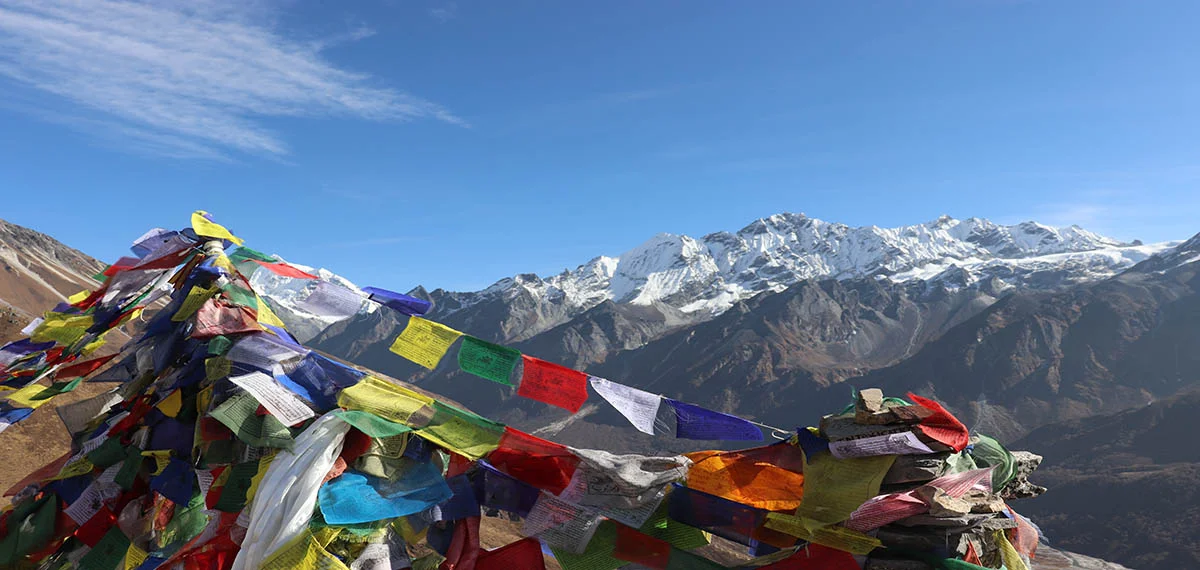
Several suspension bridges, prayer flags, main walls, and monasteries, in addition to the magnificent mountains that come across the trail, add to your trek experience. A closer look at the Sherpa lifestyle... living in a higher Himalayan region with their distinct culture is an attraction to the trip.
The real thrill of the adventure begins with the flight to Lukla. The flight along the Himalayan peaks, crossing various dotted settlements, forests, and streams, is really adventurous. The overall experience of this trekking tour to the Everest base camp is inexpressible in mere words. It’s a simply wonderful feeling that stays with you for a lifetime.
The Everest Base Camp Trek is a challenging trek that requires physical and mental preparation.The daily hikes averaging 5–6 hours, though some days may involve walking for upto 8 hours, especially during acclimatization, high passes, basecamp and Peak view point.
The most challenging part of the trek is the altitude. You will be trekking up to 5,545 meters (18,192 feet) to reach Everest Base Camp. At this altitude, the air is thin, and the temperatures can be extreme.It is important to take precautions such as drink water atleast 3 litre in a day.There is no need to worry, as our well-planned itinerary is designed with proper acclimatization days and gradual altitude gain to minimize the risk of altitude sickness and ensure a comfortable trekking experience.
The trail is steep and rugged, and navigating it can be challenging. Rocks and boulders line the trail, and the footing can be slippery. You will also be crossing several high passes where the terrain is even more difficult. With regular exercise, endurance training, and a positive mindset, most healthy trekkers can successfully complete the journey. The breathtaking Himalayan scenery, rich Sherpa culture, and the achievement of reaching the base of the world's highest mountain make the challenges of the trek well worth the effort.Majorety of beggnirs and expereince person do this trek.
Everest base Camp Trek accommodation offers a range of lodging options for trekkers. Accommodations range from simple teahouses, the most common type of lodging along the trek, to luxury resorts in the Khumbu Valley. Bathrooms are generally shared, and hot showers are available at most teahouses for an additional cost. Most lodges also have a common dining hall where trekkers can enjoy freshly prepared meals, hot drinks, and relax after a day of hiking.
Standard Accommodation:
Standard teahouses provide basic but comfortable lodging with twin-sharing rooms, beds, mattresses, pillows, and blankets and shared bathrooms.However every lodge has some attached bathroom that you can upgrade. hot showers are available at most locations for an additional charge. Dining halls are heated with traditional stoves, creating a warm and social atmosphere for trekkers.
Comfort/Luxury Accommodation:
For trekkers seeking extra comfort, luxury lodges offer cozy rooms with attached bathrooms (expect few nights ), comfortable beds, hot showers, electric blankets in some locations, Wi-Fi access, and higher-quality dining facilities and better food.These lodges provide a more comfortable and relaxing experience while still maintaining the authentic mountain atmosphere.
About Lukla Flight:
we always try our best to arrange flights directly from Kathmandu.-lukla-kathmandu but As per the Civil Aviation Authority of Nepal (CAAN), most flights to Lukla, especially during the high trekking seasons (Spring and Autumn) are diverted to operate from Ramechhap Airport (Manthali) instead of Kathmandu Tribhuvan International Airport. In low trekking seasons (Monsoon and Winter) flights are operated directly from Kathmandu to Lukla.
If flight happned from ramechhap it is approximately 4 to 5 hours drive from Kathmandu. This is to reduce the air traffic congestion in Kathmandu and ensure the safety and efficiency of all flights.
Please be aware that all flights to Lukla are subject to weather conditions, and delays are common and might cancel due to the mountain region's unpredictable climate.
In the case that your scheduled flight is delayed for more than one day, we can help organize a helicopter flight to Lukla with additional cost.
According to your arrival time, our representative will be there to greet you at the airport. You will then be taken to the respective hotel, where you check in. After a short rest and time to freshen up, we will then introduce you to Thamel—one of the popular tourist hubs in Kathmandu. You can look up for ATMs, money changer, shops, retailers, gears or any other necessities that you require. You will then be taken to our office for tour briefing. Overnight will be spent at the hotel. Delay on flight or late arrival will postpone the schedule for next feasible day.
You start your day with a yummy breakfast and proceed for the tour. We will show you three different religious/cultural sights – Pashupatinath Temple, Boudhanath Stupa. and Swyambhu (monkey temple):
Pashupatinath Temple: Known to be a space devoted to lord Shiva, a Hindu deity, Pashupatinath temple is one of the most famous destinations for Hindu pilgrims. Bagmati river – revered to be a holy river – where Hindu dead body are cremated is another attraction of the tour. It is a UNESCO world cultural heritage site and is famous for the celebration of Shivaratri”, which falls in between the stretch of February-March.
Boudhanath stupa: The stupa is one of the largest monuments of its form in Nepal. It is located in the eastern Kathmandu and stands with four pair of eyes keeping track of four directions of the city. The holy and serene environment will definitely leave you relaxed and calm. It is believed to be inspired by Mahayana philosophy.
If your flight going from ramechhap after thsi tour you are going to drive and spend overnight at ramechhap but if flight from kathamndu than you back teh hotel for Overnight.
We drive you to the domestic airport early morning for a flight to Lukla. A flight of 30 minutes flying over Nepal’s mid-hills and mountains parallel to the Himalayan ranges will be an amazing adventurous experience on its own. Landing on an airstrip of a beautiful town Lukla – gateway to the Everest trek, you will stop for a short while to fix your luggage, meet with crew members, and have a cup of tea/coffee to start the day. After about 3.5 to 4 hours of trekking, you’ll reach the charming village of Phakding, nestled on the banks of the Dudh Koshi River, known for its crystal-clear, glacial-fed waters.
You’ll spend the night at a local teahouse in Phakding, resting up for the adventure ahead.Stay overnight in Lukla.
The second day of your trek will be an exciting yet challenging walk and informative as well since you enter the Sagarmatha National Park. The first part of the walk is beautiful along the Dudh Koshi river in the pine and deodar cedar forest with a couple of small settlements. As you approach just below the ridge of Namche, you cross the highest hanging bridge – hold your breath if you suffer from Acrophobia or Gephyrophobia.
For the last part, you walk steep two to three hours uphill in the pine forest to reach Namche Bazaar. It used to be a trading post for Tibetan and Nepali merchants who cross over the high Himalayan pass called Nang Pa La pass (5,806 m/ 19,050 ft). Early transHimalayan trading place, Namche still holds its prominence for local market place.Overnight at Namche Bazar.
Today we take an early breakfast and then set out to acclimatize hiking. First, visit Namche Bazaar- to the top of Namche where the Sherpa Museum is located. You will then visit the Sagarmatha National Park headquarter from where you can enjoy breathtaking panoramas of the mountains. The peak you can view includes Mt. Everest (8,848 m /29,029 ft), Mt. Lhotse (8,516 m/ 27,940 ft), Mt. Ama Dablam (6,812 m/ 22,349 ft), Mt. Thamserku (6,608 m/ 21,680 ft), Kantenga (6,782 m/ 22,251 ft), Cho-Latse (6,440 m/ 21,128 ft), Tawache or Taboche (6,542 m/ 21,463 ft), Kongde Peak (6,187 m/ 20,298 ft) and others. If you are still energetic and want to go higher then we hike up the Syangboche Airport (Old Airport) and Everest View Hotel. After spending some time we will come back to your hotel in the afternoon and the Overnight at the local lodge.
Trek to Tengboche comprises ascending, descending, and gentle walk along relatively flat terrain. The first walk for a couple of hours is beautiful with a rewarding view of the beautiful Himalayas. During transit, you will walk down to the river in Phungi Tenga River, where the lunch is served, and ascend a very steep hill for approximately two hours. After reaching Tengboche, and checking into a teahouse, you will have the chance to look around the area and visit the Tengboche monastery, which is the old Tibetan monastery located in the Khumbu region and is known to celebrate the fascinating festival of Mani Rimdu that falls in October- November (date is fixed according to the lunar calendar). Catch a glimpse of an awe-inspiring mountain view of the peaks including Mt. Everest, Mt. Lhotse, Mt. Ama Dabalam, Mt. Thmasreku, Gokyo Ri, Kongde Peak, Kantenga, Tawache, etc. Overnight at lodge.
On this day we follow the trail into beautiful forest and trek down to the Imja Khola and continue passing through the village of Pangboche (3,900 m/12,795 ft). The hike is not that strenuous, and the view of the peaks make the day breathtaking. The sceneries along our path to Dingboche, known as the “summer valley”, is amazing. We spend our night at Dingboche.
Today is a rest and acclimatization day in Dingboche, with two great hiking options to help you adjust to the altitude. After breakfast, you can take a gentle walk to Chukung Valley, following the Imja River. Along the way, enjoy beautiful views of Lhotse Shar, Ama Dablam, and Island Peak. Have lunch at Chukung before walking back to Dingboche in the afternoon.Or you can take option choose a steeper hike to Nangkartshang Peak (about 5,083 m). This climb is more challenging but offers amazing views of Makalu, Lhotse, Cho Oyu, and Ama Dablam. Return to Dingboche. Overnight at a local lodge.
Trek starts to be a bit demanding from here. As you go to higher altitudes and deserted alpine glacial land, you will struggle to breathe more than in earlier days. On this day we pass through beautiful pastureland and the village of Pheriche where the Trekkers Aid Post that offers treatment and consultation to trekkers on altitude sickness can be seen along the river bed. We trek our way to the yak pastures of Lobuche (4,910m) crossing Dhugla pass where memorials of those who lost their life in the Himalayas are situated. Overnight at the lodge in Lobuche.
After breakfast, your big day begins. One of the most special treks alongside Everest is through the famous Khumbu Glacier to Gorak Shep – the last stop before Everest basecamp. Capture the moment in photos and joy as Everest Base Camp located at 5364 m elevation, is a place thousands dream of. If you reach here in March-May, you will see hundreds of colorful tents by climbers. It is an life time expereince .You will then return to Gorakhshep same way after spending some time at the Base Camp. Stay at the lodge in Gorakhshep for the night.
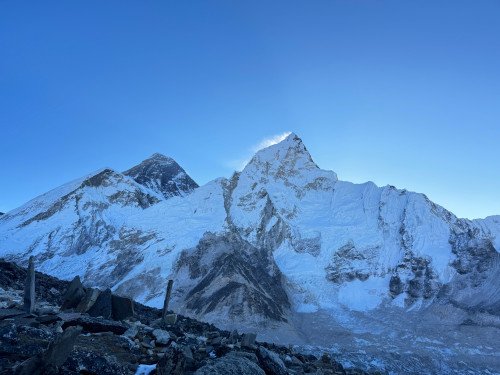
Wake up early, and start the thrilling day at pre-dawn by steep climb to Kalaptthar to catch the sunrise view over the Himalayan peaks. Kalapatthar offers 360 degree views of the mountains including the tallest south face of the Mt. Everest, Lhotse face, Nuptse, Ama Dablam, Taboche, Cholatse, Lobuche East, and Pumori. Indulge yourself with the view of the sunrise, mountain peaks, and Khumbu glaciers, and take photos. It is an indescribable moment when the world's highest mountain Everest luxuriates in its morning glory it is also heighest point of your trek. Go down to your hotel for breakfast and head in the direction of Pheriche. Stay at the lodge in Pheriche.
Today is a comparatively short and rewarding day. Phortse is a Sherpa village, off the trail to base camp that remains less explored. Explore the unique cultural identity and spend the night in this village at a local lodge.
After breakfast, we trek all the way to Namche Bazar for lunch. Then we trek down the trail to reach Monjo. The trekking is steeply down routed. We spend our night at a local lodge in Monjo.
On the last day of the trek, walk along the Dudh Koshi River, cross the suspension bridge, and through pine forests lead back to Lukla. Upon reaching Lukla, we thank our crew members and celebrate the completion of our trip. We spend our final night in the mountain air staying at a local lodge.
After an early breakfast in Lukla, you'll head to the Tenzing- Hillary Airport for your scenic flight back to Ramechhap (or Kathmandu, depending on the season and flight schedule). The flight will bring changes in air and leave mountain fresh air back, but you get to rest your body after a long trek. If flight goes to Ramechhap you need to drive for 4-5 hrs.
You will get good food after weeks of limited optioned meal in the Himalayas. We transfer you to hotel and leave you free for the day to explore nearest market and relax. You will spend the night at hotel.
Today we will have a trip around the local places in Kathmandu Valley to get a sense of the historical, cultural, and spiritual affluence, as well as to unravel the social and historical riddles and see the artistic treasures. During the tour, you can capture the centuries-old monuments and ancient crafts. We will visit Ason's local market, New Road's oldest supermarket- Kilagal, and the hidden stupa among other places. We next proceed to Kathmandu Durbar Square on foot. The visit to the temple of the living goddess "Kumari" is the most unusual experience in the square. A walking tour of Durbar Square will be a great blend of culture, history, art, architecture, and traditional values present in the valley. Overnight stay at the hotel and prepare for the departure next day.
Our representative will transfer you to Tribhuvan International Airport. As you board your flight, We wish you the best and hope to see you on another trip to Nepal in the near future.
Alcoholic drinks, mineral water, cold drinks, and cigarettes
Personal travel insurance
Any expenses resulting from unforeseen circumstances
Lunch and dinner in Kathmandu
Tips for the guide, porter, and driver
Anything not specifically listed under inclusions
This list outlines the required things to bring during the trekking tours. There are various selections and brands that you can choose as per your interest. All required trekking equipments can be bought or even hired easily at a reasonable price in Kathmandu.
Daypack
Lower Body – Legs
(Please note our guide will also carry the first aid kit bag during the trek. However we still recommend you to bring your personal first aid kit as well)
Although these are listed as optional, these can be of great assistance to people who may think of themselves and generally clumsy or with bad knees, ankles, etc, especially when going downhill
All garments should be kept dry using waterproof stuff sacks or large puncture resistant plastic bags.

© 2011 - 2026 All rights reserved. Mountain Delights Treks and Expedition Pvt. Ltd. Developed By : Xenatech Nepal









.webp)






Edward C. WilliamsonGermanyOn 2023-03-03
Everest Base Camp Trek
I had the most amazing experience on my Everest Base Camp Trek with Mountain Delight. From the moment I arrived, I was taken care of by their amazing staff, who were always ready to help and answer any questions I had. The trek itself was spectacular, with lots of amazing views and experiences. I was so impressed with the level of professionalism and care that the guides, staff and porters provided. Every aspect of the trek was taken care of and I felt safe and secure at all times. I would highly recommend a trek with Mountain Delight and will definitely be using them for future treks. Five Stars!
Ursula Julie MonsenSwedenOn 2022-04-05
Dream in the Himalayas
I can totally recommend Mountain Delights Trekking and Expedition Company to give you a wonderful experience in the Himalayas. Excellent service, very well organized, giving you a personal touch. Thank you! Nameste 🙏
Astrid LinderStockholm, SwedenOn 2025-04-23
Everest Base Camp
Experience of EBC trek April 2025. The trek was organized in the best possible way. The team, led by Mingur Sherpa, did put all needed effort into supporting each one in the group so that we all reached the EBC. Alternative transports solutions were arranged when needed, such as helicopters when planes could not land in Lukla and horses when hurting knees needed a rest. A big thank you for the fantastic experience to Kamal and the team and on the track under the leadership of Mingur. You have made us richer.BinuUnited KingdomOn 2026-05-07
Life time experience and memories
May 2026 • Friends
We went on the 14 day EBC trek with Friends.Absolutely wonderful experience with knowledgeable, friendly, professional guides (Deepak), porters and assistant guides (Dilip). Our team had an excellent time around the mountains. They looked after our safety, health and guided us according to our ability,pace etc. Accommodation was also well thought off. They also assisted us,on their own cost, in taking a Helicopter to Lukla when we had issues with flights to Lukla from Katmandu. Our group managed to summit on 27th April and back to Lukla on 3rd May. Our stay in Katmandu and the transfers were handled smoothly.Thanks for everything and will definitely recommend them for any future Treks in Nepal.
Andrea DUnited KingdomOn 2025-03-25
Everest Base Camp Trek with Mountain Delgiths
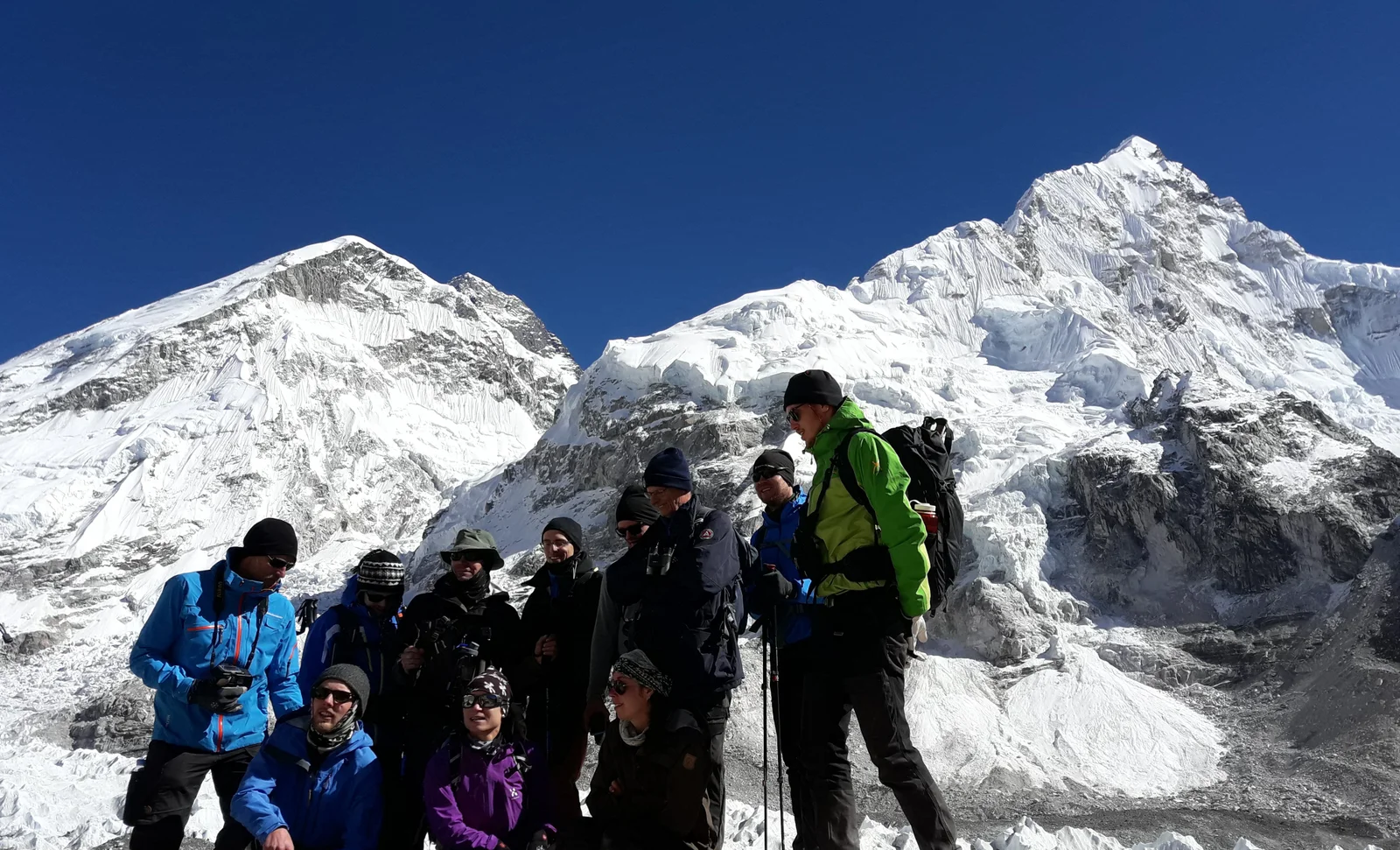
I was part of a group of 12 that hiked to Everest Base Camp with Mountain Delights. Their guides Purna, Shivra, Prim and Sundez were amazing - they were always so generous and willing to help. I was a slow walker and it was never any issue. I felt safe at all times. Their 6 porters were also wonderful and had our gear ready at every destination. I can't recommend Mountain delights highly enough and would have no problem contacting them if I planned another trip to Nepal.
Pavel MRussiaOn 2024-12-30
This is more than just a company. These are friends.
The fact that I met these guys was a real gift for the new year. They helped me organize a solo ascent to the Everest base camp. They helped with the plane tickets. We organized a safari trip. And all this was not just professional, but also as if I were the main guest in Nepal. I was greeted and escorted everywhere and they gave me the best that could be given in every place I visited. Thank you very much for everything. I haven't seen such hospitality and professionalism for a long time. I will 100% recommend you to all my friends.
Olivia1NSwedenOn 2024-12-26
An amazing adventure to Everest Base Camp
Words cannot describe how happy we are with this trip thanks to Mountain Delights. Great information from start, logistics, loan of gear, professional guides and a very inspiring company history. We felt safe during the entire trip and it is truly a memory for life, being surrounded by all these beautiful mountains.
Jan IFranceOn 2024-12-25
Great hike to EBC
Fantastically well arranged by Mountain Delights, we were 11 people and all came up to Everest Base Camp. We stayed in good Lodge and got good food every day. The atmosphere in the group was great and I miss them already
50KitMCUnited KingdomOn 2026-06-19
Awesome experience with an Awesome Trekking Company
I returned to Nepal in October 2024 with my wife and 14 year old daughter to undertake the 12 day Everest Base Camp Trek. This is my 4th time trekking in Nepal. The trek was extremely well organised and guided by the excellent Purna. We had an issue with internal flights due to poor weather and Ram was quickly able to make alternative arrangements so that our plans weren’t impacted to any great degree.