.jpeg)
.jpeg)
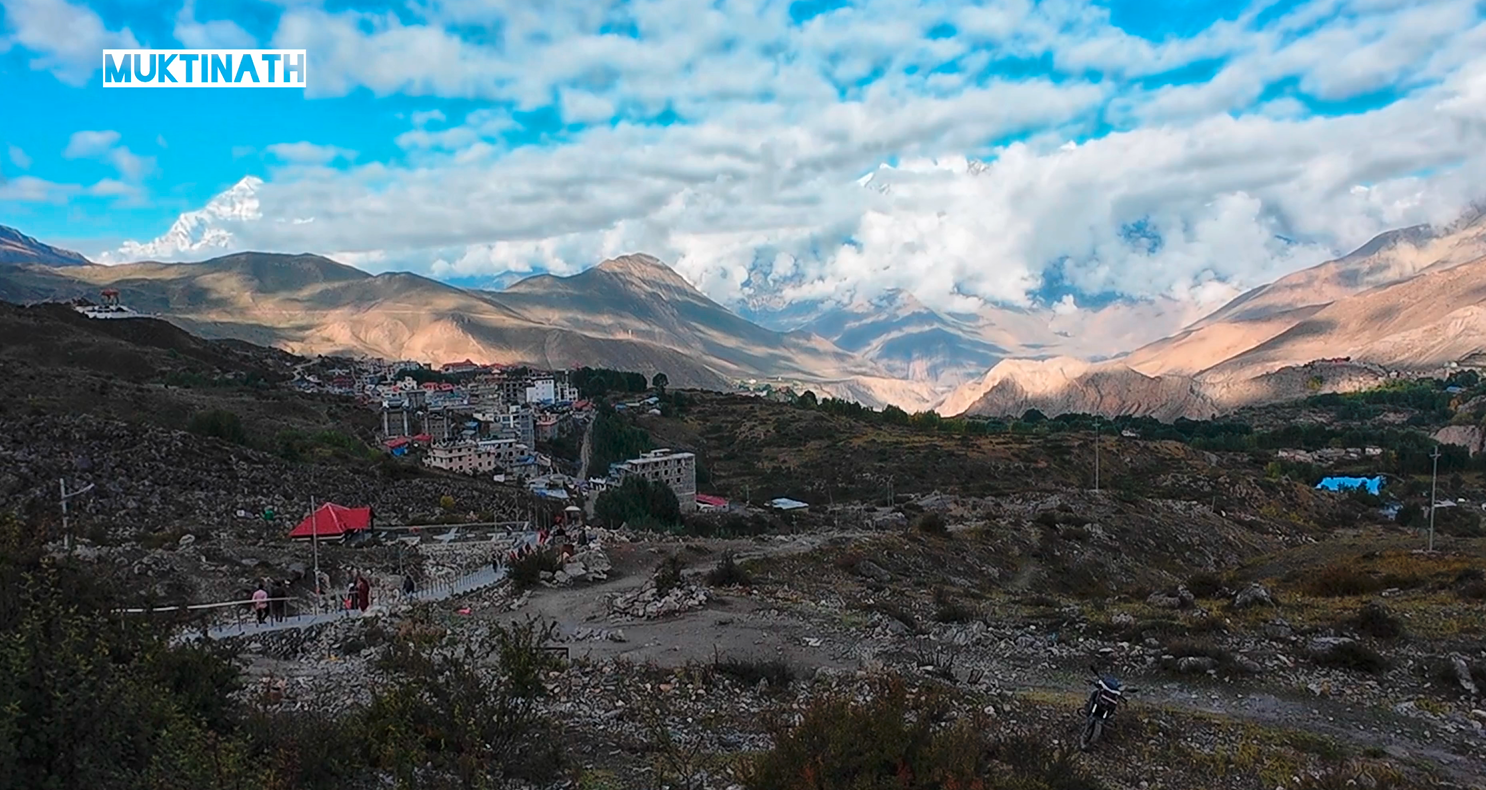
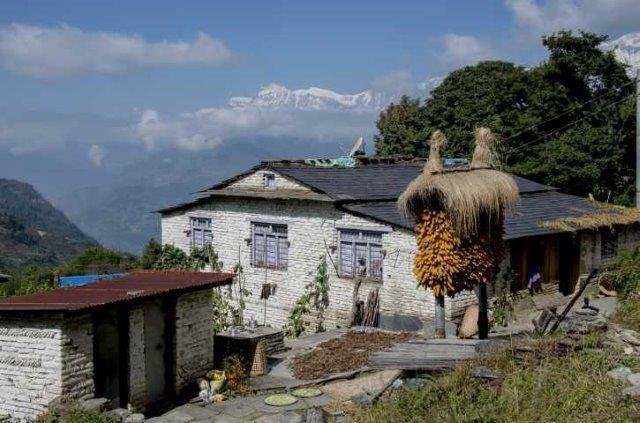
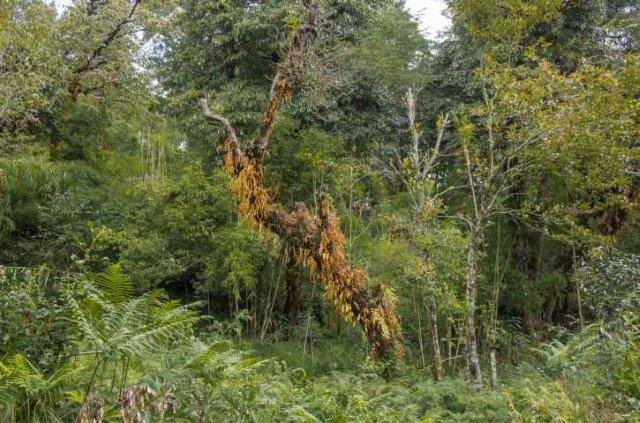
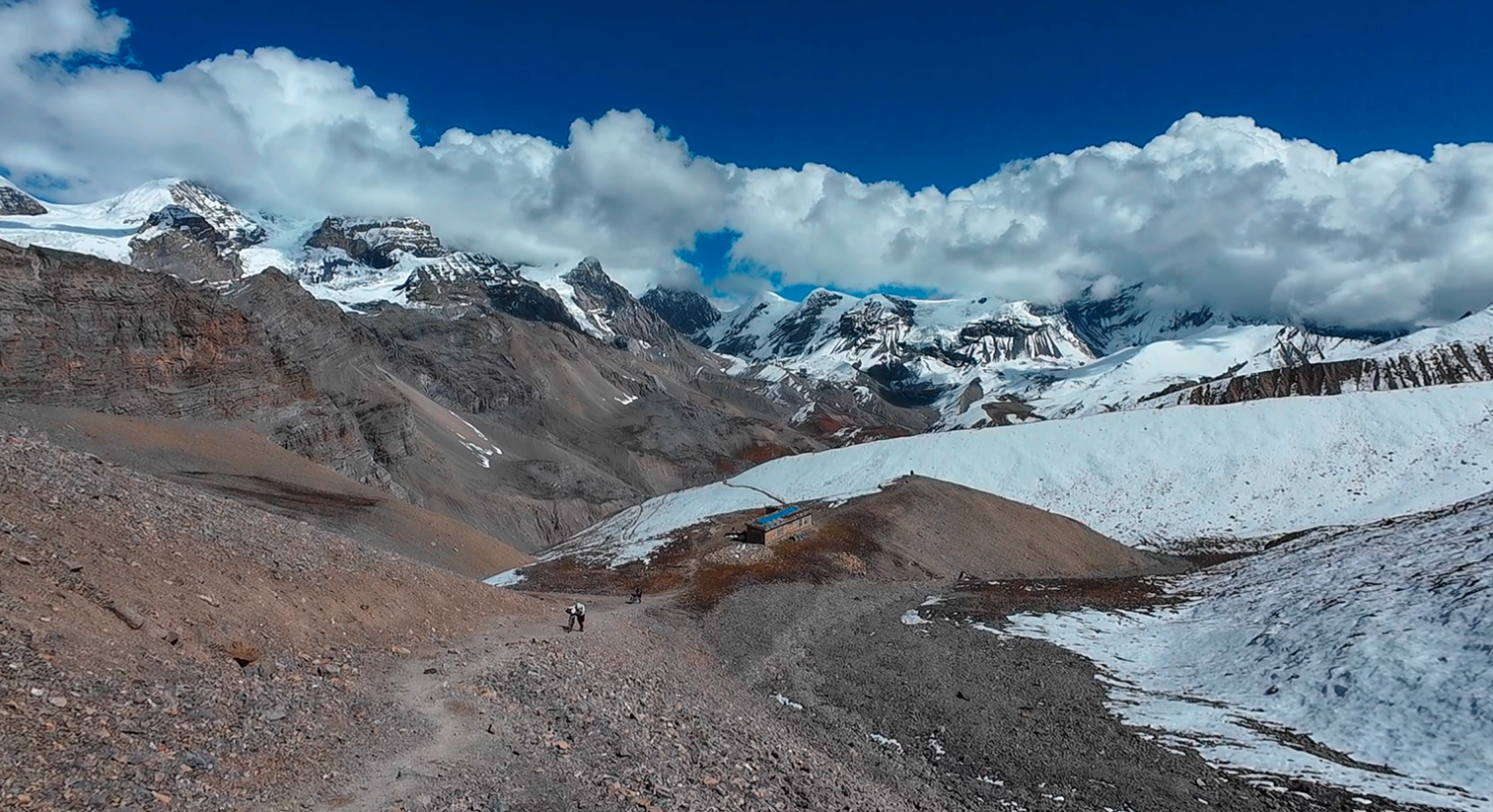
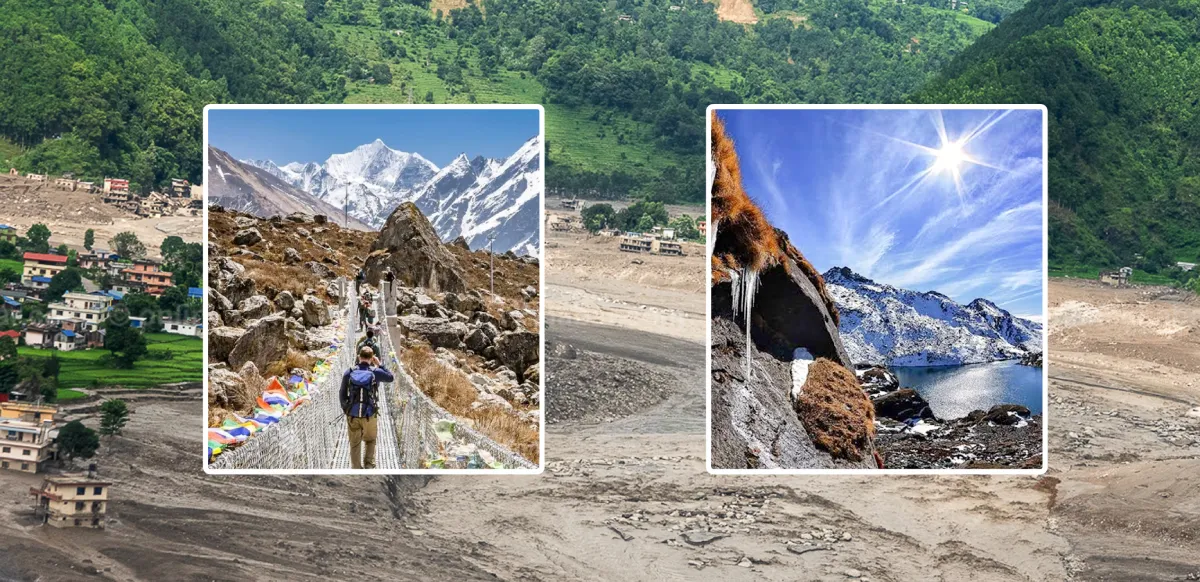
Kanchenjunga North & South Basecamp Trek Overview
Trip Overview
The Kanchenjunga North and South Basecamp Trek is one of Nepal's most remote, pristine, and rewarding trekking adventures. Kanchenjunga (8,586 m / 28,169 ft), the third highest mountain on earth, sits on the border of Nepal and the Indian state of Sikkim, and this exceptional route takes trekkers deep into one of the last unspoilt wilderness regions of the Himalayas. Unlike the heavily trafficked trails of Everest and Annapurna, Kanchenjunga sees relatively few visitors, meaning you will experience untouched landscapes, genuine local cultures, and a true sense of exploration throughout the journey.
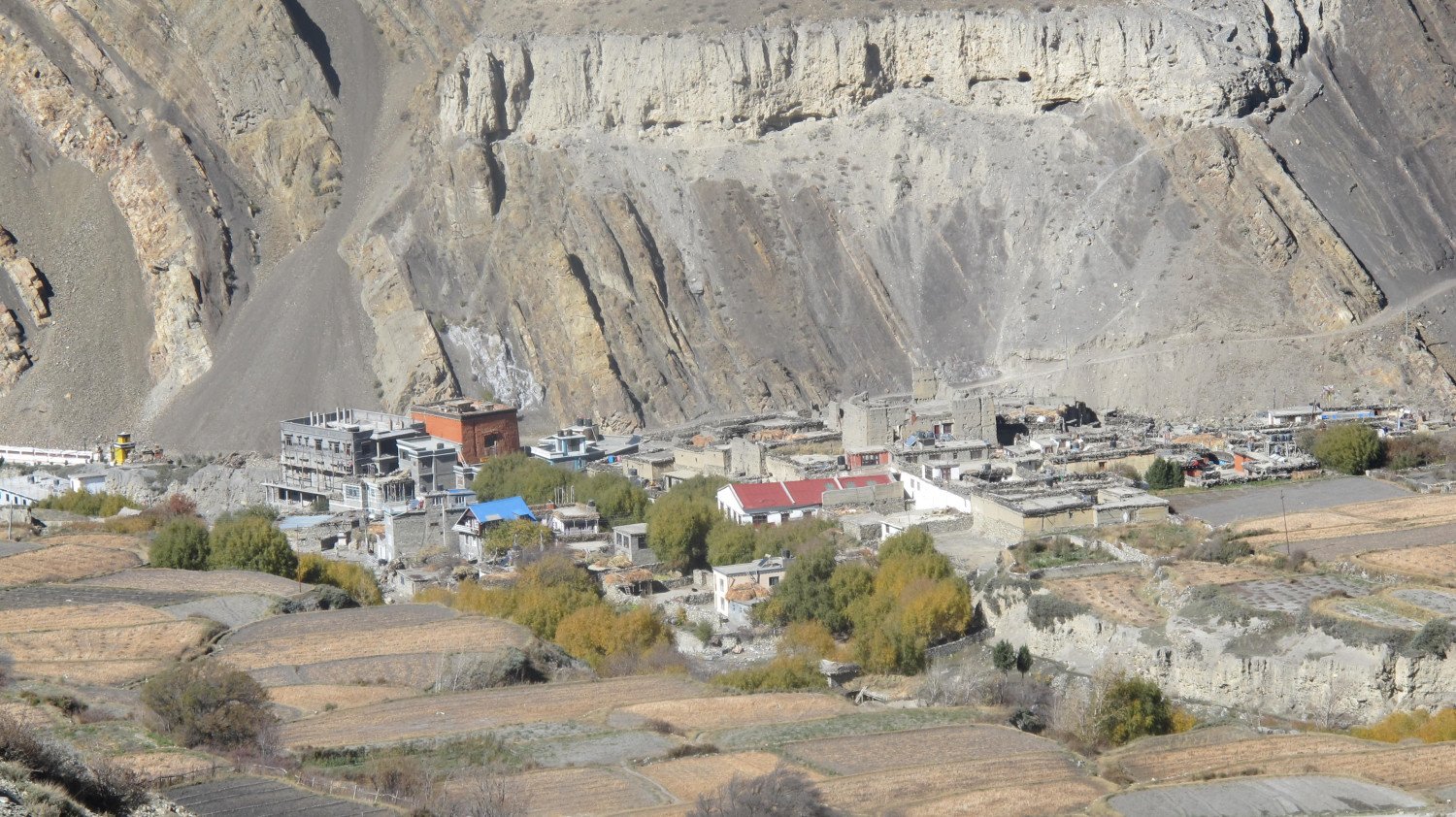
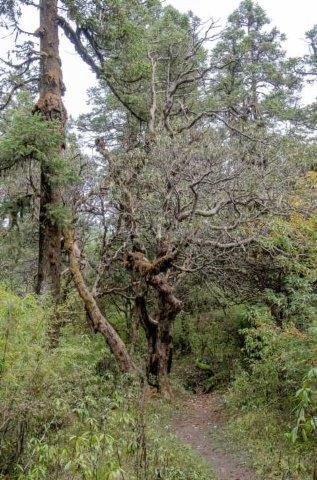
This 22-day itinerary combines both the North Basecamp (Pangpema, 5,143 m / 16,873 ft) and the South Basecamp viewpoint at Oktang (4,740 m / 15,551 ft), offering a rare and complete perspective of Kanchenjunga's magnificent massif from two contrasting angles. The trek begins with a scenic flight from Kathmandu to Bhadrapur in eastern Nepal, followed by a drive to Taplejung the gateway to Kanchenjunga. From there, the trail winds through subtropical river valleys, ancient Tibetan-influenced Sherpa and Limbu villages, dense rhododendron and bamboo forests, high alpine meadows, and vast glacial moraines before arriving at the foot of the world's third highest peak.
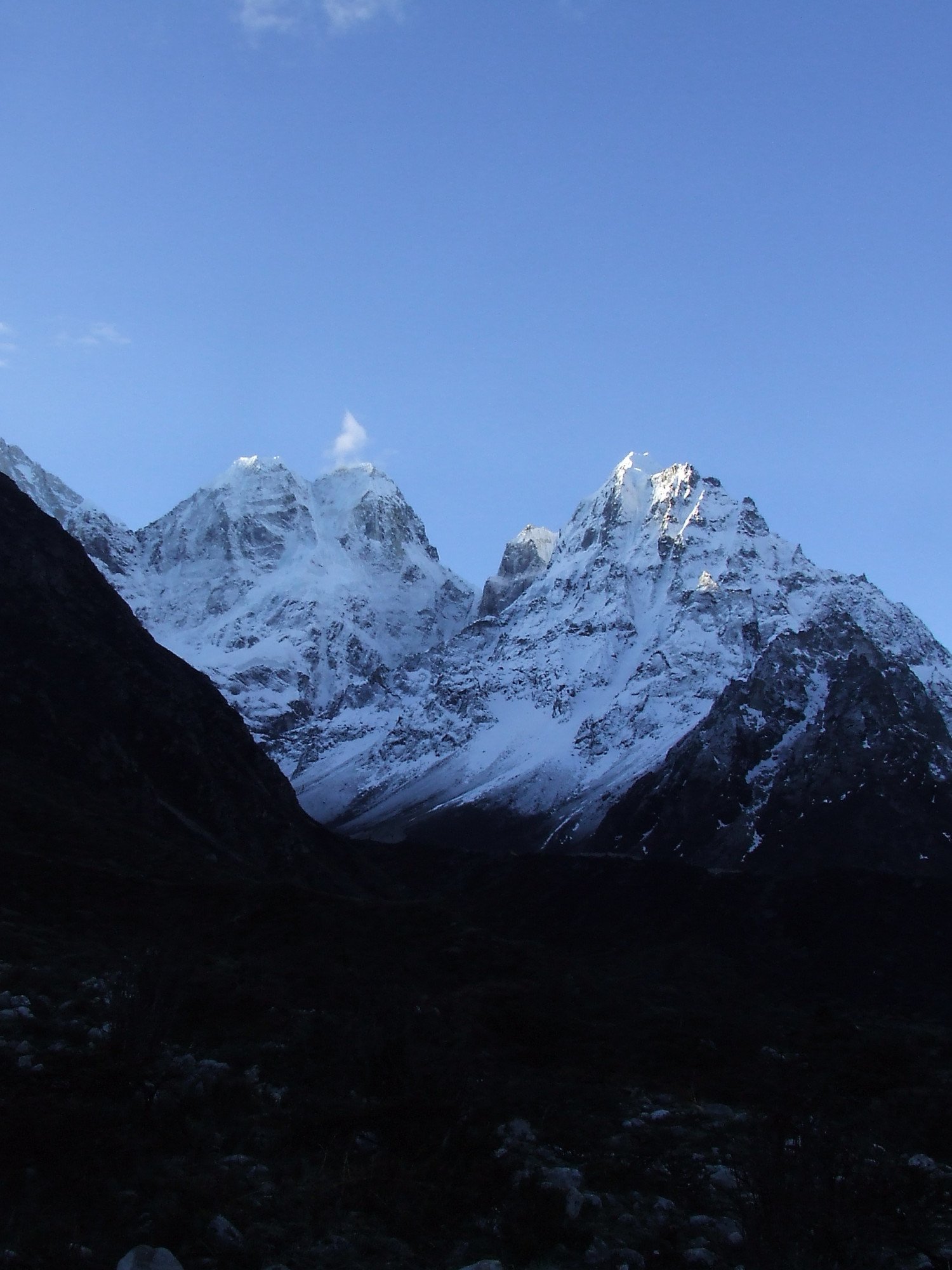
Along the way, trekkers are treated to awe-inspiring views of Jannu (7,711 m / 25,299 ft), Makalu (8,485 m / 27,838 ft), Mt. Everest (8,849 m / 29,032 ft), Kabru (7,412 m / 24,318 ft), and many other Himalayan giants. The trek also crosses three dramatic high-altitude passes Mirgin La (4,480 m / 14,698 ft), Sinelapcha (4,645 m / 15,240 ft), and Sinion La (4,440 m / 14,567 ft) linking the north and south circuits of the mountain. Wildlife enthusiasts have the exciting possibility of spotting rare red pandas and the elusive snow leopard in their natural habitat.
The trip begins and ends in Kathmandu, where trekkers enjoy guided sightseeing of UNESCO World Heritage Sites including Pashupatinath Temple, Boudhanath Stupa, and Kathmandu Durbar Square. Tea house accommodation is used throughout the trekking sections, providing a warm and authentic experience of mountain hospitality. This trek is suited for fit, experienced trekkers who are comfortable with high altitude and multi-week expeditions in a remote environment. It is a journey that rewards those who undertake it with memories of a lifetime.
Difficulty
The Kanchenjunga Base Camp Trek is classified as a difficult trek. Any trekking enthusiast can do this trek but proper high-altitude preparation is essential. While this trek isn’t technical, but it requires some sort of fitness strategies including cardio, leg strength, and altitude simulation. Proper pacing, hydration, and acclimatization are important.
Accommodation
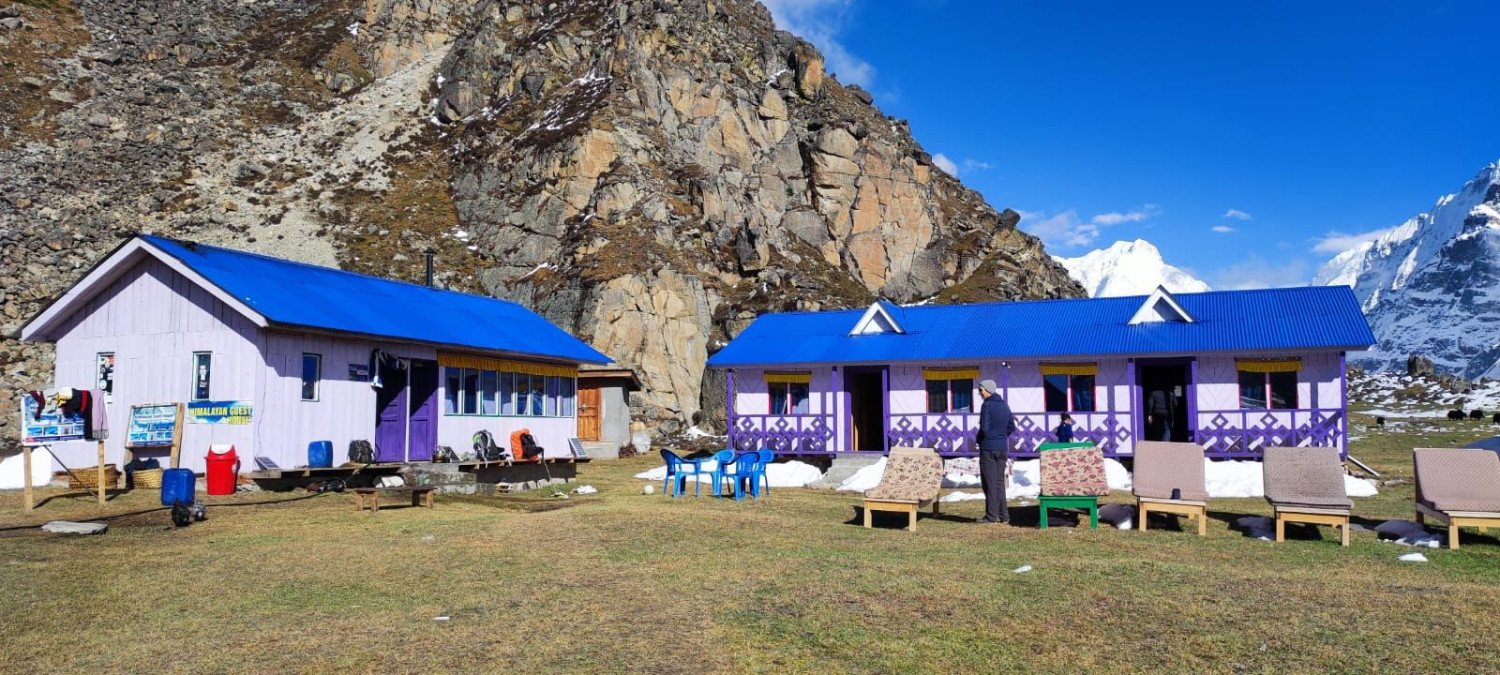
During the Kanchenjunga Base Camp Trek, the accommodation reflects the hospitality and simplicity of the Himalayas. They include basic teahouses, high-altitude lodges, and remote guesthouses with twin-sharing rooms furnished with basic mattresses, and shared bathrooms. Since it’s a remote area the tea houses/lodge have limited availability but since our company has been doing these trips we have good connection with the lodges which can be secured in advance. Amenities may be basic but their warm and welcoming hospitality is exquisite.
Kanchenjunga North & South Basecamp Trek Itinerary
Collapse All - Hotel
Hotel
 Breakfast
 3 - 4 Hours
Hotel
Breakfast
3 - 4 Hours
Hotel
Breakfast
Start your day with a warm breakfast at your hotel before beginning a guided tour of three culturally major UNESCO World Heritage Sites:
Pashupatinath Temple: It is one of the most celebrated Hindu temples in South-Asia. The temple is devoted to Lord Shiva. This place is a UNESCO world cultural heritage site. The Bagmati river flowing beside the temple is religiously and spiritually significant for Hindus where cremation of dead bodies takes place. Pashupatinath temple holds the most prominence during Shivaratri – Shiva’s birthday and thousands of pilgrims gather in the night to celebrate the day.
Boudhanath Stupa: It is one of the biggest Stupas in terms of size and height in Nepal and located in east of Kathmandu in the ancient trade route between India-Nepal and Tibet. The site is peaceful and culturally filled with intermixed influence of Tibetan and Sherpa roots. Stupa built in the trading route between Kathmandu and Tibet has four pairs of eyes directed towards all four directions. It is believed to be influenced by Mahayana Buddhist philosophy.
Swyambhunath (Monkey temple): Swyambhunath, also known as “Monkey Temple,” is a stupa that is sacred to both Buddhist and Hindu devotees. It is situated on a hill at 1406 meters (4613 feet) where one can enjoy a full panoramic view of the Kathmandu Valley. The stupa is believed to be self-originated. The central stupa is encircled with prayer flags and small shrines. The eye of the central stupa signifies the focal point for meditation and reflection. You finish the tour in the afternoon. Later, you can prepare your gear, and buy some gear if you want. Overnight in hotel.
Lodge
B/L/D
After having breakfast at your hotel, your guide will accompany you to the airport for the short scenic flight to Bhadrapur in eastern Nepal. Upon arriving at Bhadrapur airport, you will board a jeep for the long but scenic drive to Taplejung, the gateway town for the Kanchenjunga trek. No hiking will be conducted today as the journey by road is tiring due to the bumpy and winding mountain roads. However, you can enjoy the increasingly lush and serene environment as you approach Taplejung. Spend the evening immersing yourself in local culture, exploring the town, and preparing for the adventure that lies ahead. Overnight at a local lodge in Taplejung
Lodge
B/L/D
After having breakfast in Taplejung, you will take a jeep ride to Sekathum, the village from which your actual trek begins the following morning. The drive takes you along river valleys and through small settlements, giving you an early taste of the rural life of eastern Nepal. Upon arriving in Sekathum, you will have ample time to roam around the local villages, interact with the friendly residents, and take part in their daily activities. Today you will also complete all the required paperwork and permits necessary for the Kanchenjunga Conservation Area trek. Overnight at a local lodge.
4-6 Hours
Lodge
B/L/D
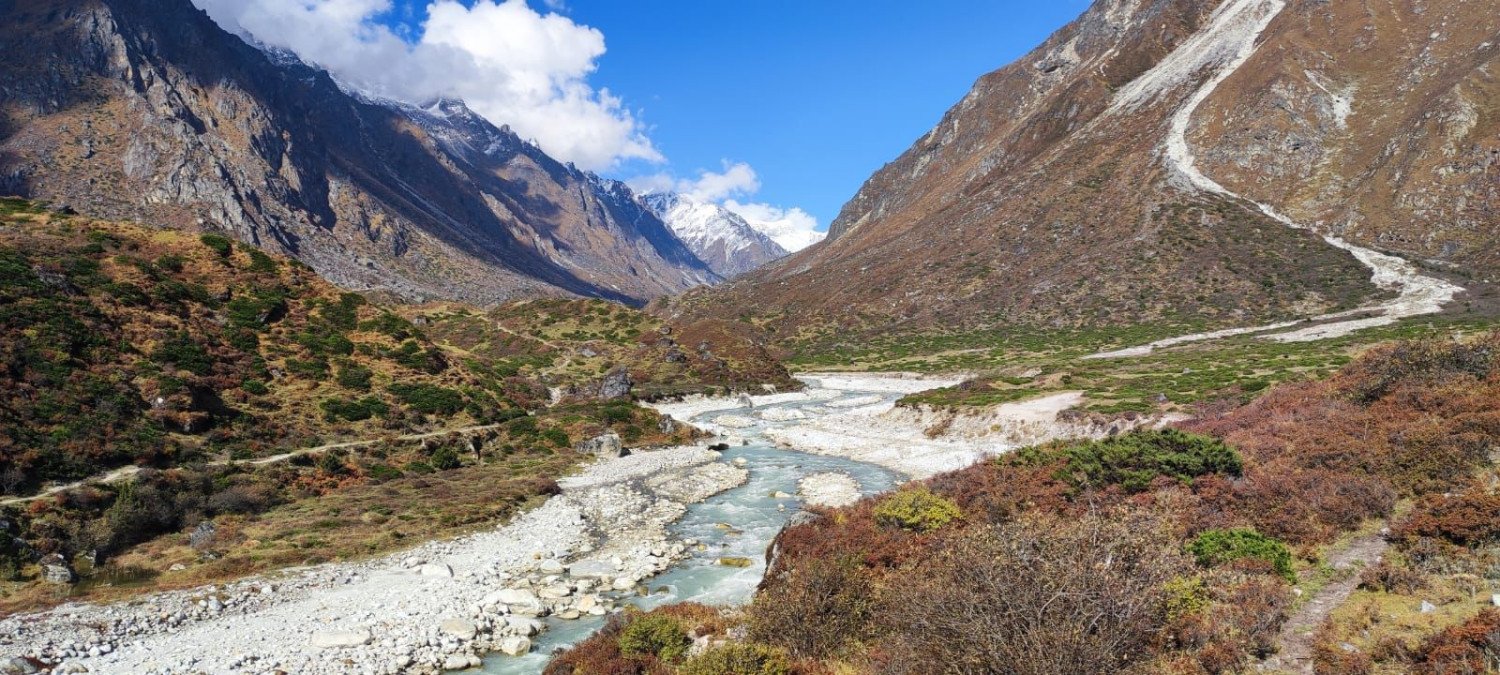
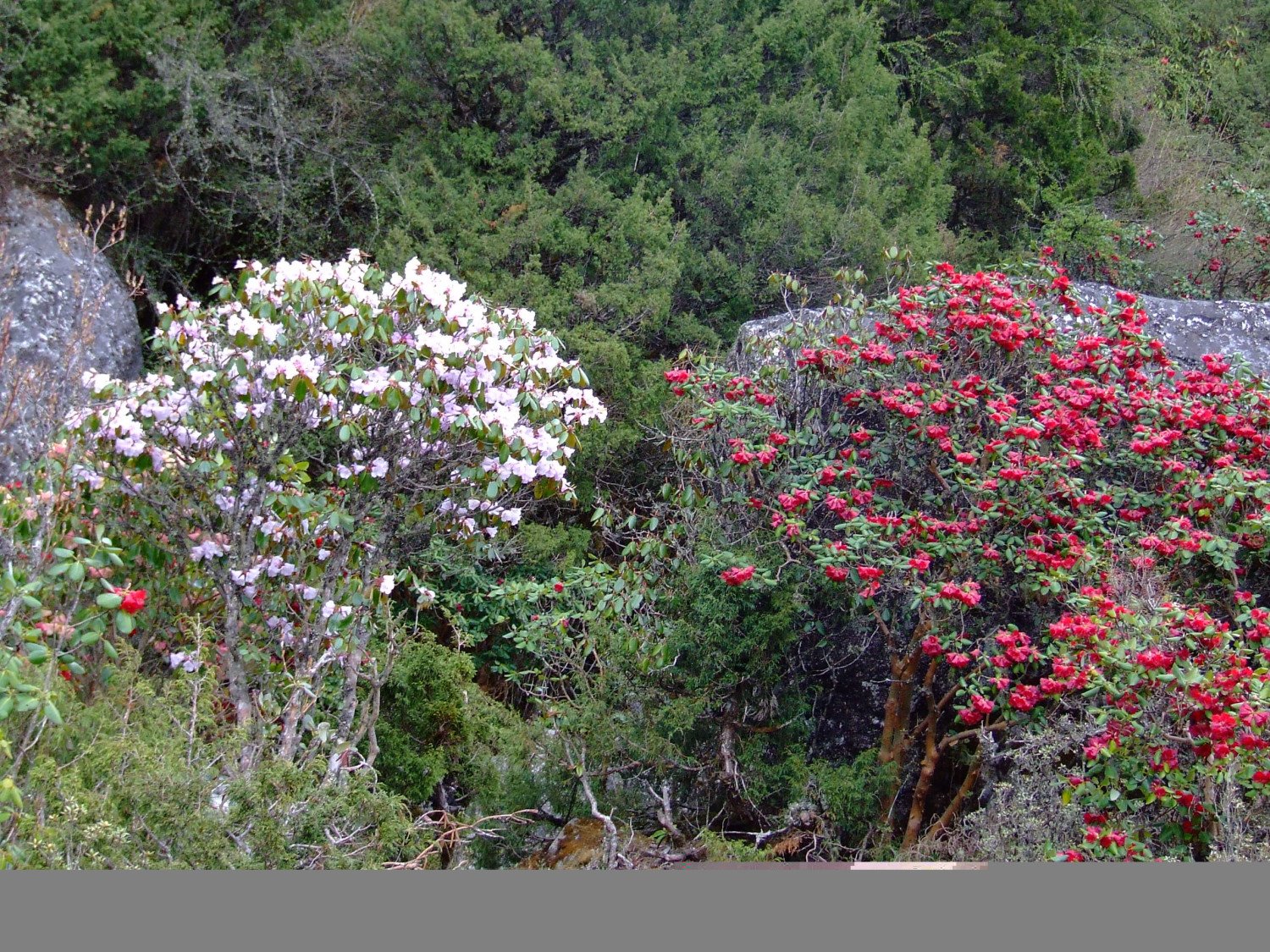
Today marks the beginning of your trekking adventure. The trail from Sekathum winds its way through dense rhododendron forests, crossing several suspension bridges over roaring rivers and passing through small scattered settlements. The route involves constant uphill and downhill sections that will warm your legs for the days ahead. The sound of rushing water and the beauty of the forest make for a very pleasant introduction to the Kanchenjunga region. You will arrive at Amjilosa, a small hamlet nestled amid the hills, in time for a well-deserved rest. Overnight at a local lodge.
5 Hours
Lodge
B/L/D
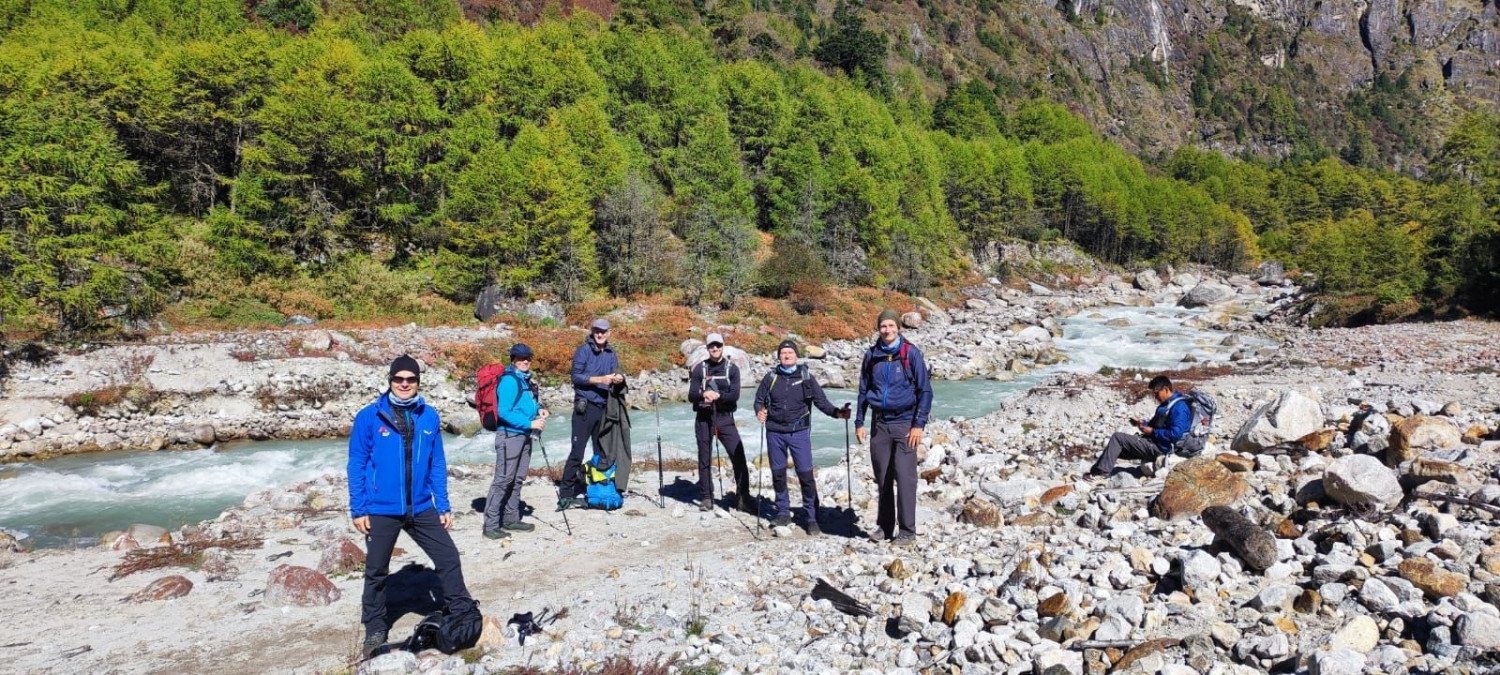
Today's hike follows the bank of the Ghunsa River for much of the journey, making for a scenic and enjoyable walk. You will pass through dense forest where, if you are lucky enough, you may spot the rare and elusive red panda — one of the most beloved and endangered animals of the Himalayan region. As the altitude increases, the landscape gradually opens up and you begin to catch your first exciting glimpses of distant snow-capped peaks glittering on the horizon. The village of Gyabla, with its traditional stone houses and warm lodge hospitality, offers a welcoming end to the day. Overnight at a local lodge.
4-5 Hours
Lodge
B/L/D
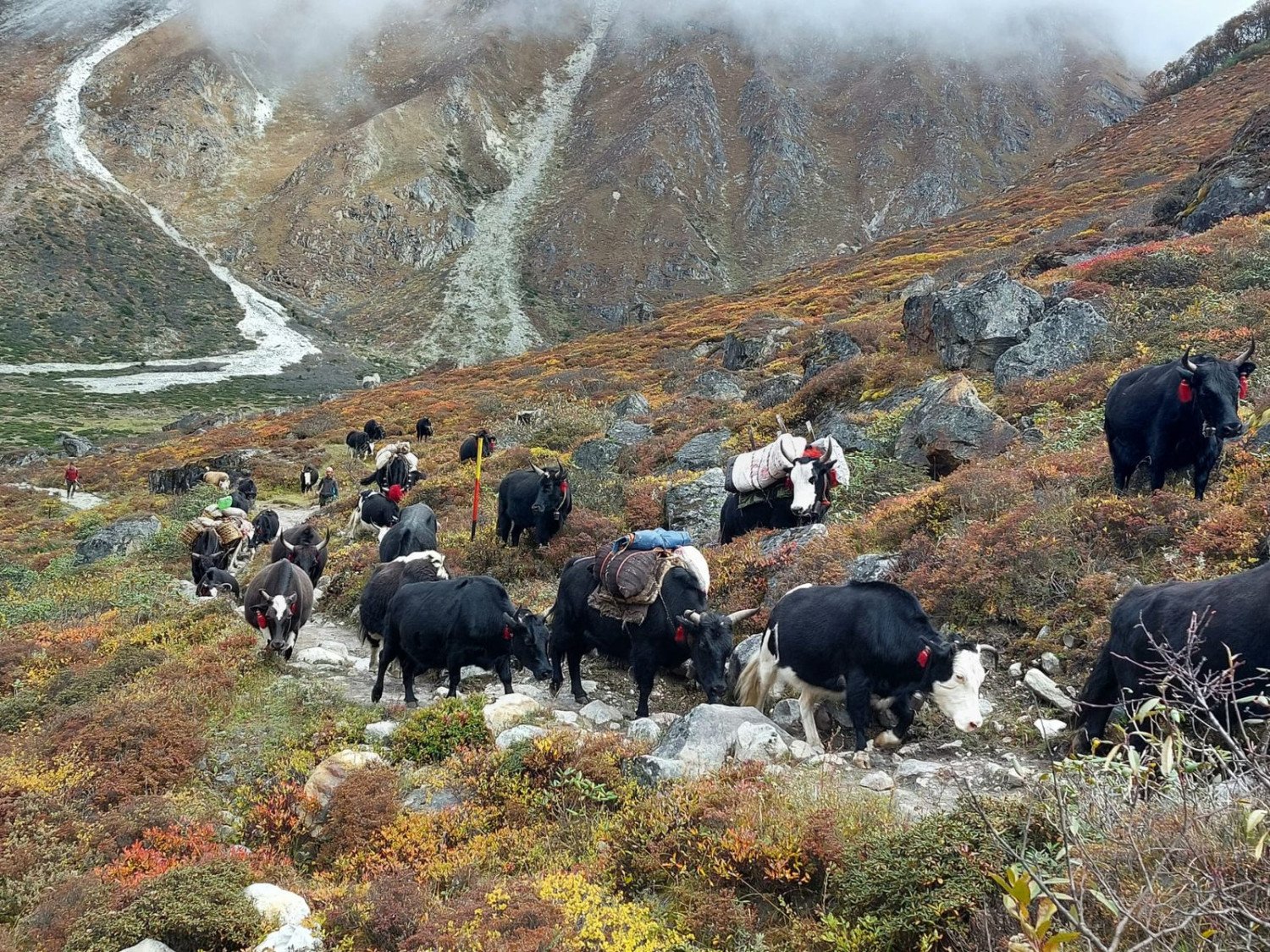
Today's hike takes you through dense mountain forest on a trail that climbs steadily toward Ghunsa, one of the main villages along the northern route. Along the way, you are likely to encounter Himalayan yaks being used to transport goods up and down the valley for both locals and trekkers visiting the area a timeless sight that speaks to the traditional ways of mountain life. Ghunsa itself is a charming Tibetan-influenced Sherpa village with a small monastery, mani walls, and prayer flags fluttering in the mountain breeze. Overnight at a local lodge in Ghunsa.
1-2 Hours
Lodge
B/L/D
Today is a rest day, there is an acclimatization hike to sacred Napchu Pokhari (4,952 m). This side trek rewards you with serene alpine lakes nestled between the glaciers and jagged slopes of Kanchenjunga.
Start from Ghunsa early in the morning and climb through lush trails. At Napchu Pokhari, wander around a holy lake circled by fluttering prayer flags which is often tranquil during trekking seasons. You will reach back to Ghunsa in the late afternoon where you will be served with Tibetan bread and tea. This meal paired with the amazing Himalayan views lets you reflect in peace. This day helps you strengthen your body and spirit simultaneously. It helps in acclimatizing to bigger heights in the mountains.Overnight at Lodge.
4-6 Hours
Lodge
B/L/D
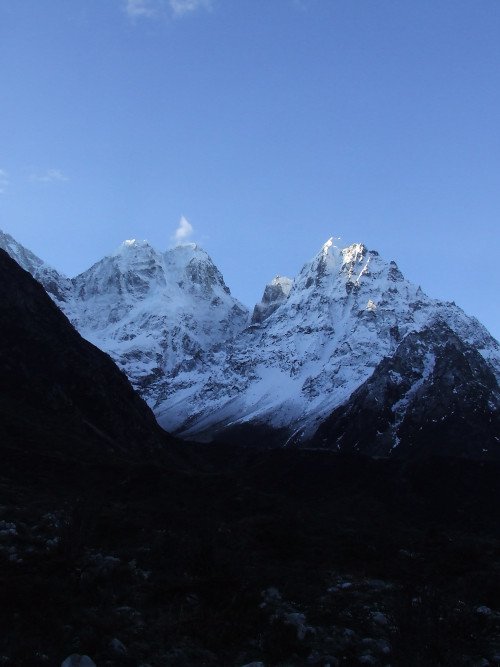
Today's hike rewards you with some of the most dramatic mountain scenery of the entire trek. As you pass through the high meadows of Rambuk Kharka and Lyakep, the trail opens up to reveal a stunning panorama of towering Himalayan giants, including the magnificent Jannu (7,711 m / 25,299 ft) also known as Kumbhakarna along with Pholesobi Thongje (6,652 m / 21,824 ft), Temachungi (6,305 m / 20,686 ft), and other formidable peaks. The scale of the mountains at this altitude is truly humbling. Khambachen is a small, high-altitude settlement offering basic but comfortable accommodation. Overnight at a local lodge.
4-6 Hours
Lodge
B/L/D
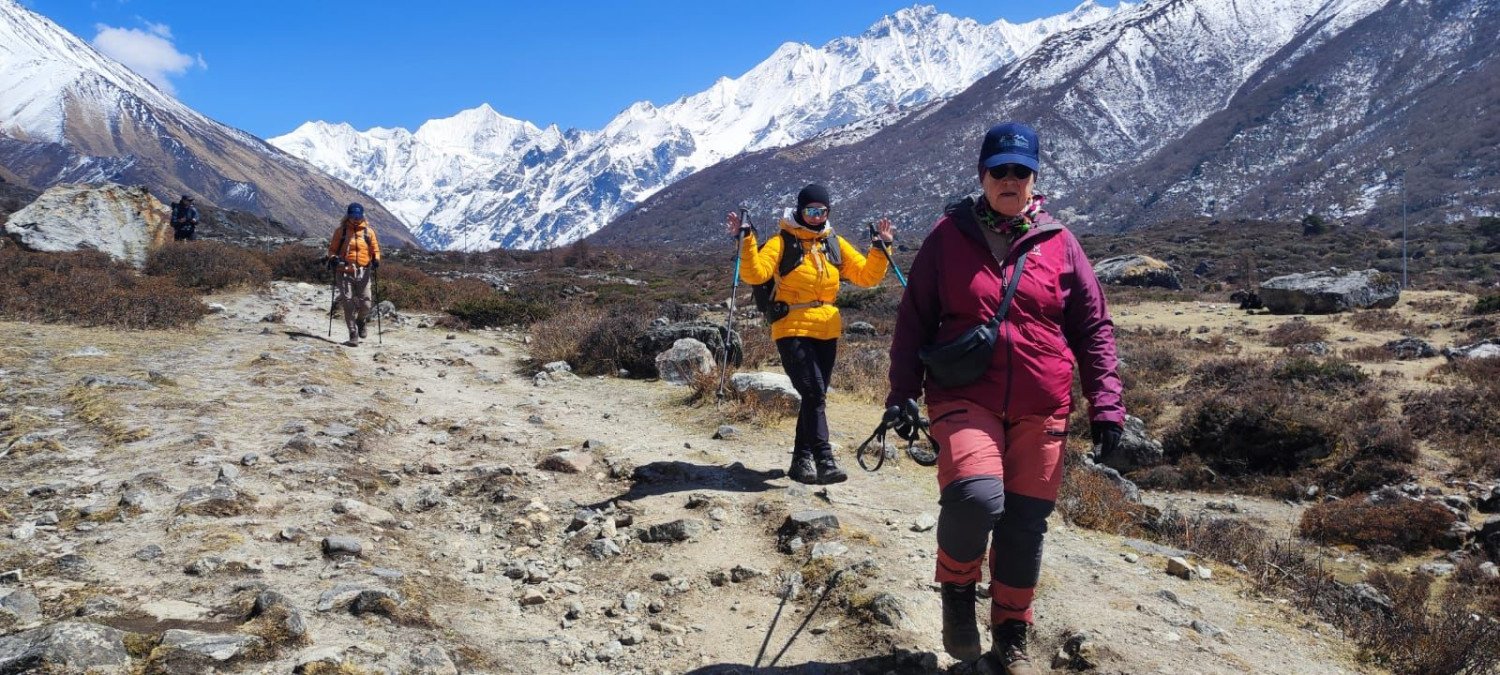
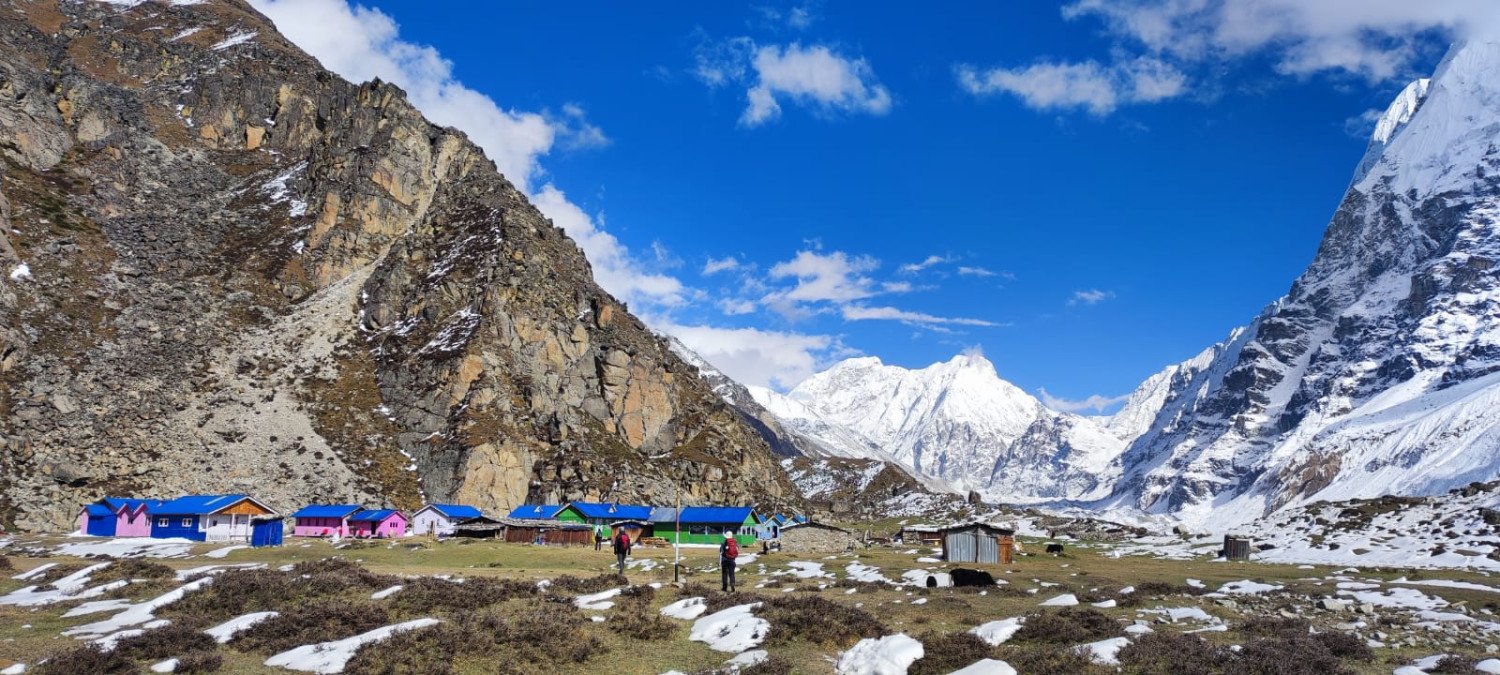
This day gets you closer to epic alpine landscapes. Leaving from Khambachen, you will be crossing icy glacier streams and following a moraine trail that leads into a large, open glacial valley. As the landscape turns into a rock-strewn desert, you will be surrounded by the Kanchenjunga North, South, and Yalung Peak in a snow-peaked haven.
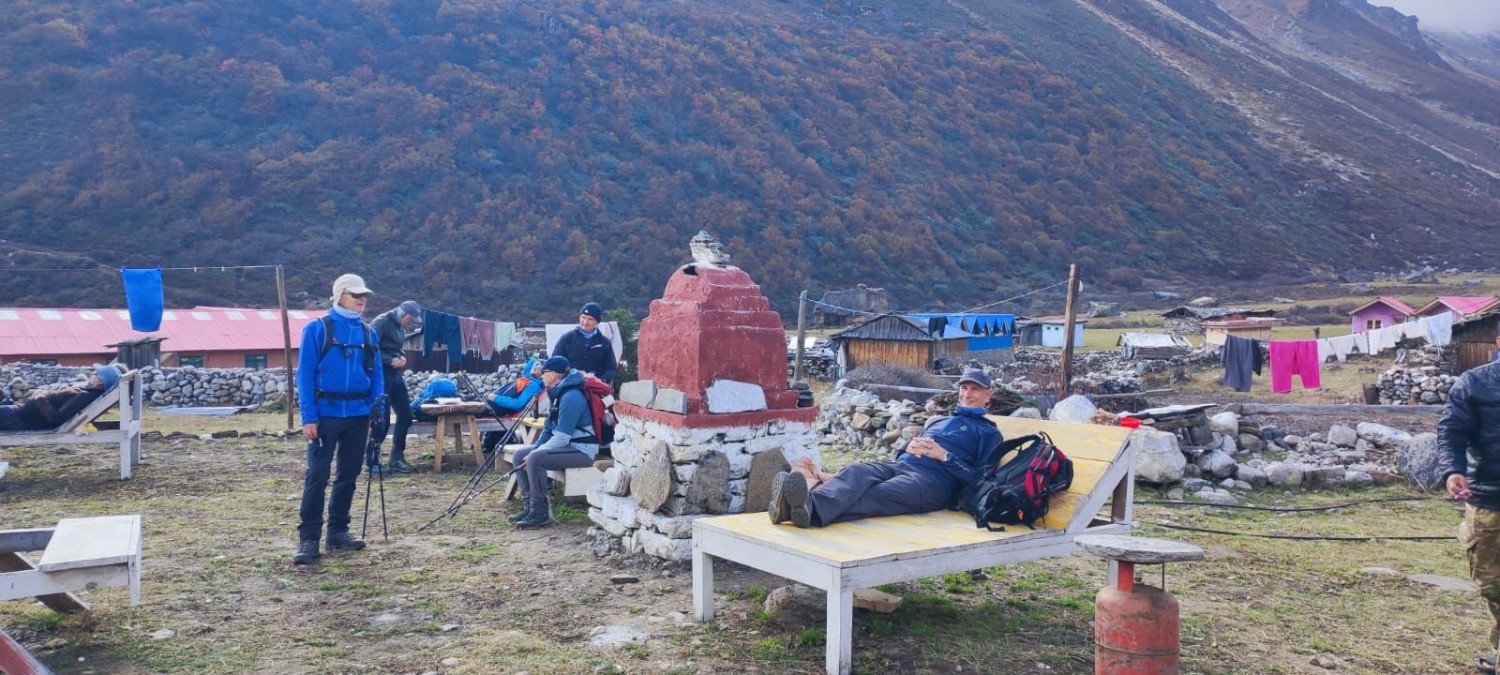
Upon reaching Lhonak, a high-altitude settlement composed of stone huts and teahouses, you will be entering a realm above 4,700m. This height is marked by stillness and thin air. A lodge will be waiting where you can share a room warmed with yak dung fires in the evening.
After the sunset, snow-capped peaks will be glowing pink against a multicolored sky; this is the breathtaking moment to be seen in the Himalayas before reaching the base camp.
6-8 Hrs
Lodge
B/L/D
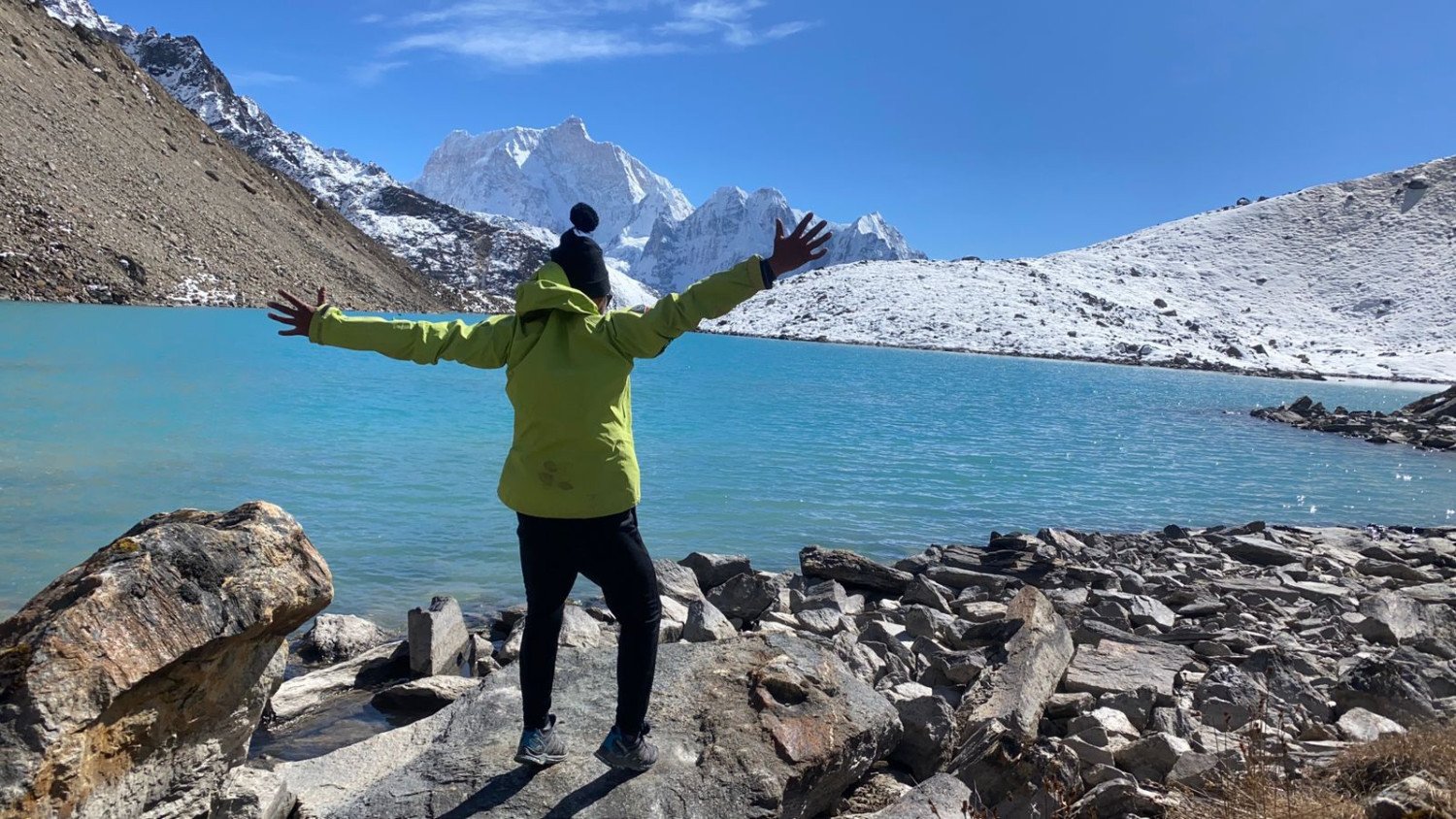
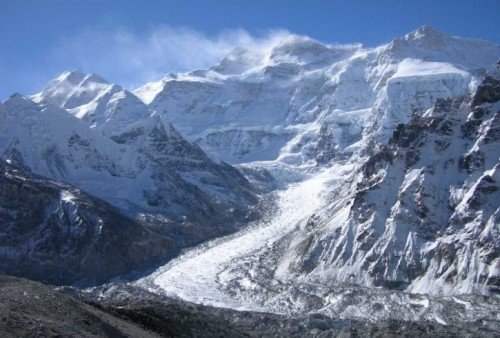
Today is the crowning highlight of the northern circuit. You ascend to Pangpema, the North Basecamp of Kanchenjunga, at 5,143 m (16,873 ft) — the highest point of the entire trek. Standing at the foot of the world's third highest mountain, with the full Kanchenjunga massif towering above you and the immense glacier spreading out below, is an experience of overwhelming grandeur and personal achievement. The awe-inspiring views make every challenging step of the past days feel completely worthwhile and fill you with a deep sense of self-accomplishment. After spending some precious time in the lap of the Himalayas, you descend back to Lhonak. Overnight at a local lodge.
6-8 Hours
Lodge
B/L/D
Today's long descent takes you back down the valley to the familiar surroundings of Ghunsa. The walk is primarily downhill and, while your legs may feel the strain of the constant descent, the spectacular mountain views and the beauty of the surrounding rhododendron forests make the journey thoroughly enjoyable. The contrast between the stark high-altitude landscape above and the lush forest below is remarkable. It is also a day to reflect on the extraordinary accomplishment of reaching Kanchenjunga North Basecamp. Overnight at a local lodge in Ghunsa.
5 Hours
Lodge
B/L/D
Today's route takes you away from the northern valley and begins the crossing toward the southern circuit of the mountain. The trail climbs through a dense forest that is prime snow leopard habitat — if fortune smiles on you, a glimpse of this magnificent and supremely rare big cat is possible, making this one of the most thrilling sections of the entire trek. As you gain altitude, the trees thin and give way to open alpine terrain, and the panoramic views from the Selele High Camp are a joy to behold. The camp sits amid dramatic mountain scenery and offers a memorable overnight experience at high altitude. Overnight at a tea house in Selele Basecamp.
6 Hours
Lodge
B/L/D
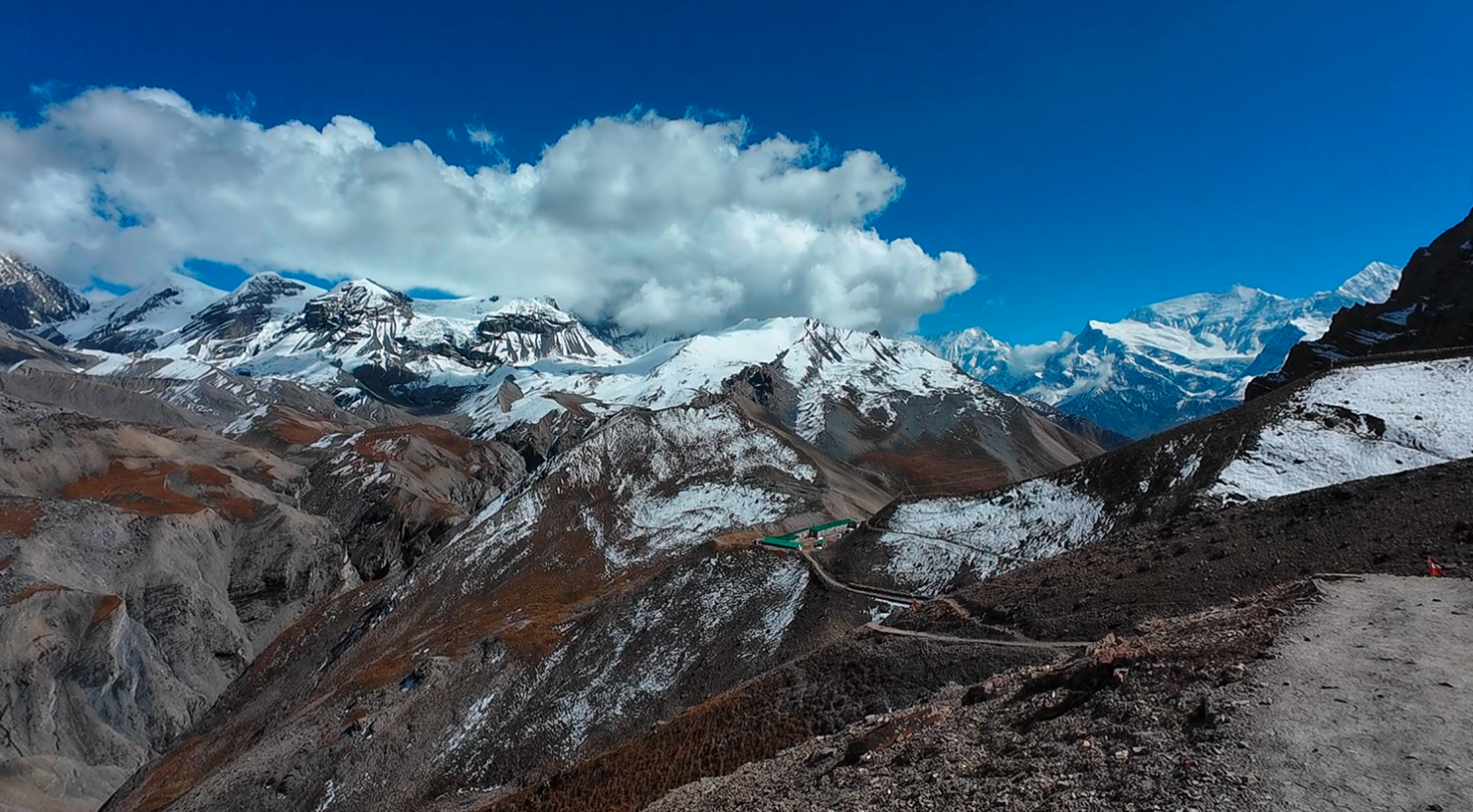
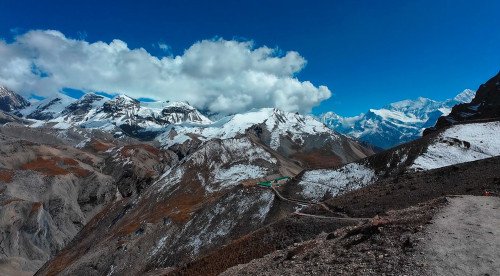
Today is one of the most rewarding days of the trek as you cross three high-altitude mountain passes — Mirgin La (4,480 m / 14,698 ft), Sinelapcha (4,645 m / 15,240 ft), and Sinion La (4,440 m / 14,567 ft) — each offering breathtaking panoramic views. From the ridges, you are treated to an extraordinary sight: Mt. Everest (8,849 m / 29,032 ft), the tallest peak on earth, is visible alongside Mt. Makalu (8,485 m / 27,838 ft), Chamlang, and the majestic Kanchenjunga itself. After the exhilarating high-altitude traverse, you descend to the peaceful settlement of Tseram for a well-deserved rest. Overnight at a local lodge in Tseram.
8-9 Hours
Lodge
B/L/D
The hike today begins with a walk alongside the spectacular Yalung Glacier — one of the largest glaciers in the Kanchenjunga region and the best vantage point from which to witness the massive southern face of the mountain up close. As you make your way to Ramche, the untouched wilderness of the region and peaks including Mt. Rathong (6,682 m / 21,923 ft) and Mt. Kabru (7,412 m / 24,318 ft) come dramatically into view. After taking lunch at Ramche, you make the final ascent to the Oktang viewpoint — the Kanchenjunga South Basecamp — where the towering summit of Mt. Kanchenjunga (8,586 m / 28,169 ft) appears in its full glory, providing the best possible views of this Himalayan colossus. After savoring the moment, you return to Tseram for the night. Overnight at a local lodge in Tseram.
6 Hours
Lodge
B/L/D
Leaving behind the high alpine world of the Kanchenjunga South circuit, today's walk descends steadily and consistently through beautiful rhododendron forests and alongside the cascading Sinbuwa River. The trail is well-defined and the lush vegetation of the lower elevations provides a wonderful contrast to the stark, glaciated terrain of the past few days. The descent is long but the scenery is constantly changing and delightful. You arrive at the small, tranquil settlement of Tortong in time for a restful evening. Overnight at a local lodge in Tortong.
5-6 Hours
Lodge
B/L/D
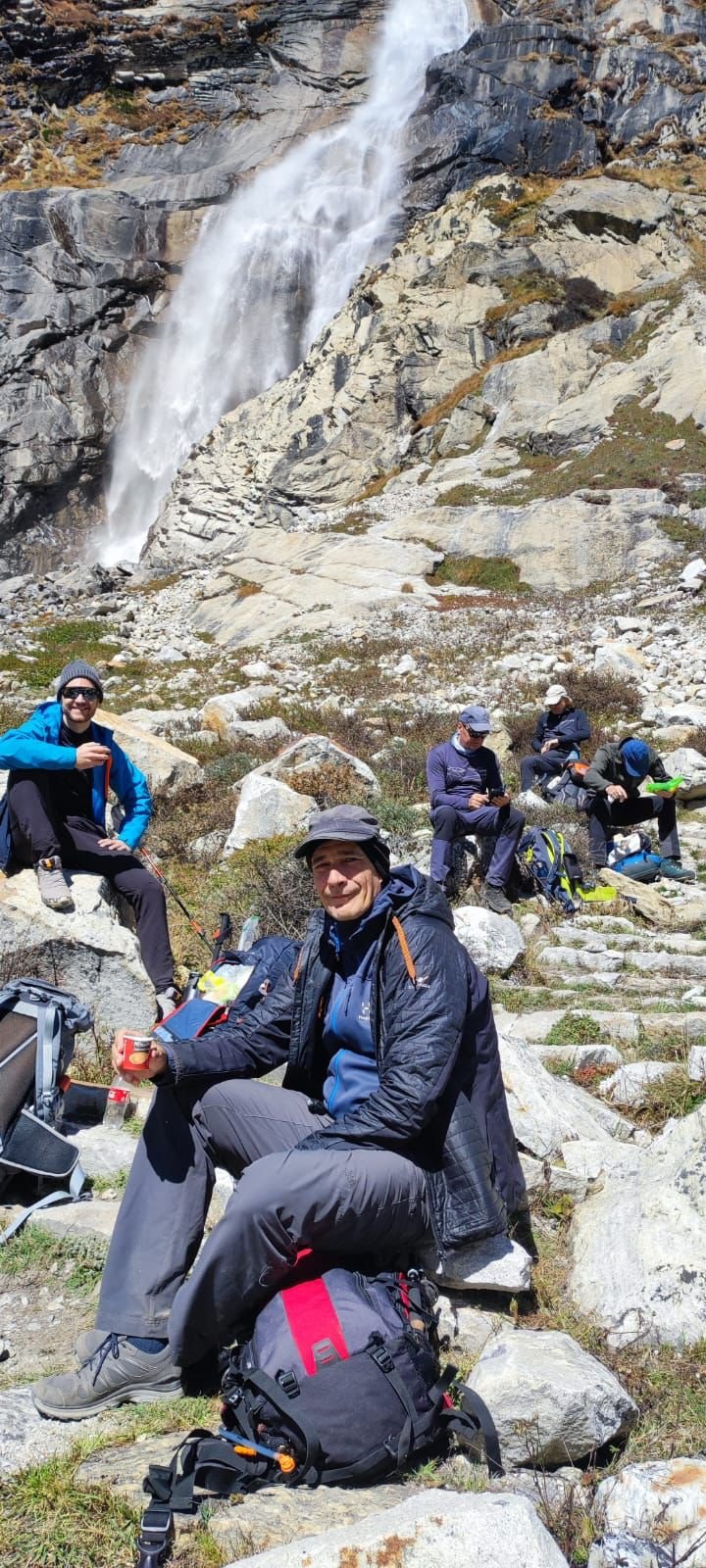
Today the trail continues its descent through spectacular scenery toward the picturesque settlement of Naya Jhareni. The path winds through terraced fields, dense forest, and small remote villages, offering glimpses of the daily life of the communities of this seldom-visited valley. The highlight of arriving in Naya Jhareni is the stunning waterfall situated near the village, which creates a beautiful and serene atmosphere that makes your overnight stay here truly special. It is a perfect natural campsite with impressive scenery all around. Overnight at a local lodge.
5-6 Hours
Lodge
B/L/D
The trail today begins with a gradual ascent through agricultural fields and dense forest, passing through small, welcoming villages where locals go about their daily routines largely undisturbed by the outside world. The landscape gradually shifts as you lose altitude, becoming greener and warmer with every passing hour. Later in the day, you descend to reach the settlement of Yanfudin (also known as Yamphudim), a village in the lower hills of eastern Nepal that serves as the final stop before returning to the road. The warmth of the lower altitude and the hospitality of the local lodge make for a very comfortable final trekking night. Overnight at a local lodge.
Hotel
B/L/D
Today you will have an early breakfast and prepare for a long jeep ride to Illam, one of Nepal's most famous hill towns, renowned for its sprawling tea gardens and pleasant climate. The road is bumpy and rough for approximately the first half of the journey until you reach Ganesh Chowk, after which the road surface becomes significantly more comfortable. Reaching Illam by evening, you will have the opportunity to explore the charming local town, stroll through the famous Kanyam tea gardens if time permits, and relax after the demanding weeks of trekking. Overnight at a hotel in Illam.
Hotel
B/L/D
After having breakfast at your hotel in Illam, you will drive to Bhadrapur airport for your short but scenic flight back to Kathmandu. Reaching Kathmandu, you can spend the rest of the day relaxing at your hotel, reflecting on what has been an extraordinary and life-changing adventure in the Himalayas. After weeks of trekking through some of the most remote and spectacular mountain terrain on earth, the comfort of a warm hotel room and the buzz of Kathmandu city will feel like a very welcome return to civilization. Overnight at a hotel in Kathmandu.
3 - 4 Hours
Hotel
B/L/D
Today we take a guided walking tour of the historic heart of Kathmandu to experience the city's remarkable historical, cultural, and spiritual riches. We explore the local market of Ason, the glass bead market at Indrachowk, the oldest supermarket at New Road, the fascinating neighborhood of Kilagal, and the Hidden Stupa. The tour then leads us to the iconic Kathmandu Durbar Square, a UNESCO World Heritage Site, where the most unique experience is a visit to the temple of the living goddess Kumari. The Durbar Square walking tour is a perfect mixture of culture, history, art, architecture, and the traditional values of the Kathmandu Valley. When sightseeing is complete, you can return to the hotel on foot, soaking in the last impressions of this extraordinary city. Overnight at the hotel.
It is time to say goodbye to Nepal and return home carrying with you a treasure trove of memories, friendships, and achievements from this remarkable expedition. As per your flight schedule, our representative will transfer you to Tribhuvan International Airport approximately three hours prior to your departure. We hope to see you again soon on your next adventure in the Himalayas!
Kanchenjunga North & South Basecamp Trek Cost Include/Exclude
What are Included In My Package ?
- Airport pick-up and drop-off (domestic and international) with our friendly representative
- Accommodation at a 3-star standard hotel with breakfast in Kathmandu (Twin- sharing basis)
- All sightseeing activities in Kathmandu with a English speaking licensed tour guide, private transportation, and monument entry fees
- All meals (Breakfast, Lunch, Dinner) during the trek
- Tea-house accommodation during the trek
- A professional, government licensed English speaking trekking guide
- An Assistant Guide for more than 5 trekkers
- A porter/sherpa to carry the bags( one per two clients)
- All required permits and national park fees
- Air ticket: Kathmandu–Bhadrapur–Kathmandu
- Private transportation as per requirements (Bhadrapur–Taplejung–Sekathum, Yamfudin–Illam–Bhadrapur)
- All food, drinks, Lodge, salary, Insurance, medical equipment, and all transport for Trekking Staff
- Seasonal fruits
- Down Jacket, a sleeping bag, a fleece liner, and a duffel bag.
- First aid medicine box with oximeter
- Farewell dinner for the clients
- Government taxes and office service charge
What are excluded from the package ?
- Any kinds of personal expenses (cold or hard drinks, cigarettes, and others)
- International Airfare
- Lunch and dinner in Kathmandu
- Travel insurance
- Tips for guide and porter
- Any unforeseen expenses
Kanchenjunga North & South Basecamp Trek Altitude Profile
Traveller Useful Information
Equipment Checklist
This list outlines the required things to bring during the trekking tours. There are various selections and brands that you can choose as per your interest. All required trekking equipment can be bought or even hired easily at a reasonable price in Kathmandu.
General
- Down Sleeping bag (we can provide one if you need it but is to be returned after the trek)
- Duffel bag (we can provide one if you need)
- Down Jacket (we can provide if you need one but is to be returned after the trek)
- Fleece Liner (we can provide if you need one but is to be returned after the trek)
- Trekking Poles (Optional): Some trekkers skip them as you often carry them more than you use , but they can be very helpful, especially on downhill sections or if you have weak knees or ankles.
Upper Body - Head / Ears / Eyes
- Shade hat or baseball cap - some people drape a bandana down the back of their head and then put a baseball cap on to hold it is place. This can be a flexible alternative while keeping the sun off your ears and neck.
- Warm wool or synthetic hat that cover your ears.
- Glacier/Sun glasses
- Headlamp
- Some people like ear-muffs; These are optional; a good hat, balaclava, and hooded jacket should really be sufficient, but this is a personal choice for some people (optional).
- A neck warmer is another piece of gear for extra warmth
Hand
- A pair of liner gloves, thin wool or synthetic, useful alone on mild days or as a layer inside other gloves / mitts for additional warmth.
- One pair warm gloves
- Instant hand warmers are always nice in a pinch, but really shouldn't be necessary on the trek. Bringing appropriate hand protection as recommended above, should be sufficient (optional).
Core Body
- T-shirts
- Long shirts
- Light and expedition weight thermal tops.
- Fleece jacket or pullover.
- Windproof / Waterproof Jacket
- 2 women sports bras, Synthetic, no cotton!
Lower Body – Legs
- Nylon hiking shorts - Quick drying type, not cotton!
- Underwear, stay away from cotton.
- Lightweight long underwear - capilene or other synthetic.
- Soft shell pants - synthetic, full zip from top and bottom preferable.
- Trekking pants, preferably that zip on/off at the knees so they double as shorts.
- Hard shell pants. Waterproof / breathable, Gore-Tex or equivalent is best. Should zip from the top and bottom - this makes it easier to put on over boots without getting undressed should the weather change once you are underway for the day.
- Warm Trousers to put on at the evening and morning
Feet
- Two-four pairs of liner socks, synthetic or capilene.
- Two-three pair’s heavy weight socks to be worn over liner socks.
- One pair light weight socks, a good option for the lower / warmer parts of the trail.
- Medium weight water proof hiking/trekking boots. Ensure a good fit with layered socks and you have worn them before to get used to it (otherwise you will get lots of blister).
- Running shoes or Sneakers. Good for around the camp/lodges and in Kathmandu.
- Sandals (Optional).
Medicines and First Aid Kits
(Please note our guide will also bring the company first aid kit bag during the trek for you). However if you have any preferred medicines from home then you can bring it
- Pain relief or fever medicine (e.g., Paracetamol)
- Ibuprofen for muscle aches or pain
- Burn cream
- Anti-diarrhea medication (e.g., Imodium or Pepto-Bismol)
- Diamox (Acetazolamide) – consult before use
- Broad-spectrum antibiotics (consult your doctor)
- Blister care items: moleskin, band-aids, waterproof tape, and antiseptic ointment
Miscellaneous
- Passport and extra passport photos (4 copies).
- Airline ticket (Please make a copy and leave on at our office in KTM just in case if you need to change the date of your trip).
- Durable wallet / pouch for travel documents, money & passport.
- Lip balm. At least SPF 20, 2 sticks.
- Sunscreen. SPF 40 is recommended and should be relatively new
- Pocket knife or small Swiss Army type.
- Water purification Iodine tablets or Polar-pure crystals.
- Toiletry kit. Be sure to include toilet paper stored in a plastic bag, hand wipes, and liquid hand sanitizer, towel, soap, etc.
- A bandana
Optional
Although these are listed as optional, these can be of great assistance to people who may think of themselves and generally clumsy or with bad knees, ankles, etc., especially when going downhill.
- Favorite snack foods
- Paperback books, cards, etc. Paperback books, cards, a Journal (If you want to reflect on your trip on a daily basis) remember to keep these items lightweight.
- Binoculars
- One lightweight point & shoot camera or 1 large SLR. Digital cameras are ok, but you must keep the batteries warm when not in use.
- Hydration bladder with drinking tube and tube insulator
- A pee bottle for men and pee funnel for woman, some swear by them to avoid that chilly late night trip
- One small stainless steel thermos
All garments should be kept dry using waterproof stuff, sacks or large puncture resistant plastic bags.






.webp)