- Why Upper Mustang Stays Dry: The Rain Shadow Explained
- 5 Honest Reasons to Trek Upper Mustang in Monsoon
- 1. You own the trails
- 2. Sharpest Air and Clearest Cliff views
- 3. Wildflowers and Green Valley Floors
- 4. The Yartung Festival in August
- 5. Lower Permit Costs and Better Teahouse Value
- Real Challenges of the Upper Mustang Trek in Monsoon
- What You Need Before You Trek Upper Mustang in Monsoon
- Conclusion
- Frequently Asked Questions
- 1. Is Upper Mustang dry during the monsoon season?
- 2. Can you visit Upper Mustang in July and still see the mountains clearly?
- 3. Are there any festivals in Upper Mustang during monsoon that are worth planning around?
If you have ever tried to book a trek to the Himalayas of Nepal in June, July, or August, you may have received the standard advice. Most travel agencies, tour guides and experts tell you to wait for autumn. Almost all the blogs state the monsoon months as the wrong time to go trekking in Nepal. For 95 percent of Nepal's trekking routes, that advice is correct. The Everest Base Camp trail turns slippery and leech-ridden and Annapurna Circuit is cloudy and the lower valleys are flooded. But Upper Mustang weather is completely different from the rest of Nepal. The lack of the monsoon in the region makes it one of the most compelling and underused travel windows in entire Nepal
For travelers like you, who want to experience the hidden secrets of the forbidden kingdom Nepal has preserved inside its rain shadow, choosing the monsoon is the right decision. The weather conditions mean you get the entire region to yourself. You’ll walk the same ancient salt trading route through the Kali Gandaki valley that the Loba people have used for centuries. You arrive at an ancient Lo Manthang walled city with empty streets, open monasteries, and locals who are free for a chat. The sky above the red cliffs is bluer than any photograph you have seen during this season. The exact version of Upper Mustang is an opportunity most people never experience because they assume monsoon means rain in entire Nepal.
Book Your Upper Mustang Trek with Mountain Delights
Why Upper Mustang Stays Dry: The Rain Shadow Explained
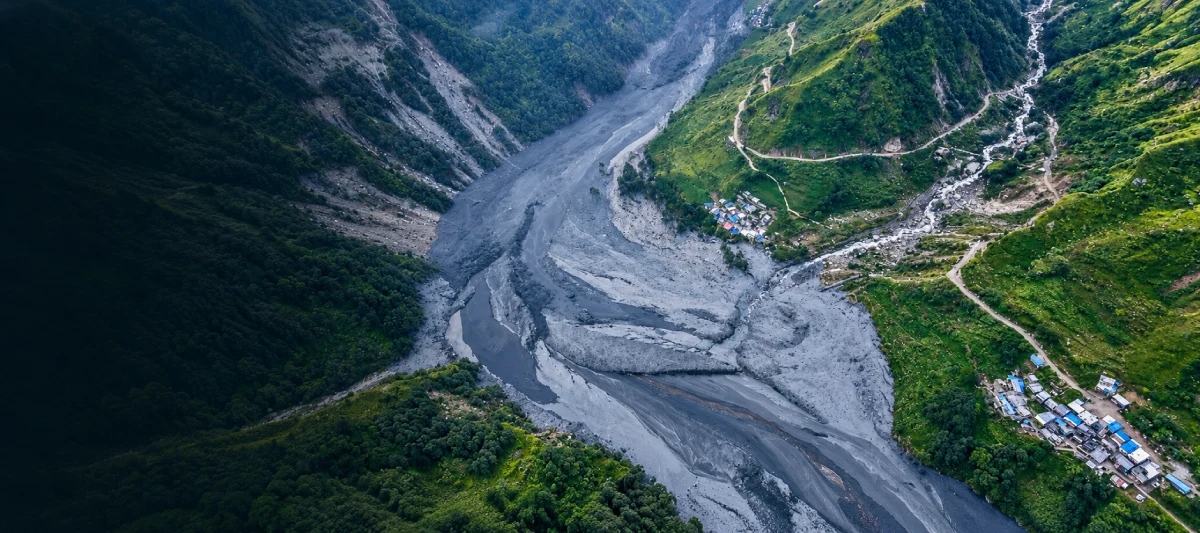
The science behind the rain shadow created only in Nepal’s Upper Mustang is simple. The Annapurna range and Dhaulagiri, rising to 8,091 and 8,167 metres respectively, form an enormous natural wall along the southern edge of the Mustang valley. When the moisture-heavy monsoon air blows north from the Bay of Bengal each year in June, it hits this wall and is forced upward. The air cools, condenses, and its drops come down as rainfall on the southern Himalayan slopes. By the time any air crosses to the northern side, it has lost almost all its moisture. Upper Mustang, which lies behind these ranges, receives barely a fraction of what falls on Pokhara or the Annapurna foothills below.
This is not a seasonal occurrence and is a permanent geographic condition which makes trekking Upper Mustang in monsoon possible but reliably comfortable. The lower approach roads between Pokhara and Jomsom can see rain and occasional disruption, but the moment your flight touches down at Jomsom and you walk north from the Kagbeni, it instantly turns arid. The table below shows the conditions of rain during monsoon season in Mustang region.
Table: Upper Mustang Monsoon Conditions Month by Month
|
Month |
Temperature (Day) |
Temperature (Night) |
Rainfall in Upper Mustang |
Trail Condition |
|---|---|---|---|---|
|
June |
15°C to 22°C |
5°C to 10°C |
Very low. Occasional light drizzle in Kagbeni area |
Dry and firm north of Kagbeni |
|
July |
18°C to 25°C |
8°C to 12°C |
Minimal. Dry above Kagbeni. Some dust in afternoon winds |
Excellent north of Kagbeni |
|
August |
18°C to 25°C |
8°C to 12°C |
Minimal. Driest month in many years. Wildflowers in bloom |
Excellent during Yartung Festival in August |
5 Honest Reasons to Trek Upper Mustang in Monsoon
1. You own the trails
The Upper Mustang trek in monsoon is one of the quietest experiences available in Nepal's entire trekking calendar. April and October bring the highest volumes of trekkers to the restricted area. June, July, and August bring barely a fraction of that number. For the traveler like you who wants to walk through Tsarang village, climb to the sky caves Mustang hides in its cliffs, and sit in the Thubchen Gompa courtyard with zero crowds, it’s the perfect season. The entire experience slows to a pace which peak trekking season cannot offer.
2. Sharpest Air and Clearest Cliff views
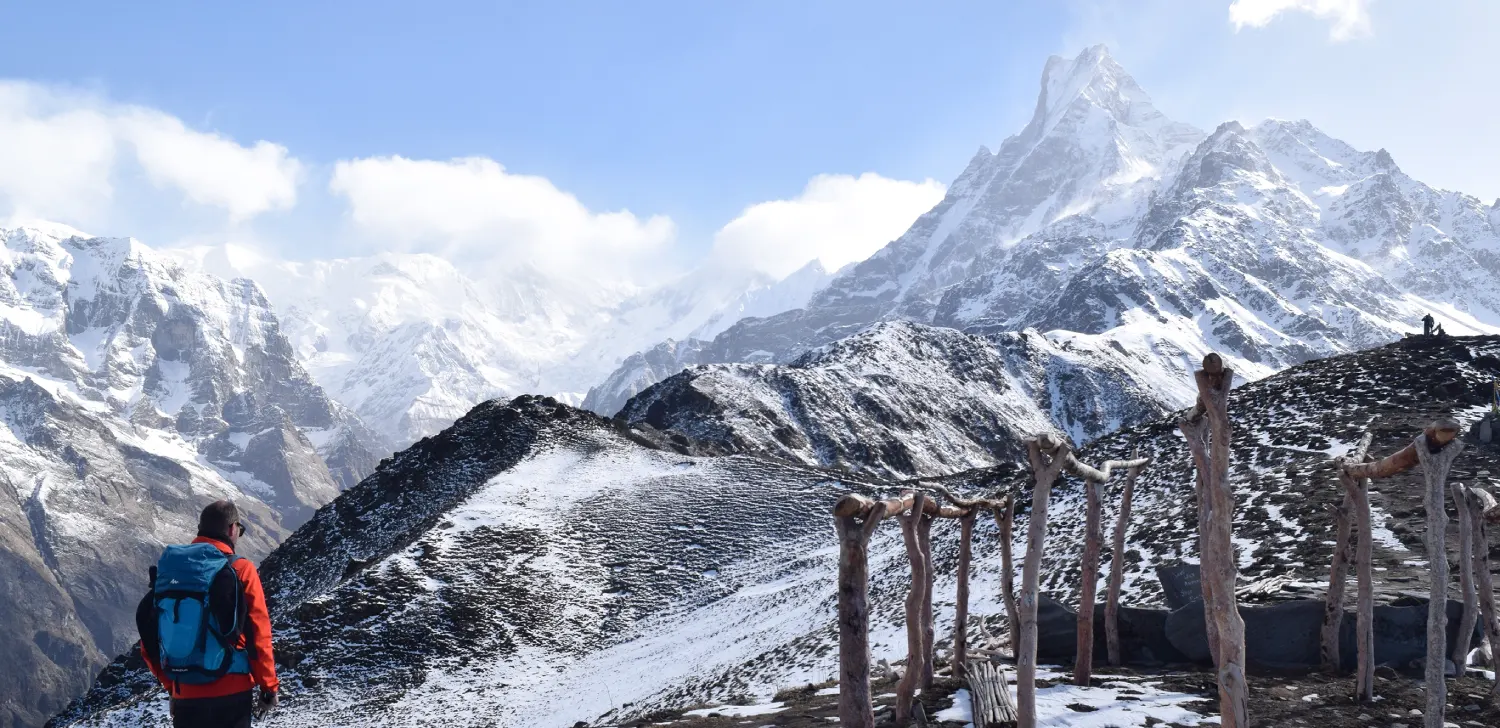
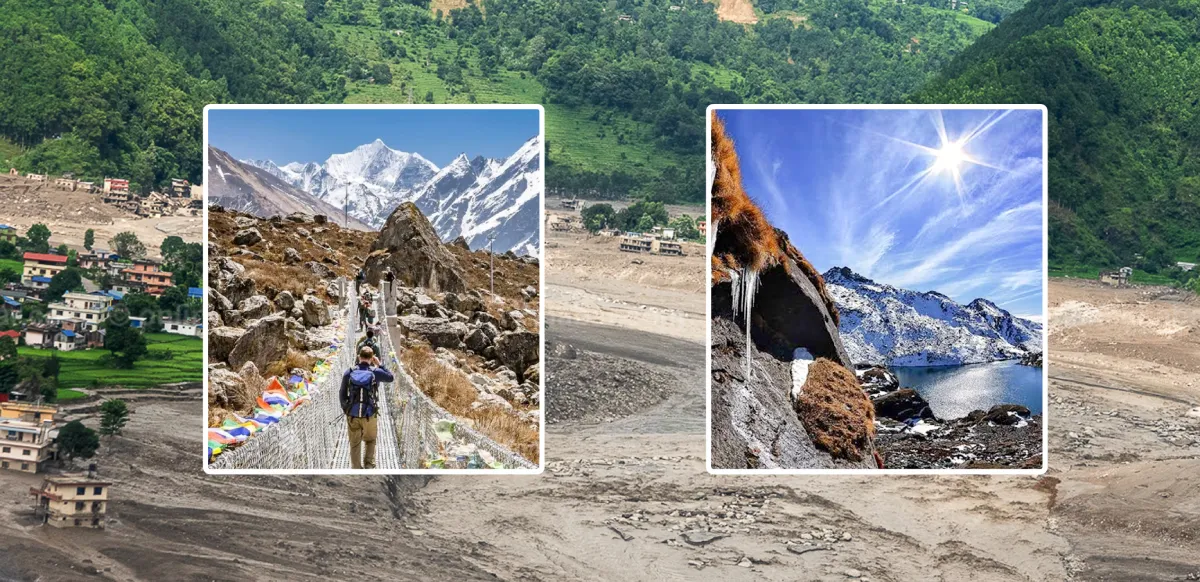
The monsoon rain creates an amazing photography opportunity for you in Upper Mustang. The rain falls which occur further south below the Annapurna Ranges purifies the air and makes it clean before it reaches here. As a result, you’ll be blessed with a clarity in the atmosphere above the red and ochre cliffs unavailable in other seasons. If you visit in June, July, or August you’’ll be able to take awestriking pictures. The canyon walls of Upper Mustang show their colours with unusual sharpness. Likewise, the snow on the distant Annapurna range sits bright white against a background of deep blue sky. If landscape photography drives your travel decisions, the monsoon months are genuinely among the best times to photograph this region.
Book Your Tiji Festival Jeep Tour with Mountain Delights
3. Wildflowers and Green Valley Floors
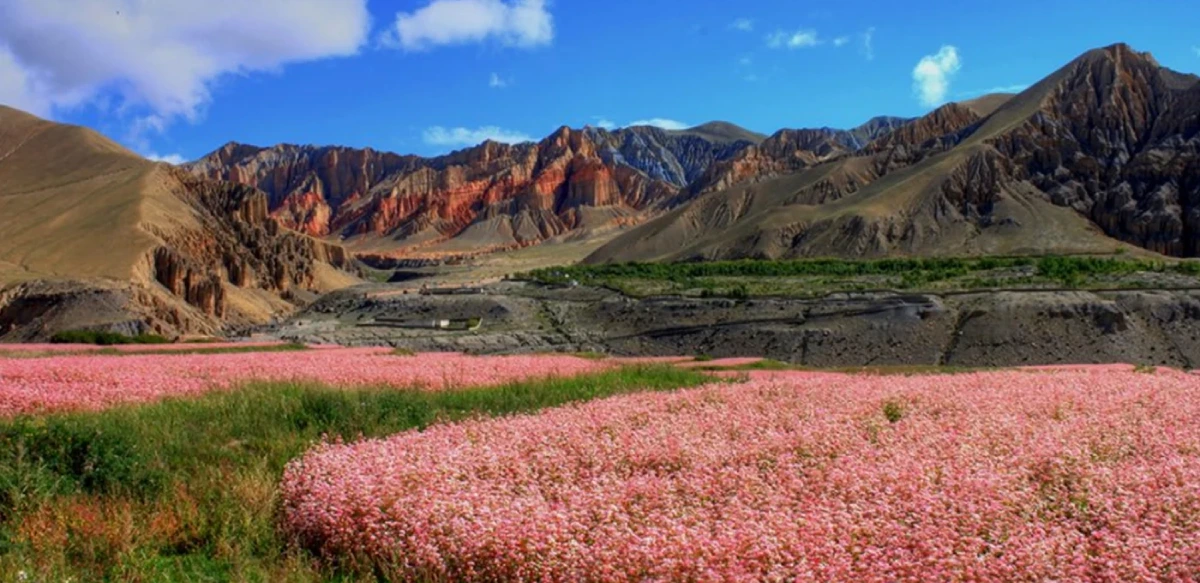
Upper Mustang's reputation is built on its image of high Himalayan desert. The monsoon months introduce a completely different aesthetic that most visitors never imagine seeing when they travel here. The valley floors between Ghami village and Lo Manthang receive just enough groundwater from melting snow rivers in summer to decorate the valley with a bloom of wildflowers. Saxifrage, primrose, and edelweiss bloom and decorate sections of the trails which remain bare rock in autumn. Barley fields in Tsarang village turn a vivid green against the red cliffs above. The combination of desert geology and unexpected seasonal green creates a visual contrast unlike anywhere else on the globe.
4. The Yartung Festival in August
The Tiji Festival in May is the most famous cultural event in Upper Mustang and draws significant numbers of travellers to Lo Manthang. The Yartung Festival in August is quieter but an equally authentic festival you’ll experience in your monsoon traveller. Held over several days in Jhong village and Lo Manthang, the Yartung Festival centres on horse racing, traditional music, and ceremonies which celebrate the end of the farming season. The Loba people dress in traditional clothing, ride horses across the wide valley floor north of Lo Manthang, and gather for celebration. As a monsoon trekker, you experience this festival with the kind of access and personal space that the crowded spring season does not allow.
5. Lower Permit Costs and Better Teahouse Value
The restricted area permits for Upper Mustang costs USD 50 per person per day under the 2026 rules, and this applies regardless of season. What changes in the monsoon is everything around the travel during the season is the booking. Bookings are very mild with teahouse room rates dropping by about 20 to 30 percent compared to peak season. Additionally, flight bookings to Jomsom are easier to secure and often cheaper. The trekking agencies offer better rates on guided packages during the June to August window because demand is lower. If you plan a 12-day Upper Mustang monsoon trek, your overall cost excluding the permit itself is meaningfully lower than the same trip in October.
Real Challenges of the Upper Mustang Trek in Monsoon
An honest monsoon guide has to include the challenges. However, none of these are reasons to avoid the trip and all of them are manageable with correct planning. The challenges for trekking to upper mustang in monsoon and their solutions are
Table: Solution to challenges in Upper Mustang Trek
|
Challenge |
What It Means for You |
How to Handle It |
|---|---|---|
|
Flight delays to Jomsom |
Pokhara airport sees frequent rain-related delays in June to August. Morning flights operate but same-day confirmation is not guaranteed. |
Build one to two buffer days in Pokhara before your trek starts. Carry your licensed guide's contact number. |
|
Lower road sections between Pokhara and Kagbeni |
The road from Jomsom to Kagbeni can see occasional mudslides in heavy rain years. Passable by jeep with local knowledge. |
Your registered agency will monitor road conditions and arrange jeep transport with an experienced local driver. |
|
Afternoon winds |
Wind in Upper Mustang builds from midday and peaks between 2 pm and 5 pm every day of the year, including monsoon months. |
Start trekking each day by 6 am or 7 am at the latest. Reach each day's destination before early afternoon. |
|
Limited teahouse menu variety |
Monsoon months see fewer supply convoys reaching upper villages. Menu options above Lo Manthang narrow to Nepali and Tibetan staples. |
This is part of the authentic experience. Dal Bhat, Tibetan bread, and noodle soups are all you need and all you will want. |
What You Need Before You Trek Upper Mustang in Monsoon
-
Restricted area permit at USD 50 per person per day, arranged through a registered Nepal trekking agency before you reach Kagbeni
-
Annapurna Conservation Area Permit (ACAP) at NPR 3,000 per foreign national
-
TIMS card for the approach section through the conservation area
-
Licensed guide Upper Mustang trekking is legally mandatory or two foreign nationals can travel in a group.
-
Travel insurance covering helicopter evacuation above 3,800 metres. Non-negotiable given the distance from medical facilities
-
Windproof jacket and warm mid-layer for the afternoon winds and cold nights above 3,500 metres, even in July and August.
-
Dry bags for electronics, documents, and spare clothing on the approach section through lower monsoon terrain between Pokhara and Jomsom.
Conclusion
The traveller who discovers Upper Mustang in the monsoon months usually returns from the trek with a different understanding of what Nepal trekking can be. You expected rain and found dry cliffs. You expected mud and found wildflowers. You expected solitude and found it completely. The rain shadow Nepal has built across the back of the Annapurna and Dhaulagiri ranges is one of the most remarkable natural travel secrets in the entire Himalayan world, and the traveller who takes advantage of it in June, July, or August gets to see the forbidden kingdom, Nepal has preserved here at its most open, most affordable, and most quietly magnificent. Plan your Upper Mustang Trek with Mountainn Delights today.
Frequently Asked Questions
1. Is Upper Mustang dry during the monsoon season?
Yes. Upper Mustang stays remarkably dry during the monsoon months of June to August because it sits in the rain shadow of the Annapurna and Dhaulagiri ranges.
2. Can you visit Upper Mustang in July and still see the mountains clearly?
Yes, and in many cases the Upper Mustang weather in July produces clearer views of the surrounding peaks than spring trekking conditions. This is because the monsoon rain that falls south of the Himalayas washes the air clean of the dust and haze that builds during spring and pre-monsoon months.
3. Are there any festivals in Upper Mustang during monsoon that are worth planning around?
The Yartung Festival held in August is the most important cultural event in Upper Mustang during the monsoon period. The festival is held over several days in Jhong village and around Lo Manthang, and centres on traditional horse racing across the wide valley floor north of the walled city.


.webp)