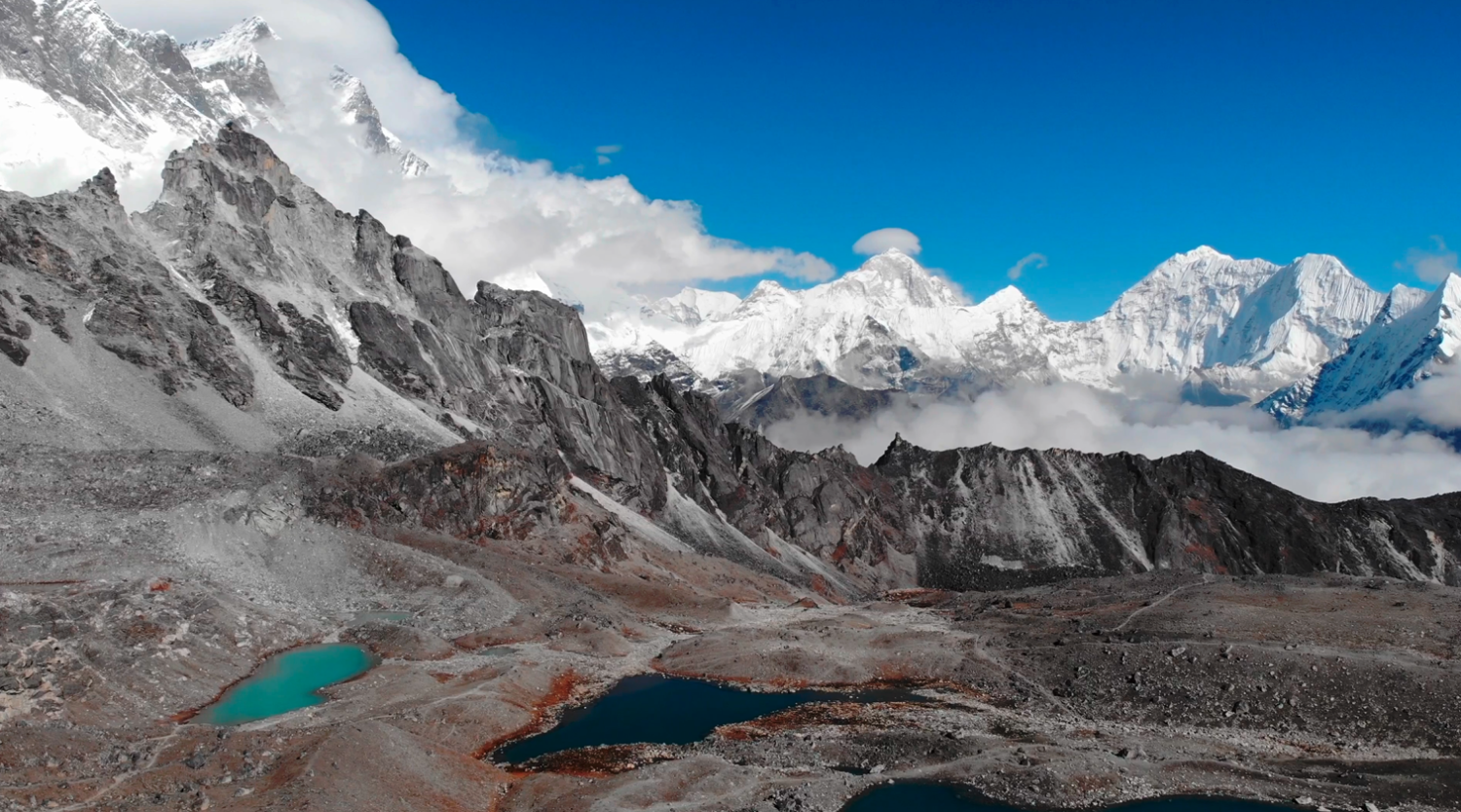


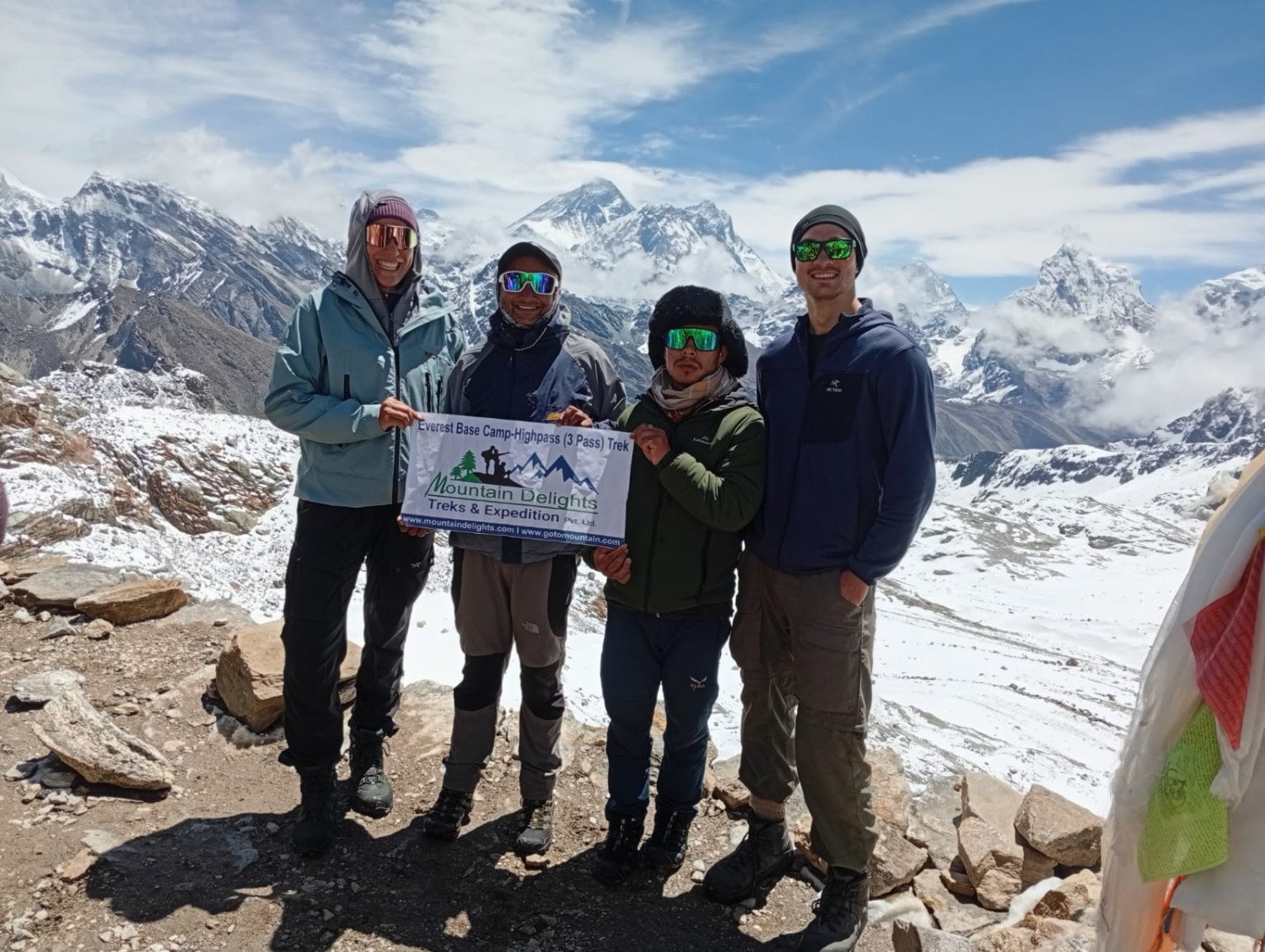

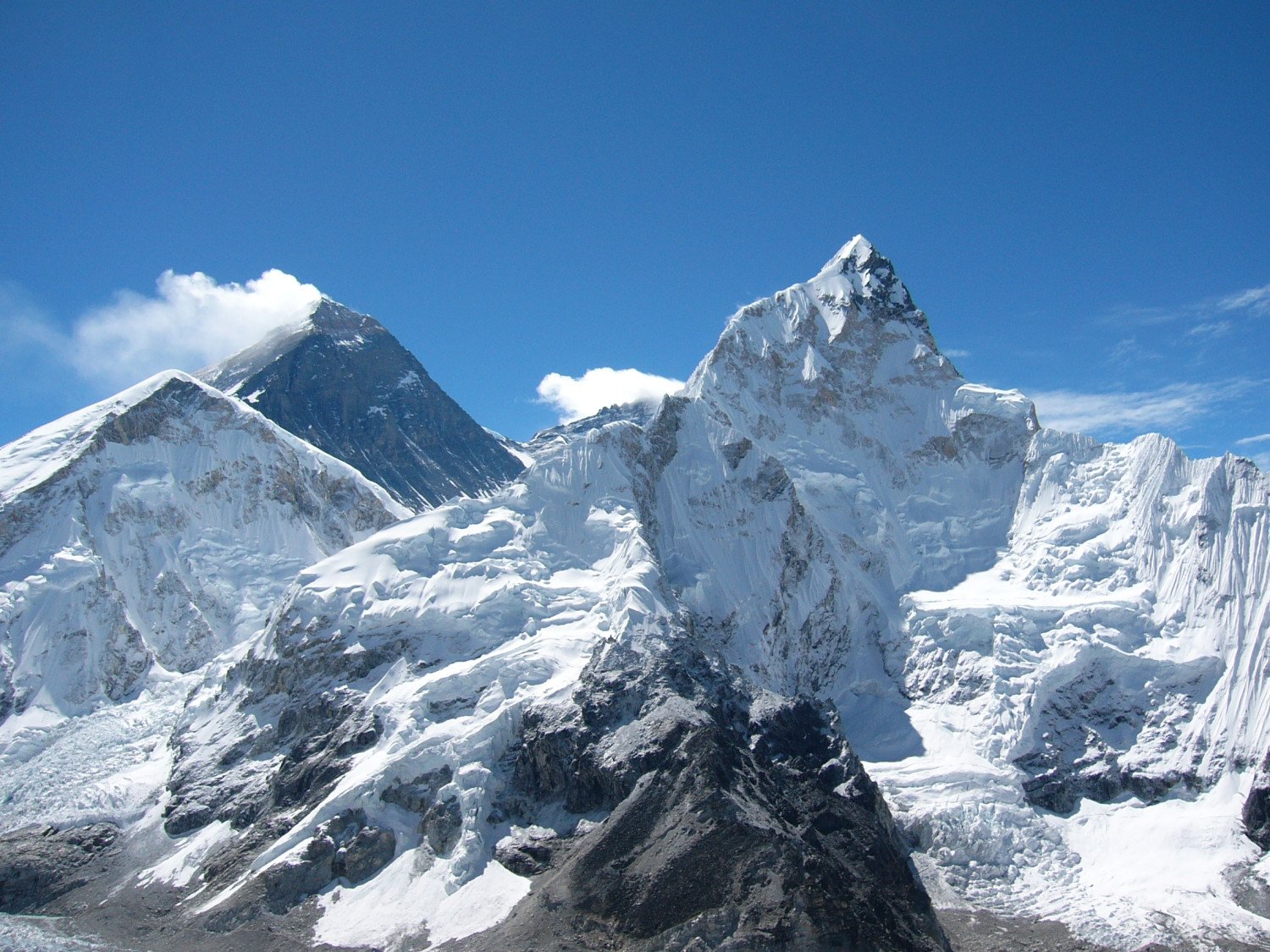
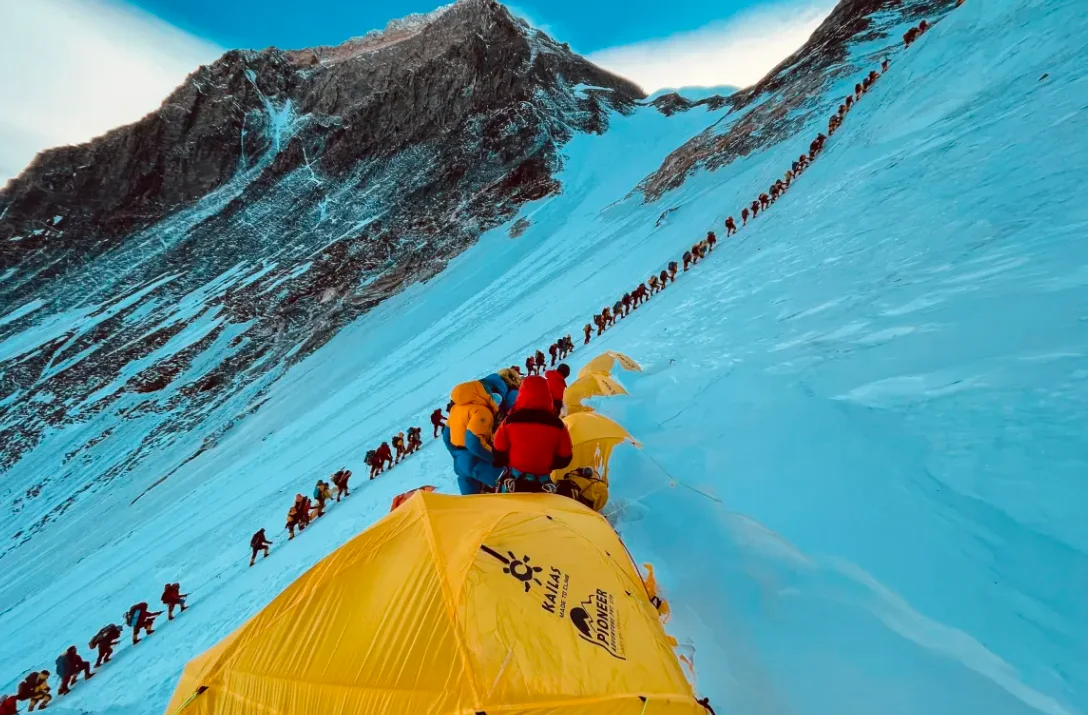
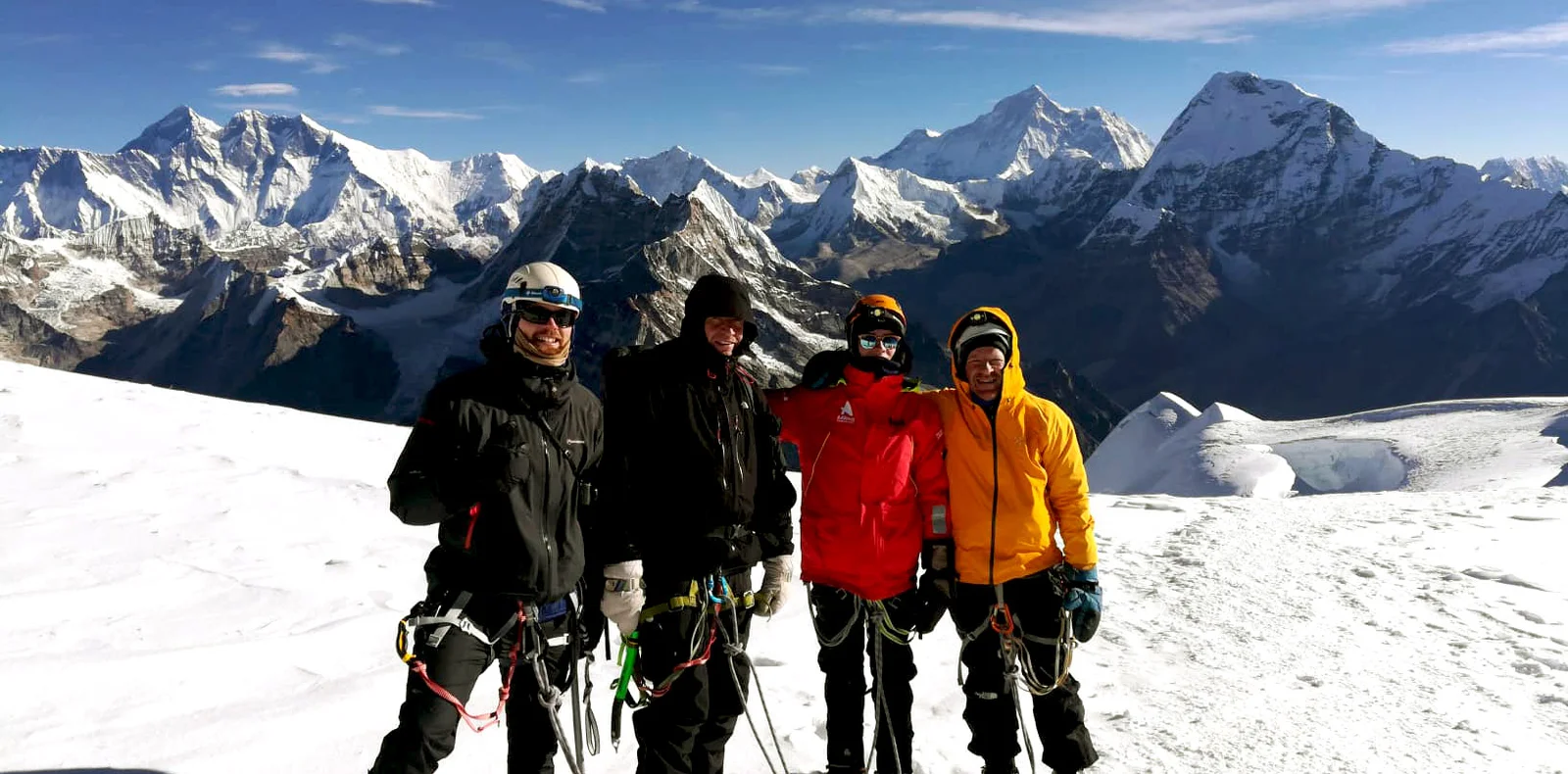
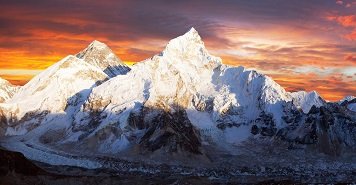
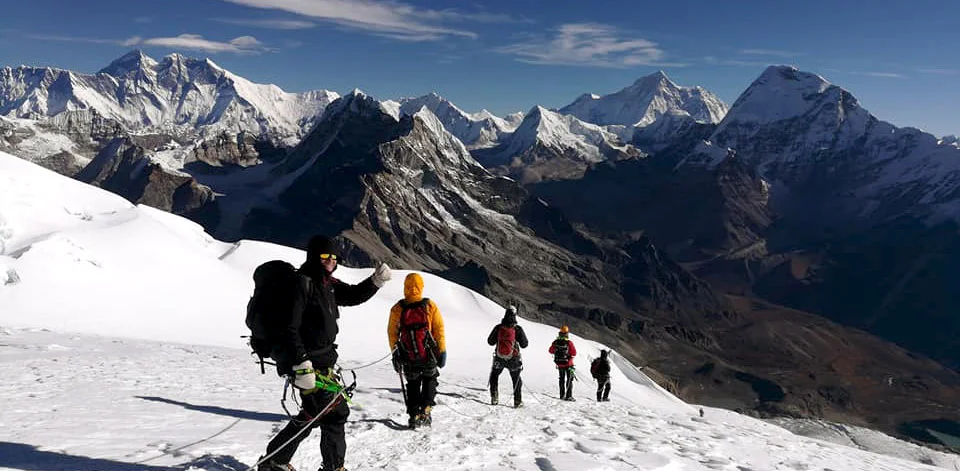
Everest High Passes Trek—or known as Three Pass Trek as well equally – in the Everest region with Mountain Delights’ professional management and support is one of the best adventure journeys worth capturing in the Himalayas if you are looking for life time adventure experience. In the trek, you are to cross three thrilling high Himalayan passes: Renjo La (5,345 m/ 17,536 ft), Cho La (5,420 m/ 17,782 ft), and Kongma La (5,535 m/ 18,159 ft) with a magnificent views of the Himalayan peaks, including four of the world’s highest peaks above eight thousand meters: Mt. Everest (8,848 m /29,029 ft), Mt. Makalu (8,485 m/ 27,838 ft), Cho Oyu (8,201 m/ 26,906 ft), Mt. Lhotse (8,516 m/ 27,940 ft).
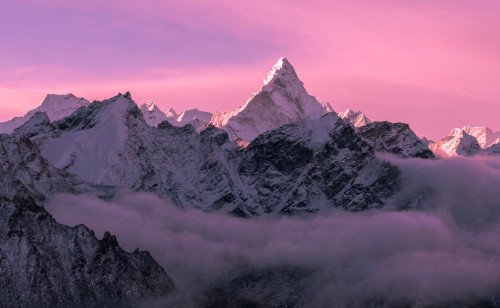
Other peaks you can sight during the trekking include: Nuptse (7,861 m/ 25,791 ft), Mt. Ama Dablam (6,812 m/ 22,349 ft), Mt. Pumori (7,161 m/23,494 ft), Mt. Thamserku (6,608 m/ 21,680 ft), Kantenga (6,782 m/ 22,251 ft), Cho-Latse (6,440 m/ 21,128 ft), Tawache or Taboche (6,542 m/ 21,463 ft), Kongde Peak (6,187 m/ 20,298 ft) and others.
The trek includes the world's most famous destination, Everest Base Camp and also walking peaks Kalapathhar (5,545 m/ 18,192 ft) and Gokyo Ri (5,357 m/ 17,575 ft). You walk pass famous towns such as Namche Bazzar, enjoy the beauty of the Himalayan freshwater lake Gokyo Lake, and walk across the world’s longest glacier, Ngozumpa. You visit a celebrated monastery in Tengboche and get first-hand experience of Sherpa culture as well.
The trekking begins and ends with a thrilling flight to Lukla, famous for its landing and takeoff adventure. This trek is suitable who want to avoid standard EBC trek and want to cross the high passes.
 Hotel
Hotel
Your arrival in Kathmandu will mark your first day in Nepal. You will be greeted and welcomed by our representative at the international airport and safely transferred to your respective hotel. You will be given time to rest and upon your wished time, we will show you a local market of Thamel where you can change your money, do shop, withdraw money, eat your meal. You will then be taken to our office for trip briefing. Delay on your arrival time will result the adjustment of your program to the next suitable day.
 4-5 hrs
Hotel
4-5 hrs
Hotel
 B
B
You enjoy your breakfast and start our informative tour of Kathmandu. You will visit two sights, both famous through holy and religious approach, Pashupatinath temple and Boudhanath stupa.
Pashupatinath Temple: One of the most visited temples in Nepal, Pashupatinath is a listed UNESCO cultural heritage site. The temple is devoted to Lord Shiva of Hindu religion and located besides Bagmati river – the holy river for Hindus where cremation of dead body takes place. It is mostly packed by pilgrims from around the world during a festival of Shivaratri which falls in the month of February-March.
Boudhanath Stupa: Standing tall with four pairs of eye directed at four different direction, the structure is one of the biggest of its kind in Nepal. It is inspired by Mahayana philosophy. You end your day with relaxation and preparation for trek. Night will be spent at hotel in Kathmandu.
3.5 hrs
Lodge
B/L/D
You drive short to domestic airport terminal or drive to Ramechhap airport around 5 hrs for an early morning flight to Lukla – small town developed after the Everest region became famous. Thrilling flight of about 15/30 minutes that offers spectacular view of the Himalayan ranges, river beds, terraced landscape, forest lands at the Lukla airstrip – notoriously famous for one of the most dangerous airports of the world. You will meet with some crew members here (porters). Trek for today is short, and easy to begin with as most of the trail descend, or have little gentle uphill. After a three and half-hours to four hours’ trek you reach the small village of Phakding on the bank of beautiful Dudh Koshi River. Overnight local lodge.
5 hrs
Lodge
B/L/D
After breakfast you are now ready for the exciting yet challenging walk which is informative as well since you enter into the Sagarmatha National Park. The first part of the walk is beautiful along the deep Dudh Koshi river valley made by high hills both sides and decorated with forest. You cross multiple hanging bridge today, and just below the ridge of Namche you cross the highest hanging bridge that hold your breath if you suffer from the fear of height and bridges. After you cross the bridge, walk steep two to three hours uphill in the pine and deodar cedar forest to reach Namche Bazaar . While in the middle of the uphill, you may sight the Mt. Everest for the first time. Namche Bazaar used to be a trading post for Tibetan and Nepali merchants who cross over the high Himalayan pass called Nang Pa La pass (5,806 m/ 19,050 ft). Early trans-Himalayan trading place, Namche still holds its prominence for local market place. You spend two nights in this town.
2-5 hrs
Lodge
B/L/D
On this day, you hike around Namche Bazar and get yourselves habituated with the altitude differences you will be facing. In order to be more than sure about your health in coming days we highly recommend to climb further up to Everest view Hotel – provides a beautiful view of mountain range including Mt. Everest. On your way up, you pass small airstrip of Syangboche (3,780 m/12,402 ft) – the highest altitude airstrip in Nepal which is not permitted for commercial flights nowadays. The hilltop above Syangboche provides first view of magical Himalayan range including Taboche Peak, Lhotse, Peak- 38, Ama Dablam , Thamserku, Kongde peak, Kongde peak and others so close. While at Khumjung (3,780 m/12,401 ft), you can visit the Hillary School – high school built by sir Edmund Hillary who reached the summit of Mt. Everest at first in 1953. Lunch in one of the tea houses in Khumjung. You can visit Khunde where Hospital under Hillary trust is serving to local Sherpas.
3-4 hrs
Lodge
B/L/D
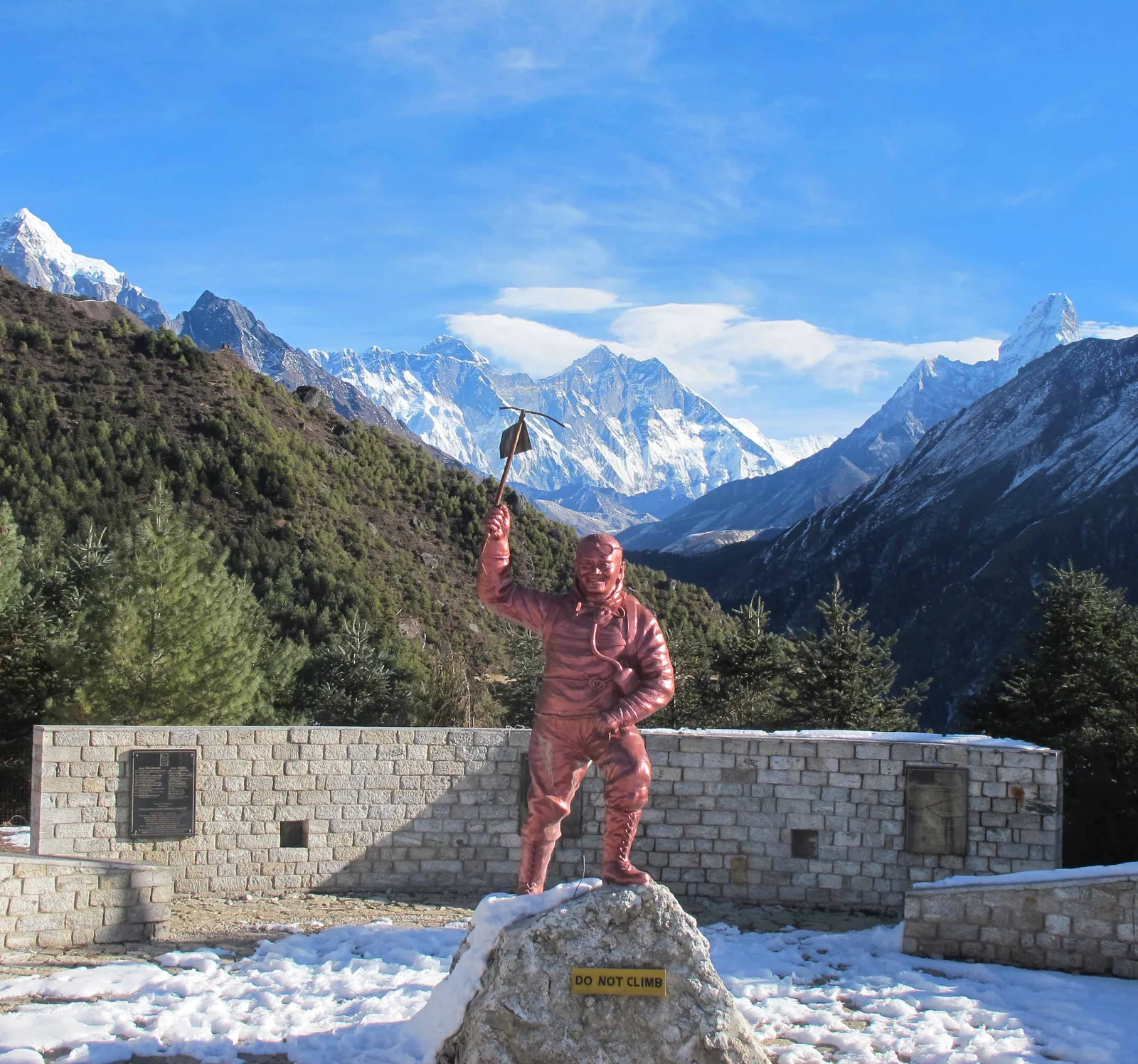
Your day will be directed towards relatively different destination than regular base camp trek to Thame – small village off to Namche and childhood home of Tenzing Norgay Sherap who scaled Mt. Everest for the first time in 1953 with Edmund Hillary. Trail for the day will be peaceful and pass through an ancient settlement. The route is the same route through which trans-Himalayan trade between Nepal and Tibet used to occur. Our exploration includes Thame Gompa renowned in cultural index for an unique festival of Mani Rimdu. We will spend the night at local lodge.
5 hrs
Lodge
B/L/D
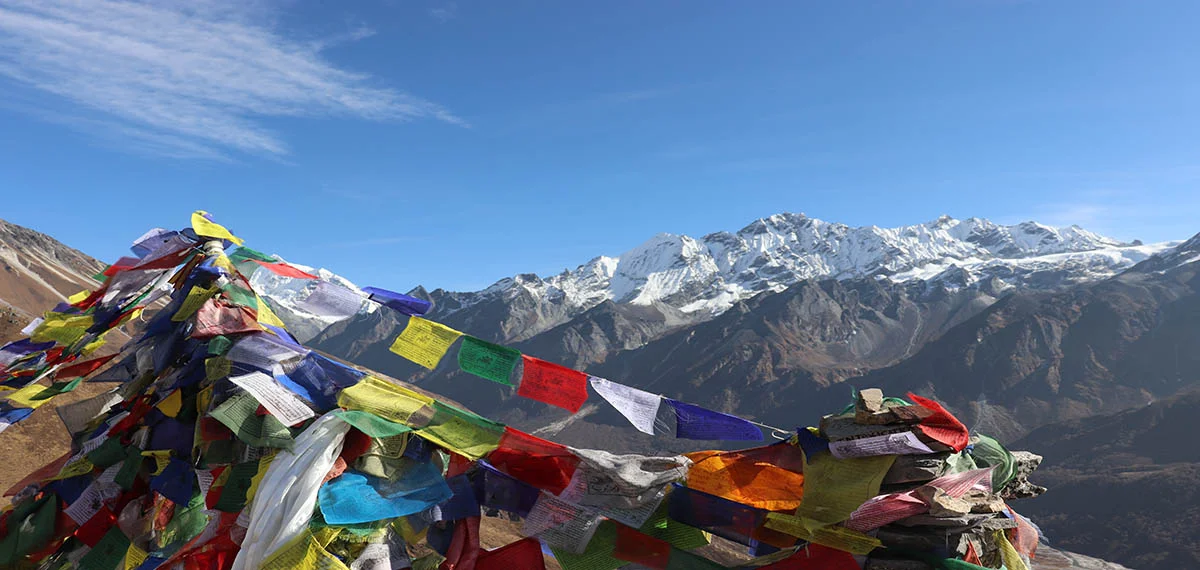
The increasing height to alpine region will make the day challenging, nevertheless very eventful. We will pass through Kyaro Gumba and Taranga temple on our way up to Marlung. Along the trail leading to Marlung, trekkers often pass through Kyaro Gumba, a small Buddhist monastery that reflects the strong spiritual traditions of the Himalayan people. It is a quiet and peaceful place decorated with prayer flags and symbols of Tibetan Buddhism, offering a moment of calm during a physically demanding journey. Together, these places add cultural and spiritual depth to the trek, making the journey to Marlung not only physically challenging but also meaningful and enriching.We rest for the day at this place and spend our night at the local lodge.
3.5 hrs
Lodge
B/L/D
The trek from Marlung to Lungden is relatively short in walking time, taking about 3 to 3.5 hours, but it is demanding because of the significant altitude gain up to around 4,600 meters. Even though the distance is not long, the thinner air makes the climb more challenging and slower.Along the way, trekkers are rewarded with striking mountain scenery, including views of Kongde Peak (Kongde Ri), which rises prominently above the surrounding valleys and adds a dramatic backdrop to the journey. The trail involves steady uphill walking until it gradually levels out as you approach Lungden.Lungden itself is a small high-altitude settlement with basic lodge facilities, where trekkers usually stay overnight.
7-9 hrs
Lodge
B/L/D
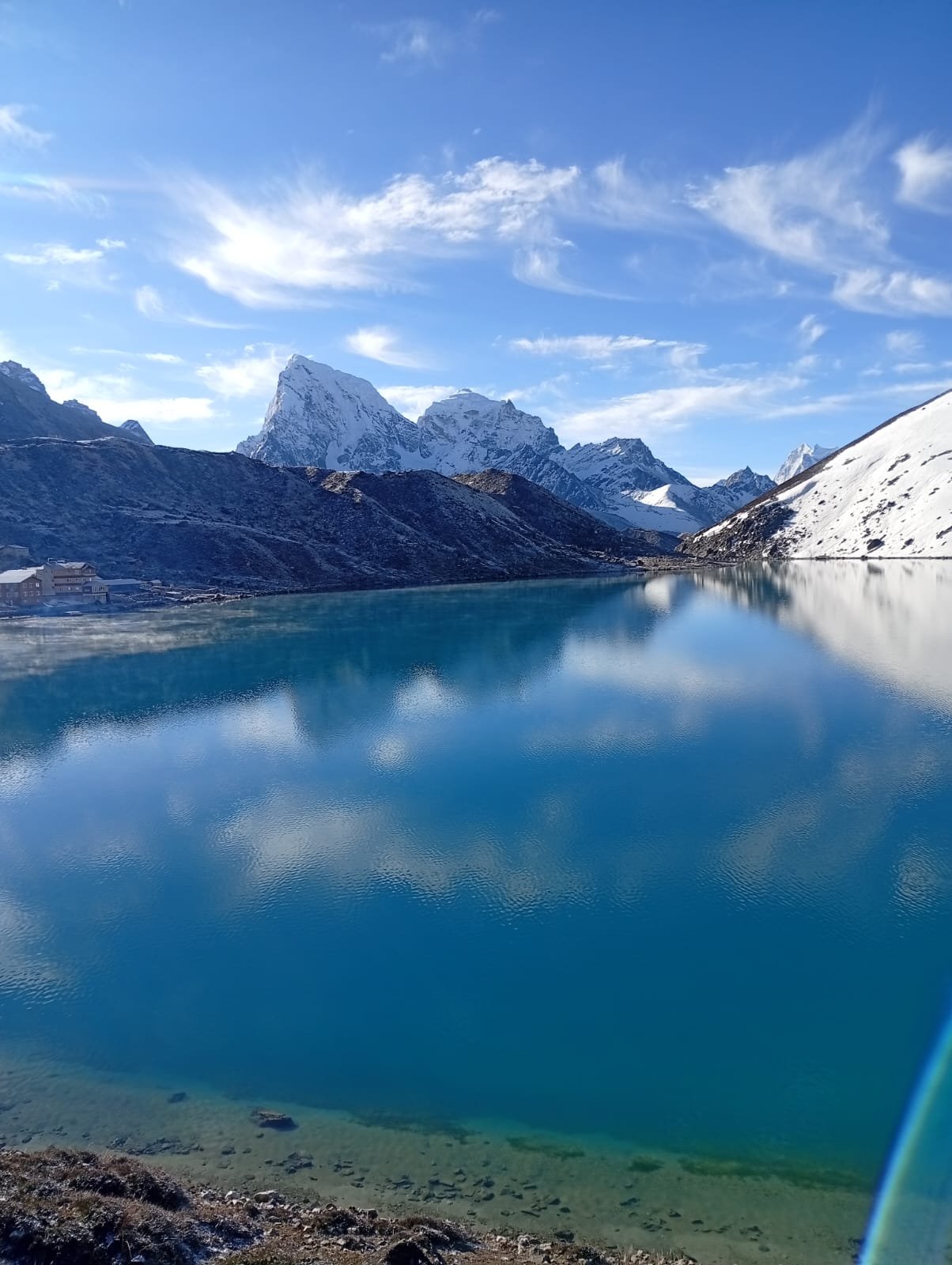
This day marks your first pass among three in the Everest region. During your walk you pass through Renjo lake and RelamaTso (lake) along with even admirable vista of the Himalayan ranges. From the Renjo La pass you can view the Mt. Everest and other numbers of the peaks including the Rolwaling ranges. You trek down to Gokyo valley which is quite tedious work in loose scree and stone boulders. You will reach the third lake in the Gokyo valley in which six Himalayan lakes are lined up. We spend our night at the local lodge enjoying the view of Gokyo lake.
5-6 hrs
Lodge
B/L/D
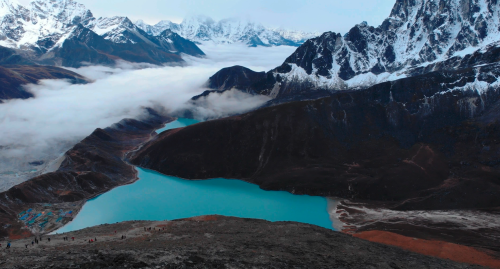
After a pre-dawn start, we hike up to Gokyo Ri to witness a breathtaking sunrise over the Himalayas. Standing at around 5,357 meters, Gokyo Ri is one of the most iconic viewpoints in the Everest region, rising steeply above the village of Gokyo and the turquoise Gokyo Lakes. Although the climb is short in distance, it is physically demanding due to the altitude and steep ascent. The trail zigzags up a barren hillside, gradually opening up spectacular views of the surrounding landscape.
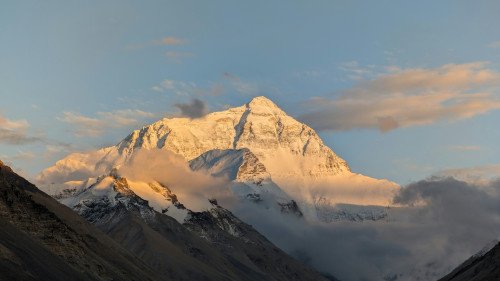
From the summit, you are rewarded with a panoramic 360-degree view that includes the massive Ngozumpa Glacier, the longest glacier in Nepal, stretching like a frozen river through the valley below. The highlight of this viewpoint is the incredible sight of three 8000-meter giants like Mount Everest, Mount Makalu, and Cho Oyu which is rising above the horizon. On clear mornings, Everest appears especially striking, often feeling closer and more prominent than from other viewpoints like Kalapatthar. The combination of golden sunrise light, glittering snow peaks, and vast glacial landscapes makes this one of the most unforgettable moments of the trek.After safely crossing the glacier, we arrive at Thangnak, a small high-altitude settlement surrounded by rugged peaks and alpine silence. Here we enjoy a warm lunch and rest after an adventurous day. The evening is calm, and we spend the night at a local lodge.
7-9 hrs
Lodge
B/L/D
Your another big day with Himalayan pass starts with pre-dawn/early morning walk towards Cho-La pass. The weather to be considered to start this day. Hike to the Base Camp of Cho La pass is fairly easy with gradual uphill in the gentle slope. From Base Camp, you need to climb the steepest route on this trekking and complete the Cho La Pass. The trekking is physically demanding as you have to then descend down the rocky trail to Dzongla which is pretty long. Rest for the day at Dzongla in a local lodge.
4 hrs
Lodge
B/L/D
It is short day and deserve to be short for the rest after yesterday’s arduous walk. We walk observing all the sights and mountains and lakes visible and redeem our energy which was lost the day before. Our walk to the yak pasture of Lobuche is filled with views of panoramas. The views of mountains will never get tiring, once we reach Lobuche we rest for the day and spend our night at the local lodge.
7-9 hrs
Lodge
B/L/D
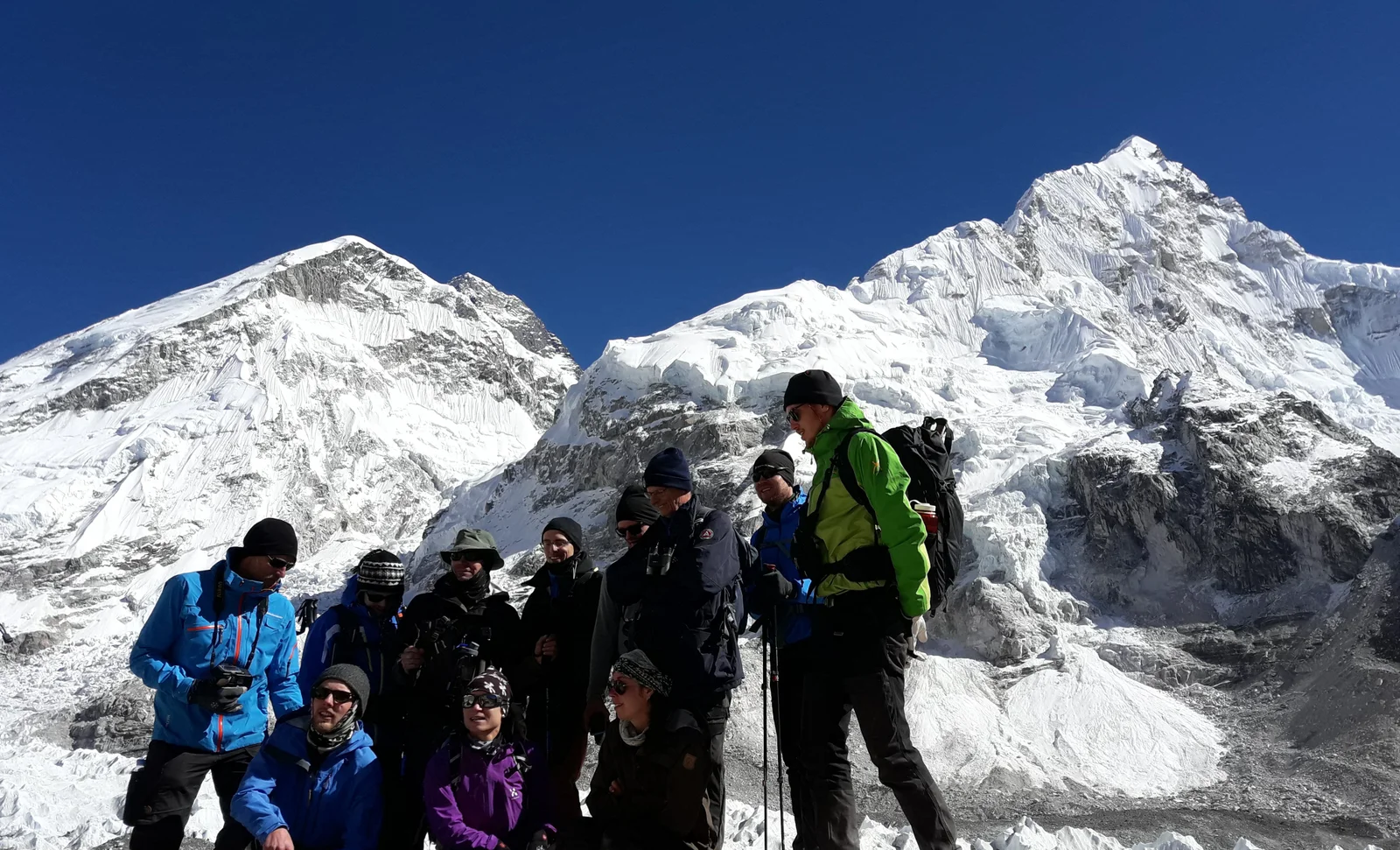
After breakfast your another big day begins. You set for the Everest Base Camp ! The first section is easy in the beautiful backdrop of the mountains parallel to Khumbu Glacier which is visible from near to Gorakshep.Once you reach Gorakshep, take good lunch and get set for the Base Camp. The trail is winding in the glacial moraines and on the rock boulders. It takes about 3 hrs of hiking to reach the base camp from where you take a closer look of Khumbu glacier. View of Mt. Everest from Base Camp is not much clear though.You will then return back to Gorakhshep after spending some time at the Base Camp. Stay at the lodge in Gorakhshep for the night.
5 hrs
Lodge
B/L/D
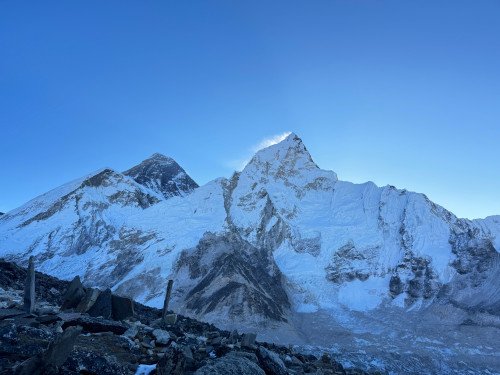
You start the thrilling day at pre-dawn by climbing to Kalapatthar which is about 2.30 to 3 hrs climb. You will catch the mesmerizing sunrise over the Himalayan peaks if your pace and health help you. Kalapatthar offers 3600 view of the mountains including the tallest Mt. Everest, Lhotse, Nuptse, Ama Dablam, Taboche, Cholatse, Lobuche East and Pumori. Enjoy your climb which is worth doing. After this climb down to your lodge. After breakfast be ready for a short walk to Lobuche. Enjoy your afternoon in Lobuche, and be ready for the final pass i.e Kong ma La.
8-9 hrs
Lodge
B/L/D
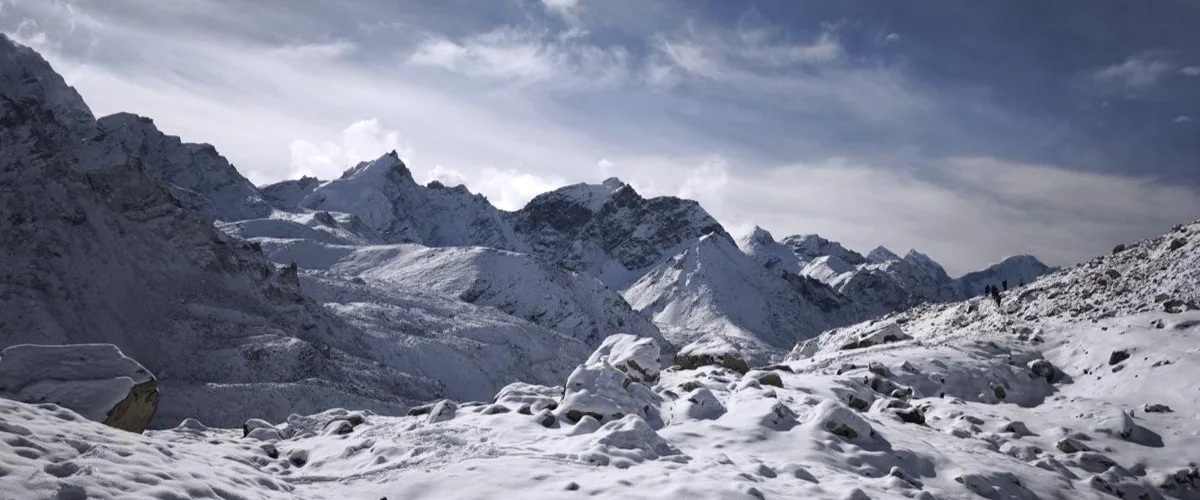
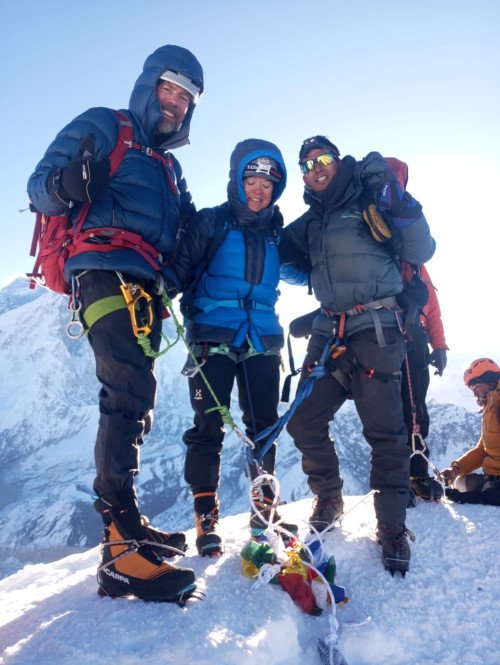
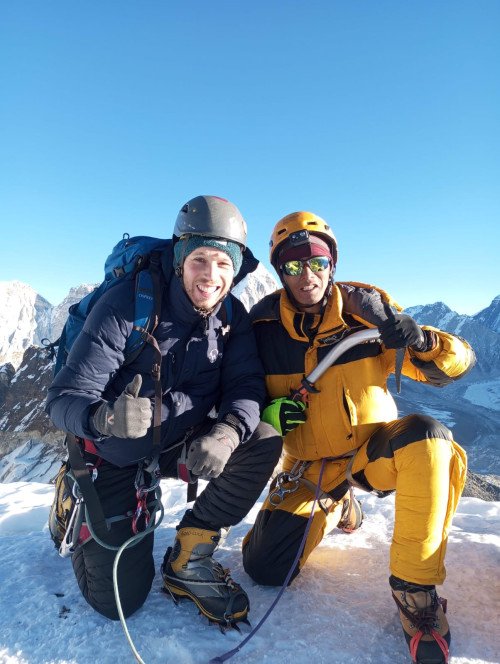
One of the most challenging and rewarding sections of the Everest region trek begins after an early start, as we walk across the dramatic Khumbu Glacier toward Kongma La Pass. This is the highest and most demanding of the three major passes in the Everest Three Passes Trek, and it offers a true high-altitude adventure.The approach to Kongma La Pass involves rugged terrain with loose scree, moraine, and scattered boulders. There is no easy, flat trail here every step requires careful balance and steady energy. The climb is steep and physically demanding, especially due to the thin air at high altitude, but the surroundings make it unforgettable. Towering peaks, glacial valleys, and raw alpine landscapes surround you throughout the ascent.Reaching the top of Kongma La is a moment of great achievement. From the pass, you are rewarded with sweeping views of Himalayan giants, including peaks like Lhotse, Makalu, Ama Dablam, and the surrounding glacial valleys.After spending time at the pass, we begin a long and steep descent toward the Imja Valley. The trail continues over loose rock and moraine before gradually becoming more defined as we approach lower altitudes. The descent requires just as much attention as the climb, as the terrain remains rough and uneven.Finally, we arrive at Chukhung, a peaceful settlement in the Imja Valley surrounded by dramatic peaks and wide alpine landscapes.Spend the night at the local lodge.
5.5 hrs
Lodge
B/L/D
From Chhukung we trek all the way to Tengboche – small hamlet town where famous Tengboche monastery dedicated to Tibetan Buddhism is located. The monastery is one of the oldest monasteries in the region and popular for the Mani Rimdu fascinating festival – celebrated in the form of mask dance – celebrated in the month of October-November (date is fixed each year according to lunar calendar). As you descend down from Chukkung past Dingobhe, alpine landscape fades away and enter in to green zone equipped with beautiful forest section after Pangboche. After long and adventurous yet beautiful walk, you arrive your destination of Tengboche. Overnight stay in the lodge.
6 hrs
Lodge
B/L/D
Enjoy the morning breakfast in this stunning place. The view of Mt. Everest, Lhotse wall, Tawache, Mt. Ama Dablam, Thamserku, Kantenga, Kongde peak is mesmerizing from this town. After breakfast walk down to the river bed in Phungi Tenga, and climb uphill to Kyanjuma and to Namche finally for lunch. Enjoy our lunch in Namche. You can stroll around for some shopping, if you want to buy back some gifts to your friends/family members from the Everest Region. Later in the afternoon, climb down to the river bed of Bhote Koshi, cross the thrilling bridge and then walk to Monjo. Overnight local lodge.
4 hrs
Lodge
B/L/D
After breakfast, we begin our final trekking day by following the familiar trail back along the Dudh Koshi River, retracing the scenic route through the heart of the Everest region. The descent feels more relaxed, as we gradually lose altitude and walk through a changing landscape of forests, suspension bridges, and traditional Sherpa villages.The trail passes through beautiful settlements such as Phakding and several smaller villages dotted along both sides of the river. Along the way, we cross iconic hanging bridges draped with prayer flags, walk through pine and rhododendron forests, and enjoy the sound of the river flowing beside us. This section of the trek also gives a final chance to experience local life in the Khumbu region, where stone houses, prayer wheels, and small monasteries reflect the deep Buddhist culture of the Himalayas.Overnight local lodge.
20-30 min
Hotel
B
After an early breakfast in Lukla, you’ll head to the Tenzing-Hillary Airport for your scenic flight back to Ramechhap (or Kathmandu, depending on the season and flight schedule). The 15 to 30-minute flight is once again thrilling, offering one last look at the Himalayan peaks, lush forests, deep valleys, and terraced hillsides. Taking off from Lukla’s short and dramatic runway is an experience in itself, often considered one of the most exciting parts of the entire journey.
Upon landing at Ramechhap airport, you’ll drive approximately 5 hours back to Kathmandu, passing through rolling hills, rivers, and rural Nepali villages. If flying directly to Kathmandu, you'll be transferred to your hotel in the city.
This is the end of your incredible Himalayan adventure, with unforgettable memories of high mountains, glacial lakes, and warm Sherpa hospitality to take home with you.
Hotel
B
After breakfast at your Hotel, we take you to the mysterious Kathmandu city tour. This historical, cultural and spiritual city unveils the social and historical mysteries to visitors. You will walk through the narrow lanes of the ancient Kathmandu – the center of power – that includes markets of Ason, Glass beads market at Indrachowk, oldest supermarket at New Road, Kilagal, and Hidden Stupas inside the family courtyard. Visit of Kathmandu Durbar Square – the administrative quarter of Malla Kings (fourteenth to eighteenth century), and Shah Kings who ruled Nepal from 1768 until 2008. The most unique experience in the square is the visit to the temple of the living goddess “Kumari”. After the tour, return back to your Hotel. If you are staying in Thamel, you can hang around this bustling tourist market and enjoy shopping. Overnight in Hotel.
B
As per your flight schedule, you will be transferred to the international airport of Kathmandu three hours prior to the flight time and your tour ends here.
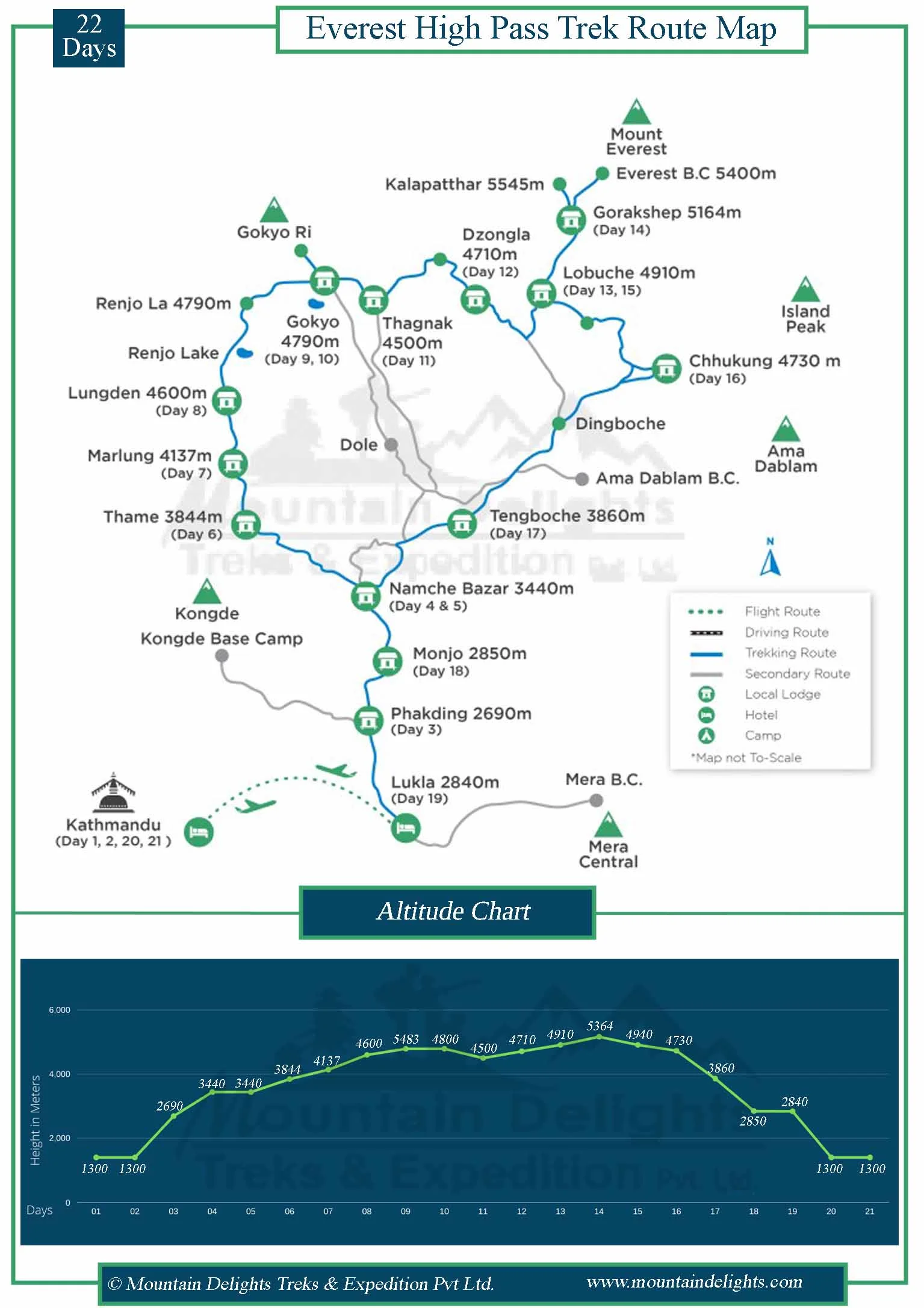
This list outlines the required things to bring during the trekking tours. There are various selections and brands that you can choose as per your interest. All required trekking equipments can be bought or even hired easily at a reasonable price in Kathmandu.
(Our guide will carry first aid kit bag during the trek. We still recommend you to bring your personal first aid kit as you feel it necessary).
All garments should be kept dry using waterproof stuff sacks or large puncture resistant plastic bags.


Discover more adventures like this one, offering the same incredible experiences and destinations. Find your next journey today!


Everest High Passes Trek—or known as Three Pass Trek as well equally – in the Everest region with Mountain Delights’ professional management and support is one of the best adventure journeys worth capturing in the Himalayas if you are looking for life time adventure experience. In the trek, you are to cross three thrilling high Himalayan passes: Renjo La (5,345 m/ 17,536 ft), Cho La (5,420 m/ 17,782 ft), and Kongma La (5,535 m/ 18,159 ft) with a magnificent views of the Himalayan peaks, including four of the world’s highest peaks above eight thousand meters: Mt. Everest (8,848 m /29,029 ft), Mt. Makalu (8,485 m/ 27,838 ft), Cho Oyu (8,201 m/ 26,906 ft), Mt. Lhotse (8,516 m/ 27,940 ft).
Other peaks you can sight during the trekking include: Nuptse (7,861 m/ 25,791 ft), Mt. Ama Dablam (6,812 m/ 22,349 ft), Mt. Pumori (7,161 m/23,494 ft), Mt. Thamserku (6,608 m/ 21,680 ft), Kantenga (6,782 m/ 22,251 ft), Cho-Latse (6,440 m/ 21,128 ft), Tawache or Taboche (6,542 m/ 21,463 ft), Kongde Peak (6,187 m/ 20,298 ft) and others.
The trek includes the world's most famous destination, Everest Base Camp and also walking peaks Kalapathhar (5,545 m/ 18,192 ft) and Gokyo Ri (5,357 m/ 17,575 ft). You walk pass famous towns such as Namche Bazzar, enjoy the beauty of the Himalayan freshwater lake Gokyo Lake, and walk across the world’s longest glacier, Ngozumpa. You visit a celebrated monastery in Tengboche and get first-hand experience of Sherpa culture as well.
The trekking begins and ends with a thrilling flight to Lukla, famous for its landing and takeoff adventure. This trek is suitable who want to avoid standard EBC trek and want to cross the high passes.
Your arrival in Kathmandu will mark your first day in Nepal. You will be greeted and welcomed by our representative at the international airport and safely transferred to your respective hotel. You will be given time to rest and upon your wished time, we will show you a local market of Thamel where you can change your money, do shop, withdraw money, eat your meal. You will then be taken to our office for trip briefing. Delay on your arrival time will result the adjustment of your program to the next suitable day.
You enjoy your breakfast and start our informative tour of Kathmandu. You will visit two sights, both famous through holy and religious approach, Pashupatinath temple and Boudhanath stupa.
Pashupatinath Temple: One of the most visited temples in Nepal, Pashupatinath is a listed UNESCO cultural heritage site. The temple is devoted to Lord Shiva of Hindu religion and located besides Bagmati river – the holy river for Hindus where cremation of dead body takes place. It is mostly packed by pilgrims from around the world during a festival of Shivaratri which falls in the month of February-March.
Boudhanath Stupa: Standing tall with four pairs of eye directed at four different direction, the structure is one of the biggest of its kind in Nepal. It is inspired by Mahayana philosophy. You end your day with relaxation and preparation for trek. Night will be spent at hotel in Kathmandu.
You drive short to domestic airport terminal or drive to Ramechhap airport around 5 hrs for an early morning flight to Lukla – small town developed after the Everest region became famous. Thrilling flight of about 15/30 minutes that offers spectacular view of the Himalayan ranges, river beds, terraced landscape, forest lands at the Lukla airstrip – notoriously famous for one of the most dangerous airports of the world. You will meet with some crew members here (porters). Trek for today is short, and easy to begin with as most of the trail descend, or have little gentle uphill. After a three and half-hours to four hours’ trek you reach the small village of Phakding on the bank of beautiful Dudh Koshi River. Overnight local lodge.
After breakfast you are now ready for the exciting yet challenging walk which is informative as well since you enter into the Sagarmatha National Park. The first part of the walk is beautiful along the deep Dudh Koshi river valley made by high hills both sides and decorated with forest. You cross multiple hanging bridge today, and just below the ridge of Namche you cross the highest hanging bridge that hold your breath if you suffer from the fear of height and bridges. After you cross the bridge, walk steep two to three hours uphill in the pine and deodar cedar forest to reach Namche Bazaar . While in the middle of the uphill, you may sight the Mt. Everest for the first time. Namche Bazaar used to be a trading post for Tibetan and Nepali merchants who cross over the high Himalayan pass called Nang Pa La pass (5,806 m/ 19,050 ft). Early trans-Himalayan trading place, Namche still holds its prominence for local market place. You spend two nights in this town.
On this day, you hike around Namche Bazar and get yourselves habituated with the altitude differences you will be facing. In order to be more than sure about your health in coming days we highly recommend to climb further up to Everest view Hotel – provides a beautiful view of mountain range including Mt. Everest. On your way up, you pass small airstrip of Syangboche (3,780 m/12,402 ft) – the highest altitude airstrip in Nepal which is not permitted for commercial flights nowadays. The hilltop above Syangboche provides first view of magical Himalayan range including Taboche Peak, Lhotse, Peak- 38, Ama Dablam , Thamserku, Kongde peak, Kongde peak and others so close. While at Khumjung (3,780 m/12,401 ft), you can visit the Hillary School – high school built by sir Edmund Hillary who reached the summit of Mt. Everest at first in 1953. Lunch in one of the tea houses in Khumjung. You can visit Khunde where Hospital under Hillary trust is serving to local Sherpas.
Your day will be directed towards relatively different destination than regular base camp trek to Thame – small village off to Namche and childhood home of Tenzing Norgay Sherap who scaled Mt. Everest for the first time in 1953 with Edmund Hillary. Trail for the day will be peaceful and pass through an ancient settlement. The route is the same route through which trans-Himalayan trade between Nepal and Tibet used to occur. Our exploration includes Thame Gompa renowned in cultural index for an unique festival of Mani Rimdu. We will spend the night at local lodge.
The increasing height to alpine region will make the day challenging, nevertheless very eventful. We will pass through Kyaro Gumba and Taranga temple on our way up to Marlung. Along the trail leading to Marlung, trekkers often pass through Kyaro Gumba, a small Buddhist monastery that reflects the strong spiritual traditions of the Himalayan people. It is a quiet and peaceful place decorated with prayer flags and symbols of Tibetan Buddhism, offering a moment of calm during a physically demanding journey. Together, these places add cultural and spiritual depth to the trek, making the journey to Marlung not only physically challenging but also meaningful and enriching.We rest for the day at this place and spend our night at the local lodge.
The trek from Marlung to Lungden is relatively short in walking time, taking about 3 to 3.5 hours, but it is demanding because of the significant altitude gain up to around 4,600 meters. Even though the distance is not long, the thinner air makes the climb more challenging and slower.Along the way, trekkers are rewarded with striking mountain scenery, including views of Kongde Peak (Kongde Ri), which rises prominently above the surrounding valleys and adds a dramatic backdrop to the journey. The trail involves steady uphill walking until it gradually levels out as you approach Lungden.Lungden itself is a small high-altitude settlement with basic lodge facilities, where trekkers usually stay overnight.
This day marks your first pass among three in the Everest region. During your walk you pass through Renjo lake and RelamaTso (lake) along with even admirable vista of the Himalayan ranges. From the Renjo La pass you can view the Mt. Everest and other numbers of the peaks including the Rolwaling ranges. You trek down to Gokyo valley which is quite tedious work in loose scree and stone boulders. You will reach the third lake in the Gokyo valley in which six Himalayan lakes are lined up. We spend our night at the local lodge enjoying the view of Gokyo lake.
After a pre-dawn start, we hike up to Gokyo Ri to witness a breathtaking sunrise over the Himalayas. Standing at around 5,357 meters, Gokyo Ri is one of the most iconic viewpoints in the Everest region, rising steeply above the village of Gokyo and the turquoise Gokyo Lakes. Although the climb is short in distance, it is physically demanding due to the altitude and steep ascent. The trail zigzags up a barren hillside, gradually opening up spectacular views of the surrounding landscape.
From the summit, you are rewarded with a panoramic 360-degree view that includes the massive Ngozumpa Glacier, the longest glacier in Nepal, stretching like a frozen river through the valley below. The highlight of this viewpoint is the incredible sight of three 8000-meter giants like Mount Everest, Mount Makalu, and Cho Oyu which is rising above the horizon. On clear mornings, Everest appears especially striking, often feeling closer and more prominent than from other viewpoints like Kalapatthar. The combination of golden sunrise light, glittering snow peaks, and vast glacial landscapes makes this one of the most unforgettable moments of the trek.After safely crossing the glacier, we arrive at Thangnak, a small high-altitude settlement surrounded by rugged peaks and alpine silence. Here we enjoy a warm lunch and rest after an adventurous day. The evening is calm, and we spend the night at a local lodge.
Your another big day with Himalayan pass starts with pre-dawn/early morning walk towards Cho-La pass. The weather to be considered to start this day. Hike to the Base Camp of Cho La pass is fairly easy with gradual uphill in the gentle slope. From Base Camp, you need to climb the steepest route on this trekking and complete the Cho La Pass. The trekking is physically demanding as you have to then descend down the rocky trail to Dzongla which is pretty long. Rest for the day at Dzongla in a local lodge.
It is short day and deserve to be short for the rest after yesterday’s arduous walk. We walk observing all the sights and mountains and lakes visible and redeem our energy which was lost the day before. Our walk to the yak pasture of Lobuche is filled with views of panoramas. The views of mountains will never get tiring, once we reach Lobuche we rest for the day and spend our night at the local lodge.
After breakfast your another big day begins. You set for the Everest Base Camp ! The first section is easy in the beautiful backdrop of the mountains parallel to Khumbu Glacier which is visible from near to Gorakshep.Once you reach Gorakshep, take good lunch and get set for the Base Camp. The trail is winding in the glacial moraines and on the rock boulders. It takes about 3 hrs of hiking to reach the base camp from where you take a closer look of Khumbu glacier. View of Mt. Everest from Base Camp is not much clear though.You will then return back to Gorakhshep after spending some time at the Base Camp. Stay at the lodge in Gorakhshep for the night.
You start the thrilling day at pre-dawn by climbing to Kalapatthar which is about 2.30 to 3 hrs climb. You will catch the mesmerizing sunrise over the Himalayan peaks if your pace and health help you. Kalapatthar offers 3600 view of the mountains including the tallest Mt. Everest, Lhotse, Nuptse, Ama Dablam, Taboche, Cholatse, Lobuche East and Pumori. Enjoy your climb which is worth doing. After this climb down to your lodge. After breakfast be ready for a short walk to Lobuche. Enjoy your afternoon in Lobuche, and be ready for the final pass i.e Kong ma La.
One of the most challenging and rewarding sections of the Everest region trek begins after an early start, as we walk across the dramatic Khumbu Glacier toward Kongma La Pass. This is the highest and most demanding of the three major passes in the Everest Three Passes Trek, and it offers a true high-altitude adventure.The approach to Kongma La Pass involves rugged terrain with loose scree, moraine, and scattered boulders. There is no easy, flat trail here every step requires careful balance and steady energy. The climb is steep and physically demanding, especially due to the thin air at high altitude, but the surroundings make it unforgettable. Towering peaks, glacial valleys, and raw alpine landscapes surround you throughout the ascent.Reaching the top of Kongma La is a moment of great achievement. From the pass, you are rewarded with sweeping views of Himalayan giants, including peaks like Lhotse, Makalu, Ama Dablam, and the surrounding glacial valleys.After spending time at the pass, we begin a long and steep descent toward the Imja Valley. The trail continues over loose rock and moraine before gradually becoming more defined as we approach lower altitudes. The descent requires just as much attention as the climb, as the terrain remains rough and uneven.Finally, we arrive at Chukhung, a peaceful settlement in the Imja Valley surrounded by dramatic peaks and wide alpine landscapes.Spend the night at the local lodge.
From Chhukung we trek all the way to Tengboche – small hamlet town where famous Tengboche monastery dedicated to Tibetan Buddhism is located. The monastery is one of the oldest monasteries in the region and popular for the Mani Rimdu fascinating festival – celebrated in the form of mask dance – celebrated in the month of October-November (date is fixed each year according to lunar calendar). As you descend down from Chukkung past Dingobhe, alpine landscape fades away and enter in to green zone equipped with beautiful forest section after Pangboche. After long and adventurous yet beautiful walk, you arrive your destination of Tengboche. Overnight stay in the lodge.
Enjoy the morning breakfast in this stunning place. The view of Mt. Everest, Lhotse wall, Tawache, Mt. Ama Dablam, Thamserku, Kantenga, Kongde peak is mesmerizing from this town. After breakfast walk down to the river bed in Phungi Tenga, and climb uphill to Kyanjuma and to Namche finally for lunch. Enjoy our lunch in Namche. You can stroll around for some shopping, if you want to buy back some gifts to your friends/family members from the Everest Region. Later in the afternoon, climb down to the river bed of Bhote Koshi, cross the thrilling bridge and then walk to Monjo. Overnight local lodge.
After breakfast, we begin our final trekking day by following the familiar trail back along the Dudh Koshi River, retracing the scenic route through the heart of the Everest region. The descent feels more relaxed, as we gradually lose altitude and walk through a changing landscape of forests, suspension bridges, and traditional Sherpa villages.The trail passes through beautiful settlements such as Phakding and several smaller villages dotted along both sides of the river. Along the way, we cross iconic hanging bridges draped with prayer flags, walk through pine and rhododendron forests, and enjoy the sound of the river flowing beside us. This section of the trek also gives a final chance to experience local life in the Khumbu region, where stone houses, prayer wheels, and small monasteries reflect the deep Buddhist culture of the Himalayas.Overnight local lodge.
After an early breakfast in Lukla, you’ll head to the Tenzing-Hillary Airport for your scenic flight back to Ramechhap (or Kathmandu, depending on the season and flight schedule). The 15 to 30-minute flight is once again thrilling, offering one last look at the Himalayan peaks, lush forests, deep valleys, and terraced hillsides. Taking off from Lukla’s short and dramatic runway is an experience in itself, often considered one of the most exciting parts of the entire journey.
Upon landing at Ramechhap airport, you’ll drive approximately 5 hours back to Kathmandu, passing through rolling hills, rivers, and rural Nepali villages. If flying directly to Kathmandu, you'll be transferred to your hotel in the city.
This is the end of your incredible Himalayan adventure, with unforgettable memories of high mountains, glacial lakes, and warm Sherpa hospitality to take home with you.
After breakfast at your Hotel, we take you to the mysterious Kathmandu city tour. This historical, cultural and spiritual city unveils the social and historical mysteries to visitors. You will walk through the narrow lanes of the ancient Kathmandu – the center of power – that includes markets of Ason, Glass beads market at Indrachowk, oldest supermarket at New Road, Kilagal, and Hidden Stupas inside the family courtyard. Visit of Kathmandu Durbar Square – the administrative quarter of Malla Kings (fourteenth to eighteenth century), and Shah Kings who ruled Nepal from 1768 until 2008. The most unique experience in the square is the visit to the temple of the living goddess “Kumari”. After the tour, return back to your Hotel. If you are staying in Thamel, you can hang around this bustling tourist market and enjoy shopping. Overnight in Hotel.
As per your flight schedule, you will be transferred to the international airport of Kathmandu three hours prior to the flight time and your tour ends here.
This list outlines the required things to bring during the trekking tours. There are various selections and brands that you can choose as per your interest. All required trekking equipments can be bought or even hired easily at a reasonable price in Kathmandu.
(Our guide will carry first aid kit bag during the trek. We still recommend you to bring your personal first aid kit as you feel it necessary).
All garments should be kept dry using waterproof stuff sacks or large puncture resistant plastic bags.

© 2011 - 2026 All rights reserved. Mountain Delights Treks and Expedition Pvt. Ltd. Developed By : Xenatech Nepal






.webp)