


Where is Mount Everest Located?
Mount Everest location explained, including its position on the Nepal-Tibet border, geographic coordinates, and key…



Loved by OoZberg and Lena from Sweden
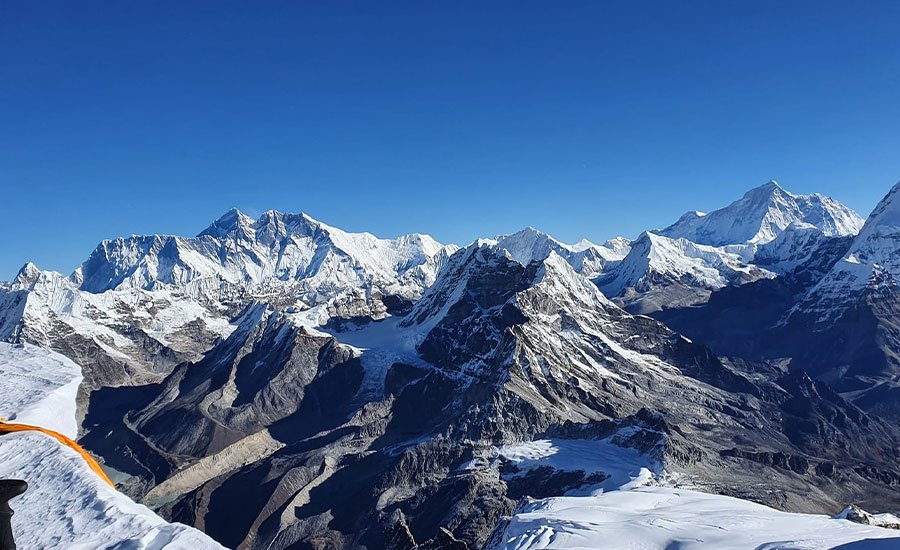
Gokyo, popularly known as Gokyo Ri, and the Gokyo Lake System are glacial in the Everest region of the Himalayas. Five lakes are scattered in the same line as the main lake, named Gokyo, which covers an area of 42.9 ha (106 acres). Gokyo village, a small hamlet, lies on the eastern shore of the lake, and one of the biggest glaciers, Ngozumpa Glacier, is adjacent to the lake. This trek offers one of the best trekking experiences in the Himalayas, in which you can enjoy the majestic views of the peaks, including Mt Everest (8,848 m/29,029 ft), Makalu (8,485 m/27,838 ft), Cho Oyu (8,201 m/26,906 ft), Ama Dablam (6,812 m/22,349 ft), Thamserku (6,608 m/21,680 ft), Kantenga, Cho-Latse, Tawache, and others. The Gokyo Valley Trek is not only popular for the scenic view of Himalayan peaks but also for the rich Sherpa culture and high Himalayan lifestyle, which amaze you equally. During the trek, you will climb the peak Gokyo Ri (5,357 m/17,575 ft), from where you can get the magnificent view of the Himalayan peaks and Everest.
The Gokyo Valley Trek is a high-altitude trek that requires good physical fitness, preparation, and endurance. Trekkers are required to walk for an average of 5-6 hours daily in steep uphill climbs, rocky trails, and uneven terrain. The route becomes more demanding as you continue from Namche Bazaar towards Dole, Machhermo, and Gokyo.
The main challenge is reaching Gokyo Ri (5,357 m), where the thin air, cold temperatures, and steep ascent make walking more difficult. Proper acclimatisation, sufficient hydration, and a slow walking pace are important to reduce the risk of altitude sickness. Our itinerary allows gradual altitude gain and time to adjust before reaching the higher sections.
Although the trek can be completed by physically prepared beginners, previous hiking experience and regular endurance training are helpful. The views of Gokyo Lakes, Ngozumpa Glacier, Mount Everest, Cho Oyu, and other Himalayan peaks make the challenging journey rewarding.
Accommodation on the Gokyo Valley Trek is mainly provided in local teahouses and mountain lodges along the trekking route. Facilities vary depending on the altitude, location, and accommodation category.
Standard Accommodation: Standard teahouses provide twin-sharing rooms with beds, mattresses, pillows, and blankets. Most have shared bathrooms, while hot showers and charging facilities may be available for an additional cost. Lodges at higher elevations, particularly Machhermo and Gokyo, generally offer more basic facilities due to their remote locations.
Comfort/Luxury Accommodation: More comfortable lodges and luxury resorts are available in selected lower-altitude settlements, including Lukla Namche Bazaar. Depending on the lodge, facilities may include attached bathrooms, electric heating blanket, hot showers, Wi-Fi, and improved dining arrangements.
The Gokyo Valley Trek begins with a mountain flight to Lukla, the main entry point to the Everest region. The flight to Lukla is itself a thrilling adventure where you land on a 527 m short airstrip in the mountain ridge at 2,860 m. Depending on the season and airline arrangements, flights may operate from Kathmandu or Manthali Airport in Ramechhap. During the busy spring and autumn trekking seasons, travellers often need to drive from Kathmandu to Ramechhap, which generally takes around 4-5 hours or longer depending on road conditions.
Flights to Lukla depend heavily on mountain weather, particularly visibility and wind conditions. Delays and cancellations are possible, so keeping an additional day in your travel schedule is recommended. If regular flights are disrupted, our team can assist with alternative travel arrangements, including helicopter services where available, at an additional cost.
 Hotel
Arrive in Kathmandu, where our friendly representative will meet and greet you at Tribhuvan International Airport. We transfer you to the hotel and complete check-in formalities. Later, we will take you around Thamel, one of Kathmandu's main tourist areas, known for its restaurants, trekking equipment shops, money exchange counters, and other travel services. You can purchase any essential items and gears needed for the trek. We will also arrange a pre-trek briefing at our office, where you will receive information about the itinerary and preparations. Overnight at the hotel in Kathmandu. In case of flight delays, the scheduled activities may be adjusted accordingly.
 4-5 hrs
Hotel
 B
Following early morning breakfast, we continue our sightseeing tour of Kathmandu, visiting two important religious and cultural sites: Pashupatinath Temple and Boudhanath Stupa.
Pashupatinath Temple: Located on the banks of the Bagmati River, Pashupatinath is one of the most sacred Hindu temples dedicated to Lord Shiva. The temple is a UNESCO World Heritage Site and attracts thousands of devotees, particularly during the Maha Shivaratri festival in February or March. During the visit, you can explore the temple surroundings and observe traditional Hindu cremation rituals along the river.
Boudhanath Stupa: Our next destination is Boudhanath, one of the largest Buddhist stupas in Nepal, located in the eastern part of Kathmandu. The monument features the symbolic eyes of Buddha facing four directions and is an important pilgrimage destination for Buddhist devotees. You can walk around the stupa, observe the prayer rituals, and explore its peaceful surroundings, influenced by Mahayana Buddhist traditions.
After completing the sightseeing tour, we returned to the hotel. You can use the remaining time to prepare your equipment and personal belongings for the Gokyo Valley Trek. Overnight in Kathmandu.
3.5 hrs
Lodge
B/L/D
Today, we begin our journey towards the Everest region with an early morning flight to Lukla. Depending on the trekking season and flight arrangements, we may depart from Kathmandu or Ramechhap Airport, which requires approximately 4- 5 hours of driving from Kathmandu.
The flight offers beautiful views of Himalayan mountains, green hills, river valleys, and traditional settlements.
After arriving in Lukla, we meet our trekking crew before starting the walk towards Phakding (2,610 m). The trail involves mostly gradual descents with some gentle uphill sections, making it a comfortable introduction to trekking in the Everest region. We walk through small villages and scenic landscapes along the Dudh Koshi River. we reach Phakding, a beautiful Sherpa settlement beside the river. Overnight at a local teahouse.
5 hrs
Namche Bazaar
B/L/D
After breakfast, we continue towards Namche Bazaar (3,440 m) following the Dudh Koshi River through forests of pine and deodar cedar. The trail passes several small settlements and suspension bridges before entering Sagarmatha National Park, a UNESCO World Heritage Site. As we approach Namche Bazar, we cross one of the highest suspension bridges along the route. The final section involves a steep uphill climb through pine forests, which can be physically demanding.
Namche Bazaar is the main trading and tourism centre of the Khumbu region. Historically, it was an important marketplace for Nepali and Tibetan traders travelling through the Nangpa La Pass (5,806 m). Today, the town has numerous lodges, restaurants, trekking shops, and other facilities. We spend the next two nights in Namche Bazaar to help our bodies adjust to the increasing altitude.
2-5 hrs
Lodge
B/L/D
Today is an acclimatisation day in Namche Bazaar, allowing us to adjust to the altitude before continuing towards Gokyo Valley. After breakfast, we hike towards Everest View Hotel (3,880 m), a popular viewpoint offering beautiful mountain scenery. The route passes Syangboche Airstrip (3,780 m), a high-altitude airstrip that is not used for regular commercial flights. As we gain elevation, we can enjoy views of Mount Everest, Lhotse, Ama Dablam, Thamserku, Taboche, Peak 38 (Shanti Shikhar or Shartse), and other Himalayan peaks.
We also visit Khumjung Village (3,790 m), where the Hillary School was established with support from Sir Edmund Hillary, one of the first two climbers to reach the summit of Mount Everest on May 29, 1953. After having lunch at a local teahouse, we can explore the nearby village of Khunde, where the Hillary-supported hospital provides medical services to local communities. We then return to Namche Bazaar for an overnight stay.
5-7 hrs
Lodge
B/L/D
After breakfast, we leave Namche Bazaar and follow a scenic trail towards Kyangjuma (3,550 m). The initial section involves a relatively comfortable walk of approximately two hours, with beautiful mountain views along the way. At Kyangjuma, the trail separates into two routes. We follow the upper trail towards Gokyo Valley, while the lower route continues towards Everest Base Camp (5,364 m). From here, the path gradually climbs towards Mong La or Mongla (3,973 m), a scenic high-altitude village and viewpoint offering impressive views of the surrounding mountains.
We may stop for lunch at Mong La or descend towards Phortse Tenga for a meal. The trail passes through rhododendron forests, which are especially beautiful during the spring flowering season. The area is also home to wildlife, including Himalayan tahr, deer, and Himalayan monal. From Phortse Tenga, we continue with a steep uphill walk of approximately two hours through pine and rhododendron forests until we reach Dole village (4,038 m). Overnight stay at a local lodge in Dole.
5-6 hrs
Lodge
B/L/D
On the 7th day of the trek, we begin our trek after breakfast, following an uphill trail through the increasingly open alpine landscapes above Dole. The first section involves approximately an hour of climbing before reaching Lapharma village, where we can stop for tea and a short rest. From Lapharma, the trail becomes relatively gentle as we continue through mountain pastures and the small settlement of Luza. The surroundings gradually become more barren as we gain elevation, with fewer trees and wider views of the surrounding hills and peaks.
We eventually reach Machhermo (4,470 m), a small mountain settlement situated near a glacial stream. The area experiences colder temperatures because of its high altitude. During our stay, we may visit the local seasonal medical facility associated with the Himalayan Rescue Association to learn about altitude sickness and its prevention. Overnight at a lodge in Machhermo.
5 hrs
Lodge
B/L/D
After breakfast, we leave Machhermo and begin with a short but steep climb towards a chorten situated above the village. From this point, we can enjoy magnificent views of the nearby mountains and surrounding valley. The trail continues towards Pangka, an area known for the tragic avalanche in 1995 that claimed more than 40 lives. We then descend towards the riverbed and follow the trail with the Ngozumpa Glacier visible on our right. As we continue uphill, we reach the first lake of the Gokyo lake system. The route takes us past the second lake before arriving at the third and largest lake, Dudh Pokhari, beside Gokyo Village. The beautiful turquoise lakes, glacial landscapes, and surrounding Himalayan peaks make Gokyo one of the major highlights of the trek. We spend the night at a local lodge in Gokyo Village.
4-5 hrs
Lodge
B/L/D
Today, we start early in the morning for the challenging climb to Gokyo Ri (5,357 m), one of the best Himalayan viewpoints in the Everest region. The trail is steep and rocky, and the high altitude makes the ascent physically demanding. We aim to reach the viewpoint around sunrise to enjoy panoramic views of Mount Everest, Makalu, Cho Oyu, and numerous other Himalayan peaks. The summit also provides beautiful views of the Gokyo Lakes and the surrounding glacial valley.
After spending some time at the viewpoint, we descend to Gokyo Village (4,750 m) for lunch and rest. Later in the day, we can explore the lakeside area or walk towards a nearby ridge to observe the Ngozumpa Glacier, one of the longest glaciers in the Himalayas. Overnight stay at a lodge in Gokyo.
6-7 hrs
Lodge
B/L/D
On day 10, we leave Gokyo Village and begin descending towards Phortse Tenga following the breakfast. We follow the same route used during the ascent, passing the Gokyo Lakes and the alpine settlements along the valley. As we reach Phortse Tenga, the rocky and open alpine terrain changes into green forests of pine and rhododendron. The settlement is situated near the Dudh Koshi River and provides a peaceful place to rest after the long downhill walk. Overnight at a local lodge in Phortse Tenga.
6 hrs
Lodge
B/L/D
Day 11 begins with breakfast and continues descending towards Namche Bazaar. Along the way, we pass through beautiful forests and mountain trails before arriving in Namche, where we stop for lunch. After lunch, we follow the downhill trail towards Monjo. The route includes steep descending sections and passes through the familiar landscapes of the lower Khumbu Valley. We reach Monjo in the afternoon and spend the night at a local lodge following dinner.
4 hrs
Hotel
B/L/D
Today is our final trekking day in the Everest region. After breakfast, we leave Monjo and follow the trail along the Dudh Koshi River, passing local villages, forests, and several suspension bridges. We walk through Phakding once again and continue towards Lukla. Some sections involve uphill walking, while the suspension bridges provide beautiful views of the river and surrounding valley. Upon reaching Lukla, we thank our guides and porters for their support throughout the trek. We can spend the evening celebrating the completion of our Gokyo Valley Trek and enjoying the final night in the mountains. Overnight stay at a hotel in Lukla.
4-5 hrs
Hotel
B
After an early breakfast, we head towards Tenzing-Hillary Airport for our return flight from Lukla. Depending on the flight schedule and season, we fly either directly to Kathmandu or to Ramechhap Airport. The short and scenic mountain flight offers another opportunity to enjoy views of the Himalayas, deep river valleys, forests, and terraced farmland. The departure from Lukla's mountain airstrip is also a distinctive experience of travelling in the Everest region.
If we land at Ramechhap, we continue to Kathmandu by road, which normally takes approximately 5 hours, depending on traffic and road conditions. For flights arriving directly in Kathmandu, we arrange a transfer to the hotel. After arriving in Kathmandu, you can rest at the hotel following your Himalayan trekking journey. Overnight stay at a hotel in Kathmandu.
4 hrs
Hotel
B
After completing the Gokyo Valley Trek, we spend the day exploring the historical streets and cultural attractions of Kathmandu. The city has a long history of trade, traditional architecture, local markets, and religious practices that continue to influence everyday life. Our tour takes us through the historical markets of Ason, Indrachowk, and New Road, where you can observe busy traditional shops, old buildings, and local trading activities. These areas provide an opportunity to experience the traditional lifestyle and cultural heritage of Kathmandu. We then visit Kathmandu Durbar Square, a UNESCO World Heritage Site known for its historic royal palaces, courtyards, and temples. One of the major attractions is the Kumari Ghar, the residence of Nepal's Living Goddess, where you can learn about this unique cultural tradition. After completing the tour, we return to the hotel. You can spend the rest of the evening relaxing or preparing for your international departure.
Breakfast
Today your journey to the Gokyo Valley Trek with Mountain Delights comes to a conclusion. After breakfast, our representative will arrange your transfer to Tribhuvan International Airport according to your flight schedule. Our team will assist with your departure arrangements and bid you farewell before your journey home.

Airport arrival pickup and departure transfer in Kathmandu.
Accommodation at a three-star hotel in Kathmandu with breakfast.
Teahouse or lodge accommodation during the trek.
Daily breakfast, lunch, and dinner throughout the trekking journey.
Tea or coffee served three times daily during the trek.
An experienced, government-licensed trekking guide.
Porter support to carry your trekking bag.
An additional assistant guide for groups of five or more trekkers.
Two-way domestic flights between Kathmandu and Lukla, including airport departure taxes.
Accommodation, wages, insurance, and transportation expenses of the trekking staff.
Guided cultural sightseeing in Kathmandu with private transportation and monument entrance fees.
Khumbu Pasang Lhamu Rural Municipality entry permit.
Sagarmatha National Park entry permit.
Trek completion certificate.
Complimentary use of a down jacket, sleeping bag, fleece liner, and duffel bag during the trek.
Basic first-aid supplies, including a pulse oximeter to monitor oxygen levels.
Fresh seasonal fruits served during the trekking journey.
All applicable government taxes.
Donations, grants, tips, and gifts to guides, trekking staff, or others
Personal expenses for alcoholic beverages, bottled mineral water, soft drinks, and cigarettes.
Personal travel insurance, including medical and emergency evacuation coverage.
Additional expenses caused by unforeseen circumstances or situations beyond our control.
Lunch and dinner expenses during your stay in Kathmandu.
Personal tips for trekking guides, porters, and drivers.
Any services, activities, or expenses not mentioned in the package inclusions.
Proper trekking equipment is important for a comfortable and safe journey in the Himalayas. The following checklist includes essential clothing, trekking gear, personal supplies, and optional items you may need during the trek. You can choose equipment from different brands according to your budget and preferences. Most trekking items are available for purchase or rent at reasonable prices in Kathmandu.
Four-season sleeping bag: Suitable for cold mountain temperatures. We can provide one if required, but it must be returned after the trek.
Duffel bag or rucksack: For carrying your trekking clothes and personal belongings. A duffel bag can be provided for temporary use and should be returned after the trek.
Daypack: A comfortable backpack for carrying water, snacks, a camera, and other daily essentials.
Down jacket: Important for warmth during cold mornings, evenings, and high-altitude stays. Available from us upon request and must be returned after completing the trek.
Sun hat or baseball cap: Protects your face from direct sunlight. You can also use a bandana underneath to cover your neck and ears.
Warm hat: One woollen or synthetic hat that provides proper coverage for your head and ears.
Balaclava: A lightweight face covering for protection against cold winds.
Glacier sunglasses: Good-quality sunglasses that provide adequate UV protection in snowy and high-altitude areas.
Headlamp: Essential for walking in low light and moving around lodges at night.
Earmuffs: Optional extra protection for your ears, although a warm hat and hooded jacket are generally sufficient.
Neck warmer: Useful for additional warmth around your neck and lower face during cold weather.
Liner gloves: One pair of thin woollen or synthetic gloves for mild temperatures or for wearing underneath thicker gloves.
Warm gloves: One insulated pair to protect your hands from cold temperatures at higher elevations.
Hand warmers: Optional instant heat packs for extremely cold conditions. Proper winter gloves are generally sufficient for most trekking days.
2 comfortable, quick-drying T-shirts.
Lightweight and heavyweight thermal base layers for different temperatures.
1 fleece jacket or warm pullover.
Windproof fleece jacket for extra protection (optional).
1 waterproof and breathable outer jacket for rain, snow, and strong winds.
2 synthetic sports bras for women; avoid cotton materials.
2 long-sleeved shirts for additional coverage and comfort.
Hiking shorts: Two pairs of lightweight, quick-drying nylon shorts suitable for warmer trekking days.
Underwear: Four pairs of comfortable, moisture-wicking underwear. Synthetic materials are preferable to cotton.
Thermal bottoms: Two pairs of lightweight synthetic long underwear for insulation.
Softshell trousers: One pair of flexible trekking trousers, preferably with full-length side zippers.
Trekking trousers: Two pairs of comfortable hiking trousers. Convertible trousers that can be changed into shorts are a practical option.
Waterproof trousers: One pair of breathable hardshell trousers, preferably Gore-Tex or similar material, with side zippers for easy wearing over trekking boots.
Casual trousers: One pair of loose cotton trousers, jeans, or khakis for travelling and relaxing at lodges.
Keep your clothes properly packed in waterproof storage bags to prevent them from getting wet during the trek.
Liner socks: Carry 2-4 pairs of lightweight synthetic socks to wear underneath thicker trekking socks.
Thick trekking socks: Pack 2-3 pairs of warm socks for colder sections of the trail.
Lightweight socks: One pair for walking at lower elevations or during warmer weather.
Trekking boots: One pair of comfortable, waterproof hiking boots with good ankle support and grip. Make sure they fit properly with your trekking socks and have been worn before the trip to reduce the chance of blisters.
Light shoes or trainers: One pair for wearing around teahouses, campsites, or Kathmandu.
Sandals: Optional footwear for relaxing after a long day of trekking.
Our trekking guide carries a first-aid kit during the journey. However, we recommend bringing a small personal medical kit with any medicines and basic supplies you may require.
Headache medicine, such as Excedrin, if suitable and recommended by your healthcare professional.
Ibuprofen or other appropriate pain relief for general muscle aches and discomfort.
Medication for diarrhoea and stomach problems, such as Imodium or Pepto-Bismol, where medically appropriate.
Acetazolamide (Diamox), commonly available in 125 mg and 250 mg tablets, may be prescribed for altitude sickness prevention. Consult your healthcare professional before taking it.
Personal first-aid supplies, including adhesive bandages, blister pads or moleskin, waterproof medical tape, and antiseptic ointment.
Any prescribed medication required for your personal health conditions.
Important: Do not ignore headaches or other possible symptoms of altitude sickness. Inform your trekking guide immediately, as medication should not be used to hide worsening altitude-related symptoms.
Passport: Carry your original passport and four additional passport-size photographs.
Flight tickets: Keep copies of your airline tickets and leave an additional copy at our Kathmandu office if required for travel arrangements.
Travel wallet: A secure pouch for keeping your passport, cash, permits, and important documents.
Lip balm: Lip care with SPF 20 or higher to prevent dry and cracked lips. A lip balm with a neck cord can be convenient while walking.
Sunscreen: Good-quality SPF 40 or higher sunscreen for protection against strong mountain sunlight. Check the expiry date before travelling.
Pocket knife: A small multipurpose knife or Swiss Army knife, packed in accordance with airline baggage regulations.
Water purification supplies: Iodine tablets, purification crystals, or another suitable method for treating drinking water.
Toiletries: Personal hygiene items such as toilet paper, wet wipes, hand sanitiser, soap, a towel, and other daily essentials. Keep toilet paper and sensitive items in waterproof bags.
Bandanas: Two pieces for protecting your face and neck from sunlight, dust, and wind.
The following items are not compulsory but may provide additional comfort and convenience during the trek.
Adjustable trekking poles: Helpful for maintaining balance on rocky trails and reducing pressure on your knees and ankles, particularly during steep descents.
Favourite snacks: Energy bars, chocolates, or other lightweight food items for additional energy while walking.
Books or playing cards: Useful for spending free time at teahouses and camps.
Binoculars: For observing distant mountains, landscapes, and wildlife.
Camera: A compact digital camera or DSLR for capturing the Himalayan scenery. Carry spare batteries and protect them from cold temperatures.
Hydration bladder: A water reservoir with a drinking tube and insulated hose for convenient hydration while trekking.
Urination bottle or funnel: Optional personal equipment that may be useful during cold nights at high-altitude camps.
Stainless steel thermos: A small insulated flask for carrying warm drinking water or tea.
Note: Pack all clothing, electronics, and essential personal items in waterproof stuff sacks or durable plastic bags. This will help protect your belongings from moisture, rain, and snow throughout the trekking journey.
Gokyo Valley Trek reaches 5,357 m, which is high altitude. Most people adapt well when they climb slowly, so the pace of the itinerary matters more than fitness alone.
The higher routes include acclimatisation days. Your guide checks every day how you are coping, can add a rest day, and will turn the group around if conditions or anyone's health make it unsafe to go on.
Headache, nausea, loss of appetite, dizziness and poor sleep are early signs of altitude sickness: tell your guide and do not go higher. Confusion, breathlessness at rest or unsteady walking are serious: descend at once.
Travel insurance that covers medical treatment, air ambulance and helicopter rescue is a condition of booking. Check that your policy covers trekking up to 6,000 m. If an evacuation is needed, we coordinate it with your insurer.
Our guides are licensed and come mostly from the mountain regions. Porters carry no more than 25–30 kg, are insured, and are never sent down alone when they are sick or hurt.
Booking and insurance terms · Ask us about fitness and acclimatisation for this trip
Rated Excellent by 500+ travellers on
5.0from 2 reviews of this trip
 Lara Smyth-Osbourne11 reviews
I am so grateful to Mountain Delights for giving me the most incredible experience on my trek to Everest Base Camp and Gokyo Lakes. My guide, Babu, was amazing, so kind and caring, making sure my safety was always prioritised. It was such a special couple of weeks, and wouldn't have been the same without Babu.
Couldn't recommend Mountain Delights more, Thank you so so much!
Lara Smyth-Osbourne11 reviews
Google review
EBC
 Jette Ramdohr4 reviews
Google review
 Yili Quinlan10 reviews
Google review
 Flow LukasLocal Guide · 21 reviews
I took quite a lot of time on-site to compare different trekking agencies, and I’m very happy that I chose Mountain Delight.
They are a local, well-connected, and very well-organized company. I booked the Everest Base Camp trek combined with Island Peak. What I really appreciated is that the agency is actively working in the background while you are on the trek. Due to weather conditions, some plans had to be adjusted, and this is exactly why it is important to book with an experienced and well-connected agency like Mountain Delight.
My guide, Mindu, is an original Sherpa who knows the region extremely well. He was able to show me not only the route but also share a lot about the local culture, religion, and wildlife. I am very grateful for his support and experience.
I highly recommend Mountain Delight to anyone looking for a reliable, safe and professional trekking experience in Nepal.
Flow LukasLocal Guide · 21 reviews
Google review
Island Peak with EBC: Highly recommend Mountain Delights
 Thomas Loveneke3 reviews
Google review
 Bimal GandhiLocal Guide · 13 reviews
Google review
 ooZberg1 contributions
Nov 2018 • Couples
Written February 6, 2019
This review is the subjective opinion of a Tripadvisor member and not of Tripadvisor LLC.
ooZberg1 contributions
Tripadvisor review
Gokyo lakes
Travelled Nov 2018 · Couples
This review is the subjective opinion of a Tripadvisor member and not of Tripadvisor LLC.
 A Clausen9 contributions
Oct 2026 • Family
Written October 13, 2026
This review is the subjective opinion of a Tripadvisor member and not of Tripadvisor LLC.
A Clausen9 contributions
Tripadvisor review
Amazing trekking tour to EBC
Travelled Oct 2026 · Family
This review is the subjective opinion of a Tripadvisor member and not of Tripadvisor LLC.
 Thomas Gordon C14 contributions
Oct 2026 • Family
Written October 13, 2026
This review is the subjective opinion of a Tripadvisor member and not of Tripadvisor LLC.
Thomas Gordon C14 contributions
Tripadvisor review
Mount Everest Base Camp Tour
Travelled Oct 2026 · Family
This review is the subjective opinion of a Tripadvisor member and not of Tripadvisor LLC.
 Binu8 contributions
May 2026 • Friends
Written May 7, 2026
This review is the subjective opinion of a Tripadvisor member and not of Tripadvisor LLC.
Binu8 contributions
Tripadvisor review
Life time experience and memories
Travelled May 2026 · Friends
This review is the subjective opinion of a Tripadvisor member and not of Tripadvisor LLC.
Peter H1 contributions
Nov 2025 • Family
Written December 1, 2025
This review is the subjective opinion of a Tripadvisor member and not of Tripadvisor LLC.
Peter H1 contributions
Tripadvisor review
Outstanding service
Travelled Nov 2025 · Family
This review is the subjective opinion of a Tripadvisor member and not of Tripadvisor LLC.
Apr 2025 • Solo
Written June 14, 2025
This review is the subjective opinion of a Tripadvisor member and not of Tripadvisor LLC.
EBC via Gokyo Lakes
Travelled Apr 2025 · Solo
This review is the subjective opinion of a Tripadvisor member and not of Tripadvisor LLC.
Date of experience: Mar 2025
To Gokyo Ri with mountain delights
Travelled Mar 2025
Date of experience: Oct 2026
Fantastic adventure and Well organized
Travelled Oct 2026
 Thomas Gordon Clausen33 reviews
Date of experience: Oct 2026
Thomas Gordon Clausen33 reviews
Trustpilot review
We used Mountain Delight Treks to trek Everest Base Camp
Travelled Oct 2026
Date of experience: Apr 2025
I did a trek to EBC this April and the…
Travelled Apr 2025
Did the 11 day trek from Lukla to Everest Base Camp in April 2025. Had a fantastic experience. Not least because of excellent guidance from Mingur Sherpa and his team. Mountain Delights CEO Ram Sapkota provided a very well arranged package and logistics which worked flawlessly. Can highly recommend them for the future.
Date of experience: Apr 2025
Amazing Trek to EBC
Travelled Apr 2025
 olivia1N1 reviews
Words cannot describe how happy we are with this trip thanks to Mountain Delights. Great information from start, logistics, loan of gear, professional guides and a very inspiring company history. We felt safe during the entire trip and it is truly a memory for life, being surrounded by all these beautiful mountains.
Date of experience: Oct 2024
olivia1N1 reviews
Trustpilot review
An amazing adventure to Everest Base Camp
Travelled Oct 2024
Travelled with us? Send us your review or post it on Google, Tripadvisor or Trustpilot.
The Gokyo Valley Trek generally takes 13-16 days, depending on the itinerary and trekking pace. Mountain Delights offers a 15-day package that includes Kathmandu sightseeing, flights to Lukla, trekking through the Khumbu region, and a hike to Gokyo Ri. The itinerary also includes time for acclimatisation in Namche Bazaar before continuing towards Gokyo Lakes.
The Gokyo Valley Trek is considered a challenging high-altitude trek, but physically prepared beginners can also complete it. The journey involves around 5-6 hours of walking daily through steep mountain trails, rocky terrain, and high-altitude settlements. The climb to Gokyo Ri is particularly demanding because of the altitude. Regular exercise, hiking experience, and proper acclimatisation are recommended before joining the trek.
Spring (March to May) and autumn (September to November) are the best seasons for the Gokyo Valley Trek. During spring, you can enjoy relatively pleasant temperatures and flowering rhododendron forests along the lower trails. Autumn offers clearer skies and excellent visibility of Mount Everest and other Himalayan peaks. Winter is much colder, while the monsoon season brings rainfall, cloudy weather, and possible flight delays.
The highest point of the Gokyo Valley Trek is Gokyo Ri at 5,357 m. From this viewpoint, trekkers can enjoy panoramic views of Mount Everest, Makalu, Cho Oyu, Lhotse, and other Himalayan mountains. You can also see the beautiful Gokyo Lakes and Ngozumpa Glacier. The early morning hike to Gokyo Ri is one of the major highlights of the journey.
Trekkers need a Sagarmatha National Park Entry Permit and a Khumbu Pasang Lhamu Rural Municipality Permit to complete the Gokyo Valley Trek. These permits allow access to the protected national park and local trekking areas of the Khumbu region. Both permits are included in our Gokyo Valley Trek package, and Mountain Delights handles the necessary arrangements.
No, the standard Gokyo Valley Trek does not include Everest Base Camp. The route follows the Everest region trail until it separates towards Dole, Machhermo, and Gokyo Lakes. However, trekkers who want to visit both Gokyo Valley and Everest Base Camp can choose an extended itinerary via Cho La Pass. This route requires additional trekking days, good physical preparation, and suitable weather conditions.
Travellers
Free, no-obligation enquiry. We reply personally. Full booking terms

Discover more adventures like this one, offering the same incredible experiences and destinations. Find your next journey today!
Everest · Trekking
Everest · Trekking
Everest · Trekking
Everest · Trekking
Everest · Trekking
Everest · Trekking
Everest · Trekking
Everest · Mountain Expedition
Everest · Mountain Expedition
From our blog
Mount Everest location explained, including its position on the Nepal-Tibet border, geographic coordinates, and key…