- Quick Comparison: ABC vs. EBC
- Key Factors That Shape Your Trekking Experience
- 1. Trail Conditions: Stone Steps vs. Rocky Mountain Paths
- 2. Difficulty Level
- 4. Scenery: Annapurna Sanctuary vs. Everest Region
- More Things to Consider Before Choosing Your Trek
- 1. Best Time to Visit
- 2. Budget and Travel Costs
- 3. Permits
- Conclusion
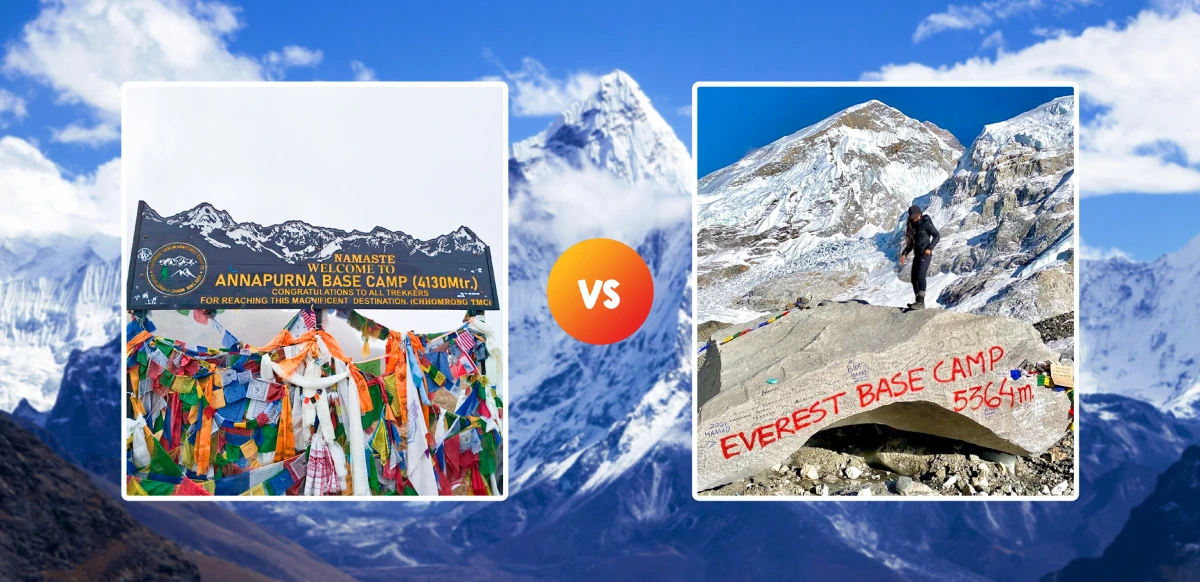
Annapurna and Everest Base Camp treks are both iconic Himalayan destinations in Nepal. Both treks take you to the foot of 8,000 m giant mountains. However, you will experience differences in rhythms, landscapes, and physical tests.
Here is a closer look at how both of these treks are different, and what features are similar that help you choose the best fit for your fitness level, interests, and travel style.
Quick Comparison: ABC vs. EBC
|
Trekking Factors |
Annapurna Base Camp Trek |
Everest Base Camp Trek |
|
Maximum altitude |
4,130 m(13,551 ft) |
5,364 m(17,598 ft) at EBC / 5,550 m at Kala Patthar |
|
Average duration |
7-12 days |
12-14 days |
|
Difficulty |
Moderate to challenging |
Challenging |
|
Starting point |
Pokhara |
Lukla |
|
Trail |
Stone steps, forest paths, and river crossings |
Suspension bridges, rocky paths, and glacial deposit |
|
Accommodation |
Teahouses and lodges |
Teahouses and lodges |
|
Best seasons |
Spring and autumn |
Spring and autumn |
|
Mountain views |
Annapurna I, Machhapuchhre, Hiunchuli |
Everest, Lhotse, Nuptse, Ama Dablam |
|
Cultural experience |
Gurung and Magar villages |
Sherpa villages and Buddhist monasteries |
|
Approximate budget |
$500 to $1,500 USD. |
$1,000 to $2,500+ USD |
|
Highest overnight altitude |
Around 3,700 m, depending on itinerary |
Around 5,164 m at Gorakshep |
Key Factors That Shape Your Trekking Experience
The following factors explain what makes the ABC and EBC treks different and what you can expect on each trail.
1. Trail Conditions: Stone Steps vs. Rocky Mountain Paths
One of the biggest differences between ABC and EBC is the type of trail you walk on. Both routes involve uphill and downhill sections, but the terrain is quite different.
Annapurna
If you take the popular route through Ghandruk, Sinuwa, Bamboo, and Deurali, you will encounter plenty of stone staircases. However, you won't be climbing steps continuously. The trail alternates between steep staircases, forest paths, and rocky sections. These repeated climbs and descents can be tiring, especially for your knees and leg muscles. However, the trails are well-established, and you do not need any technical climbing skills.
Everest
The Everest Base Camp trek also has some staircases. The most noticeable one is the climb to Namche Bazaar. The trail is the mix of stone steps, forest paths, suspension bridges, and rocky mountain trails and has less stair as compared to ABC trek.
As you move beyond Dingboche towards Lobuche and Gorak Shep, the landscape becomes more barren, and the trail gets rougher, with loose rocks, gravel, and uneven glacial paths. These rocky sections can make walking difficult.
2. Difficulty Level
Both treks require good physical fitness, but they challenge your body in different ways.
-
ABC is harder on your legs: Most days involve around 4-6 hours of walking. The steep stone staircases and repeated uphill and downhill sections can make your legs tired. However, the maximum altitude is lower than EBC.
-
EBC is harder on your stamina and breathing: You spend several days above 4,000 metres, where the air contains less available oxygen. Even walking slowly can feel difficult. The long trekking days and high altitude make this route more physically demanding.
In general, EBC is more challenging because of its altitude and longer duration. ABC is also demanding, particularly because of its steep staircases.
A common question among first-time trekkers is whether ABC or EBC requires mountaineering equipment. The answer is no. Neither standard trek requires ropes, harnesses, ice axes, or crampons. Both are walking treks that can be completed without previous mountaineering experience.
So, what does moderate climbing mean in trekking descriptions? On ABC and EBC, climbing generally refers to walking uphill on steep trails, climbing stone steps, or carefully crossing rocky sections. Trekking poles can help with balance and reduce pressure on your knees.
However, climbing nearby trekking peaks such as Island Peak or Lobuche East is a different experience. These climbs require technical equipment, including crampons, harnesses, and ropes, along with additional mountaineering skills.
4. Scenery: Annapurna Sanctuary vs. Everest Region
Both treks offer beautiful Himalayan scenery, but the landscapes are quite different.
What Makes Annapurna Base Camp Special?
The ABC trek is known for its changing landscapes. You begin your journey through terraced farms and traditional Gurung villages such as Ghandruk. As you continue, you pass through green forests, bamboo groves, and rhododendron trees. The biggest highlight is reaching the Annapurna Sanctuary. At 4,130 metres, you are surrounded by mountains on almost every side. Annapurna I, Annapurna South, Hiunchuli, and Machhapuchhre create an impressive natural atmosphere. The close-up mountain views make ABC a special experience for anyone who loves nature and mountain scenery.
What Makes Everest Base Camp Special?
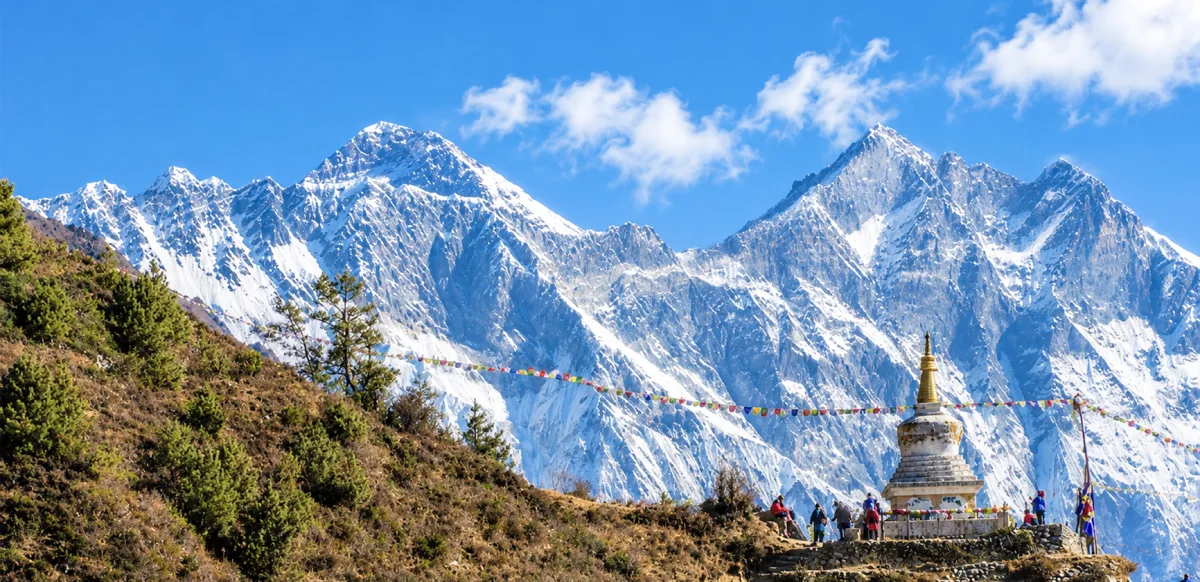
The EBC trek offers a different kind of mountain experience. The route takes you through the famous Sherpa region, where you can explore traditional villages, monasteries, and the history of Himalayan mountaineering. You will pass Tengboche Monastery, enjoy views of Ama Dablam, and see memorials dedicated to climbers who lost their lives in the mountains.At Everest Base Camp (5,364 m), you reach the base of the world's highest mountain. You can also hike to Kala Patthar (5,550 m), one of the best viewpoints for seeing Mount Everest, Lhotse, Nuptse, and Ama Dablam.
More Things to Consider Before Choosing Your Trek
You need to know about the following things before planning your trek.
1. Best Time to Visit
Spring (March to May) and autumn (September to November) are generally the best seasons for both treks. During spring, rhododendron forests along the ABC route come alive with flowers. Autumn is popular for clear skies and good mountain views. Both seasons offer favourable trekking conditions, although weather can change quickly in the mountains.
2. Budget and Travel Costs
The ABC trek is more affordable than EBC. You can reach the Annapurna region by road through Pokhara, avoiding the expensive mountain flight to Lukla. EBC usually requires more trekking days, and daily expenses can increase at higher elevations. Food, accommodation, hot showers, and Wi-Fi tend to become more expensive as supplies are carried further into the mountains.
3. Permits
Both treks require permits to enter their respective conservation areas.
-
ABC: Annapurna Conservation Area Permit (ACAP).
-
EBC: Sagarmatha National Park entry permit and Khumbu Pasang Lhamu Rural Municipality entry fee.
Conclusion
Both the Annapurna Base Camp and Everest Base Camp treks offer unforgettable Himalayan experiences, but the right choice depends on your fitness level, budget, available time, and trekking goals.
If you enjoy green forests, traditional villages, close-up mountain views, and a relatively shorter trek, Annapurna Base Camp is a great choice. If reaching the base of Mount Everest is your dream, Everest Base Camp is worth considering. It offers a longer and more demanding journey through Sherpa villages, high mountain valleys, and rocky glacial trails. The higher altitude also makes proper acclimatization especially important.
Whichever trek you choose, good preparation and the right guidance can make your journey safer and more enjoyable.
Ready to experience the Himalayas? Let Mountain Delights help you plan your next adventure. Whether you choose Annapurna Base Camp or Everest Base Camp, our team can help with itinerary planning, experienced guides, accommodation, and trekking arrangements. Get in touch with Mountain Delights and start planning your Himalayan journey today!