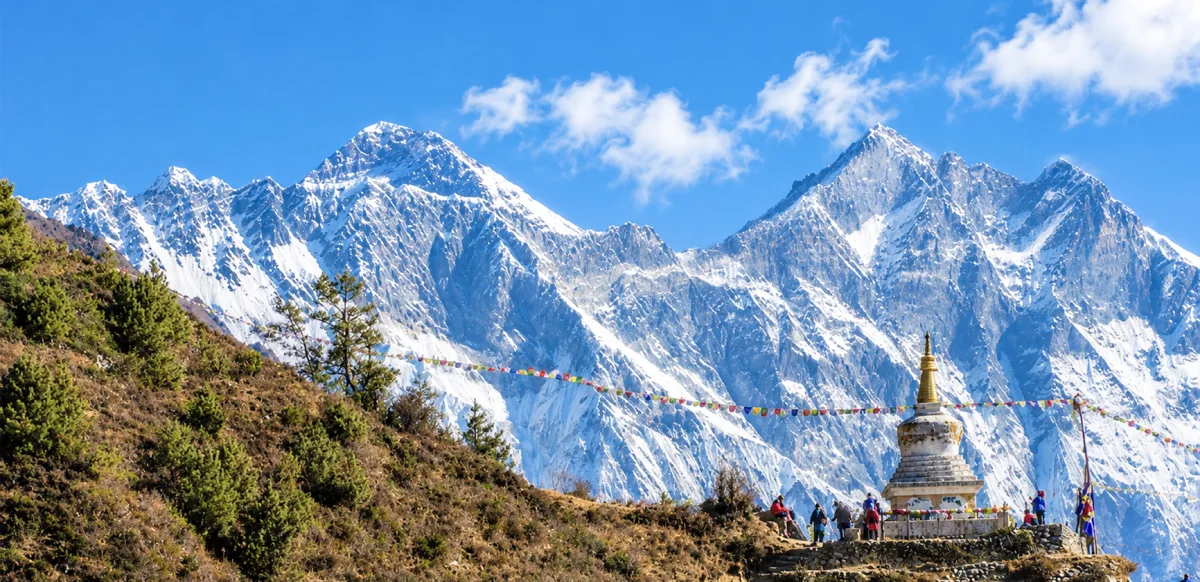
Autumn (September to November) is one of the best times for the Everest Base Camp Trek. During this season, the weather becomes stable after the monsoon, the skies are clearer, and mountain visibility improves as the season progresses. Comfortable daytime temperatures and dry trails make autumn a popular choice for trekking in the Everest region. October is particularly best for enjoying clear views of Mount Everest and the surrounding Himalayan peaks.
The Everest Base Camp Trek is a beautiful journey through the heart of the Khumbu region of Nepal. The trail takes you through traditional Sherpa villages, ancient monasteries, suspension bridges, and beautiful mountain landscapes. You will pass through Namche Bazaar, Tengboche, Dingboche, and Gorak Shep before reaching Everest Base Camp at 5,364 metres. Along the way, you can experience Sherpa culture, warm local hospitality, and breathtaking views of the Himalayas.
In this blog, we'll explore the Everest Base Camp Trek in autumn, including weather conditions, what to expect each month, and essential tips to help you prepare for your journey.
1. Weather During the Everest Base Camp Trek in Autumn
Autumn offers favourable trekking conditions in the Everest region. However, temperatures vary significantly with altitude. As you gain elevation, temperatures generally decrease by approximately 6°C for every 1,000 metres of ascent. Lower villages may have comfortable daytime temperatures, while higher settlements such as Lobuche and Gorak Shep can become freezing, particularly at night.
Month-by-month breakdown:
i) September (Early Autumn)
-
Sky Visibility: Early September may still experience monsoon clouds and occasional rainfall. Visibility gradually improves towards the end of the month.
-
Daytime Temperature: Lower villages generally experience temperatures around 10°C to 18°C, while higher elevations remain cooler.
-
Nighttime Temperature: Nights become increasingly cold with altitude, and temperatures at higher camps can fall below freezing.
-
Trail Conditions: Trails may remain wet and muddy during early September but generally become drier as rainfall decreases.
-
Crowds: September is relatively quieter than October, making it suitable for trekkers who prefer fewer crowds.
ii) October (Mid-Autumn)
October is generally considered one of the best months for the Everest Base Camp Trek.
-
Sky Visibility: Clear skies and excellent mountain visibility offer beautiful views of Everest, Ama Dablam, Lhotse, and Nuptse.
-
Daytime Temperature: Lower elevations generally experience comfortable temperatures of around 10°C to 15°C, while higher settlements are colder.
-
Nighttime Temperature: Temperatures frequently drop below freezing at higher camps.
-
Trail Conditions: Trails are generally dry and stable, making walking comfortable.
-
Crowds: October is the busiest trekking month, so booking flights and accommodation in advance is recommended.
iii) November (Late Autumn)
-
Sky Visibility: November offers crisp mornings and excellent mountain visibility, with beautiful views of snow-covered peaks.
-
Daytime Temperature: Temperatures gradually decrease, particularly at higher elevations and shaded sections.
-
Nighttime Temperature: Nights can become extremely cold, with temperatures dropping significantly below freezing at higher camps.
-
Trail Conditions: Trails are generally dry, although frost and occasional snowfall can affect higher sections.
-
Crowds: Crowds gradually decrease towards late November, offering a quieter trekking experience.
2. Why Choose Autumn for the Everest Base Camp Trek?
Autumn offers several advantages for trekkers. The skies are generally clear, allowing you to enjoy panoramic Himalayan views. The surrounding forests and hills look fresh after the monsoon, while comfortable daytime temperatures make long walking days more enjoyable.
You can also experience Nepal's major festivals, including Dashain and Tihar, which usually fall during autumn. The season provides opportunities to experience local traditions and Sherpa hospitality along the trail.
3. Essential Tips for the Everest Base Camp Trek in Autumn
-
Book Flights and Accommodation Early: October is a busy trekking month. Book your Lukla flights and teahouse accommodation in advance to avoid last-minute difficulties.
-
Pack Warm Clothing: Carry thermal layers, fleece jackets, a down jacket, waterproof outerwear, gloves, and warm socks. Higher elevations become extremely cold, especially at night.
-
Prepare for Altitude: Follow a gradual itinerary with acclimatisation days in Namche Bazaar and Dingboche. Stay hydrated, walk slowly, and never ignore symptoms of altitude sickness.
-
Carry Proper Trekking Gear: Comfortable trekking boots, trekking poles, sunglasses, sunscreen, a headlamp, and a suitable sleeping bag are essential.
-
Keep Buffer Days: Lukla flights are weather-dependent and can be delayed or cancelled. Include at least one or two extra days in your itinerary.
-
Get Travel Insurance: Choose insurance that covers high-altitude trekking and emergency helicopter evacuation. Check the maximum altitude covered before departure.
Plan Your Everest Base Camp Trek with Mountain Delights
Ready to experience the breathtaking beauty of the Himalayas? Join Mountain Delights and explore beautiful Sherpa villages, ancient monasteries, and stunning Himalayan landscapes. Our team can help you organise your autumn adventure with a well-planned itinerary and experienced trekking support.
Contact Mountain Delights today to plan your Everest Base Camp Trek and create unforgettable memories in the Khumbu region.