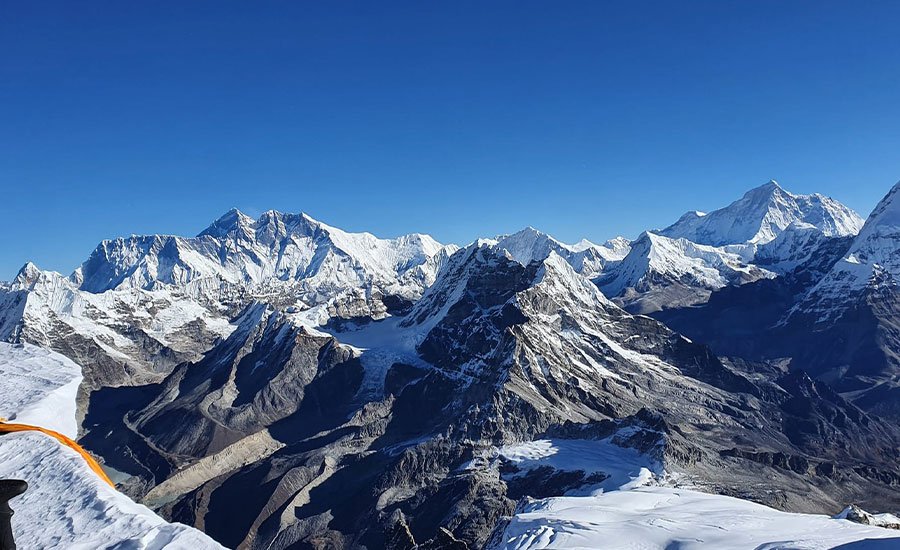
Climbing a Mera peak is a rewarding experience in Nepal's Himalayas. It is known as the highest trekking peak that offers a panoramic view of towering peaks. Climbing Mera peak is considered a stepping stone for climbing higher mountains. While Mera peak climbing can be challenging, choosing the proper season might help climbers to climb safely and successfully. Choosing the best season helps in minimizing the risks during the climb and increase the success rate.
This blog provides you information about the best seasons to climb Mera peak. The practical tips for climbing the peak and offseason risks are explained.
Spring Season (March–May)
March to May during the spring season is the popular and ideal time to do Mera peak trek. Spring season offers clear skies, stable weather, and warmer days.
1. Weather condition
Spring offers warm, steady and stable weather in the Himalayas. Trekking in Mera peak in spring gives you the best experience as you feel the atmosphere is purer than in usual days. You get to experience flower bloom throughout most of the trails during March to May.
2. Visibility
You get the best visibility during your spring season trek in Mera peak. The visibility is clear and excellent in the spring season due to which you get an undisrupted view of mountains such as Makalu and Everest.
3. Temperature
The temperature in high mountains and base camps are usually cold with an average of -5°C to -10°C at night. Meanwhile, day time temperature in lower elevations ranges from 10°C to 20°C. Weather in spring is generally comfortable during Spring in comparison to another season.
4. Wind patterns
The winds during spring are light and predictable. Early hours generally experience less wind due to which it is the best time to summit. Wind in later spring can be stronger and intense.
5. Success Rate
The success rate for Mera Peak climbers is usually high during the spring season. The weather is stable with more daylight and trails have less snow making it easier for the climbers to acclimatize. There is also less chance for trek cancellations during spring season due to favorable weather.
Autumn Season (Sept–Nov)
Autumn season (September to November) is the ideal season to perform Mera peak trek. The weather in the season is stable with clear skies and great visibilities.
1. Weather condition
Among other seasons, Autumn is the ideal season to climb Mera peak. The weather during the Autumn is stable and predictable. There is very little chance of rain and the trails are mostly dry. Compared to other seasons, Autumn offers a suitable atmosphere for trekking in high altitude regions.
2. Visibility
Autumn offers undisrupted visibilities due to clear skies and clean weather. You get to experience pristine landscapes and a clean environment. Among other Autumn seasons, October specially gives clear and perfect panoramas of Himalayan ranges.
3. Temperature
Autumn is cold in Mera peak when compared to spring season. The average temperatures in lower trails ranges between 12°C to 18°C. Meanwhile, the higher camps might experience -15°C to -20°C during night.
4. Wind patterns
Wind in Mera peak during Autumn are between light to moderate level. October can be the best month in Autumn with calm wind for summit. Meanwhile, late November can be windy and cold in comparison to previous month.
5. Success Rate
The success rate in Mera peak trek during Autumn is higher. October can be the ideal month as it offers best weather and atmosphere. Both beginners and experienced trekkers benefits from predictable weather, dry trails, and low winds during the autumn.
Seasonal Comparison
Spring and Autumn are the best season for Mera peak trek. These seasons offers clear skies, stable weather, and suitable weather.
|
Factor |
Spring (Mar–May) |
Autumn (Sept–Nov) |
|
Weather |
Weather is stable in Spring |
Weather is extremely stable during Autumn |
|
Visibility |
You get excellent visibility during the spring |
Autumn offers the best visibilities throughout the year |
|
Temperature |
Weather is warm in day and cooler in night |
Weather is colder than spring |
|
Wind |
Moderate wind |
Winds are light to moderate |
|
Crowds |
You might experience moderate to busy crowd level |
Autumn is the peak season when you may experience high crowds |
|
Success Rate |
High success rate |
High success rate |
Offseason conditions and Risks
Spring and Autumn are the best season for Mera peak trek. Meanwhile trekking during winter and monsoon can be challenging and risky. During winters, you may experience heavy snowfall and extreme cold. In addition, trails during winter are mostly icy with strong wind in Mera peak. Meanwhile, monsoon leads to heavy rain and slippery trails. Monsoon is also not a best season in terms of pests like leeches and visibility.
Practical Tips for Climbers
For completing Mera peak trek sucessfully, climbers must create proper trek itinerary and follow safe trekking guidelines. Some of the practical tips for climber to successfully complete Mera peak include:
-
Make proper trek itinerary and plan that match your pace and experience
-
Preparing for the tips both emotionally and physically
-
Follow proper acclimatization techniques and rest adequately
-
Stay hydrated and maintain energy level
-
Bring proper gears and equipment
-
Learn mountaineering skills
If you are also planning for successful trek to Mera peak, contact Mountain Delights Treks & Expeditions. We offer customized trekking itinerary to ensure your maximum safety and wellbeing. Our expert guides and trek management experience helps you to make your Mera Peak journey memorable and worthy.



.webp)