- Spring Trekking Nepal (March to May): The Season of Colours & Warmth
- Autumn Trekking Nepal (September to November): The Season of Perfect Views
- Monsoon Trekking Nepal (June to August): Green but Challenging
- Winter Trekking Nepal (December to February): Cold, Quiet, and Snow-Touched
- Which Month Should You Choose for the ABC Trek?
The Annapurna Base Camp trek receives as many as 60,000 trekkers in its Annapurna Conservation Area every year. This makes ABC trek one of the most visited trekking routes on the entire planet. Sitting high at an elevation of 4,130 metres above sea level, Annapurna Base Camp rests at the very foothills of the Annapurna I at 8,091 metres which is the tenth highest mountain in the world. The views from the base camp amphitheatre covering a sum of thirteen peaks above 6,000 metres is a memorable dramatic view in all of Himalayan trekking. But getting those views in full depends heavily on when you go and the season you choose to trek in shapes everything from the colour of the forest to the temperature of your teahouse lodge room.
Nepal experiences four distinct seasons, and each one offers a different version of the ABC trek experience. Understanding what each season delivers on the trail, rather than just on paper, is the most important thing you can do prior to booking your flights. This guide breaks each season down honestly so you can match your timing to your expectations.
Table: Annapurna Base Camp Trek Season Comparison
|
Season |
Months |
Daytime Temp (ABC) |
Views |
Crowds |
Best For |
|---|---|---|---|---|---|
|
Spring |
March to May |
5°C to 12°C |
Very good |
High |
Flowers, warm trekking |
|
Monsoon |
June to August |
10°C to 18°C |
Often blocked |
Low |
Solitude, greenery |
|
Autumn |
Sept to November |
0°C to 16°C |
Excellent |
Very high |
Views, photography |
|
Winter |
Dec to February |
-14°C to 7°C |
Clear but cold |
Very low |
Solitude, snow scenes |
Spring Trekking Nepal (March to May): The Season of Colours & Warmth
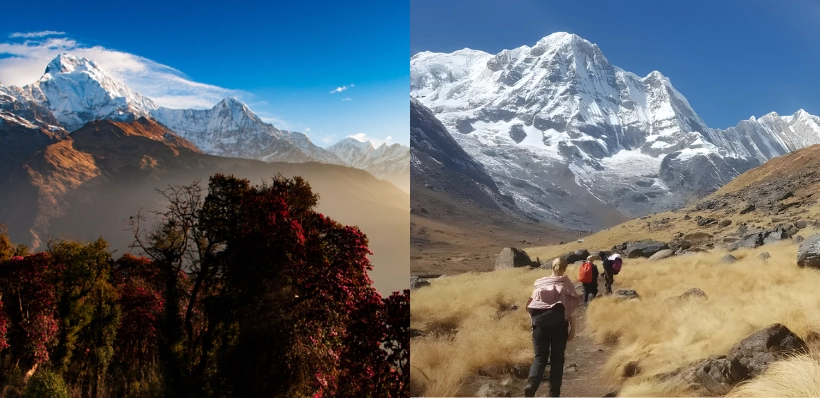
Spring trekking Nepal is among the most popular season for the Annapurna Base Camp trek, and it earns this status for very good reason. The trail comes alive in March month every year as rhododendron forests Nepal burst into bloom from Chhomrong upward through the Modi Khola valley section of the trekking trail. These forests, which cover vast sections of the approach trail, turn vivid red, pink, and white and create a floral canopy that trekkers like you’ll remember long after you complete the trail. Nepal's national flower, the rhododendron, blooms at its most spectacular form between months of mid-March and mid-April, which makes this window one of the most photographed periods on the entire route.
Temperatures during spring season trekking in Nepal are the most comfortable of any season. Daytime temperatures at lower elevations stick between the ranges of 10 and 20 degrees Celsius. Even at Annapurna Base Camp altitude you can expect daytime temperature of 5 to 12 degrees in April. However, Nights are cold at both Machapuchhre Base Camp and Annapurna Base Camp in this region with temperatures dropping to around minus 8 degrees Celsius, so a good sleeping bag remains essential for your trek. Morning skies are generally clear and sharp throughout spring offering the best views of mountains if you travel in this season. Afternoon clouds build progressively as late March starts and head towards the pre-monsoon season, so early morning departures from camp are essential if you want to see the best mountain views.
-
Best spring months: April (warmest, clearest) and early May (fewer crowds, still stable)
-
Trail condition: Firm and dry below 3,000 metres, snow possible above Deurali in March
-
Crowd level: April is the busiest month of the year on the ABC trail, book teahouses in advance
Autumn Trekking Nepal (September to November): The Season of Perfect Views
Autumn trekking Nepal is the second best and peak season for the popular Annapurna Base Camp trek. It delivers equally amazing and better views of the mountain range like the spring. The monsoon departs from Nepal by mid-September which leaves behind air scrubbed clean of dust and haze. The result is a clarity of visibility which spring season in Nepal cannot quite match. From any high point on the trail, you’ll be able to see Annapurna I, Machhapuchhre, Hiunchuli, Annapurna South, and Gangapurna standing sharp and vivid against the backdrop of deep blue sky. October is the single most reliable and popular month for the ABC trek across all seasons.
Daytime temperatures in autumn are comfortable for steady trekking, ranging from 12 to 20 degrees Celsius at lower elevations and dropping to around minus 6 to 0 degrees Celsius at Annapurna Base Camp during the night. The autumn season also coincides with Nepal's two most important festivals, the Dashain festival and Tihar, which fall in October and November. Trekking during these weeks will give you a rare window into village life in the Annapurna region because communities celebrate with family gatherings, decorated doorways, and traditional music. September is also a good choice if you want autumn quality views with slightly fewer people on the trail.
-
Best autumn months: October (views, stability) and late September (quieter, post-monsoon freshness)
-
Trail condition: Dry, firm, and ideal throughout the route with no snowfall risk below 4,000m
-
Crowd level: October is the busiest month across Nepal trekking, plan permits and teahouses early
Monsoon Trekking Nepal (June to August): Green but Challenging
The monsoon season in the Annapurna region runs from June through August which brings heavy and sustained incessant rainfall to the lower trail sections below 2,500 metres. Leeches appear on forested paths and the trail between Nayapul and Chhomrong. Additionally these trails can become slippery and muddy making travel very difficult for you. Mountain views are frequently blocked by cloud cover throughout the whole day, which is the biggest single drawback for trekkers like you that want to complete this trek. However, the Annapurna region does receive less monsoon rain than the Everest region because of its partial rain-shadow geography and determined trekkers do complete the ABC trek successfully each year during these months.
-
Trail: Wet and slippery below 2,500 metres, leeches present through July, possible landslides on steep sections
-
Views: Clear mountain views are rare and usually limited to early morning before clouds build
-
Benefit: Very low crowd levels, teahouse prices drop, the landscape is deep emerald green and genuinely beautiful
Winter Trekking Nepal (December to February): Cold, Quiet, and Snow-Touched
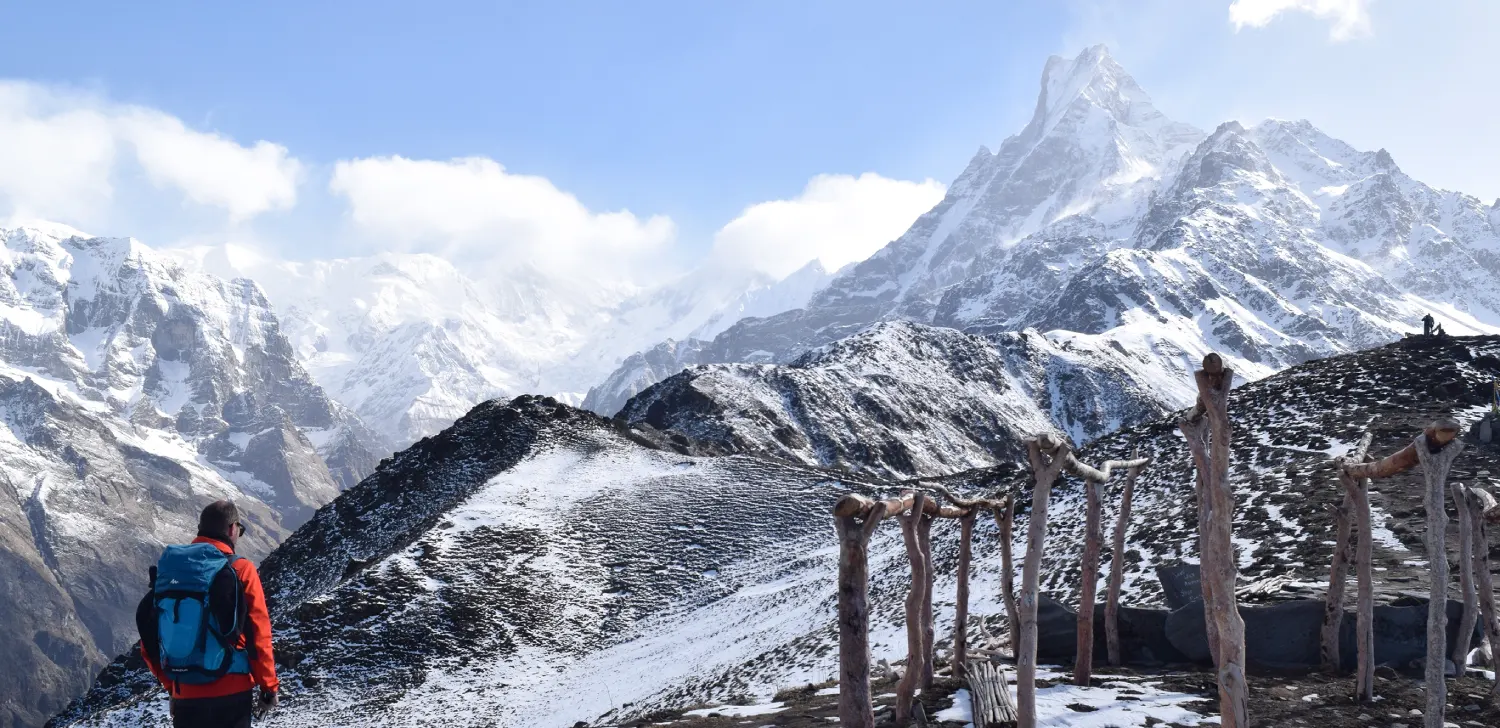
Winter trekking Nepal on the ABC route is possible but demands serious preparation and realistic climbing skills. Snow covers the trail above Deurali from December onward, and temperatures at Annapurna Base Camp altitude drop to minus 14 degrees Celsius at night in January. The section between Deurali and Machapuchhre Base Camp can be blocked by deep snow in January and February, and some teahouses in the upper sections close entirely during the coldest weeks. Despite these challenges, December and February offer some genuinely beautiful experiences for only experienced trekkers or mountaineers who are equipped and highly skilled.
-
Views: Exceptionally clear on good days, snow-dusted peaks against winter blue sky are stunning
-
Crowds: Minimal, you often have entire trail sections to yourself through January and February
-
Risk: Trail closures above 3,500 metres possible, always carry microspikes and a sleeping bag rated to minus 15
Which Month Should You Choose for the ABC Trek?
If you want the single best overall experience, choose October. You get the clearest mountain views of the year, warm days, stable weather, and a trail alive with the energy of peak season. If rhododendron flowers matter to you as much as mountain panoramas, choose April. The views are excellent and the trail scenery is unmatched in any other month. If you want a quieter, more personal ABC trek experience and are comfortable with cooler mornings, choose November or late September. Both deliver excellent conditions with noticeably lower crowd levels than their peak-month neighbours.
Whatever month you choose, prepare for cold nights above 3,000 metres, carry a good warm layer for the early morning departure from Machapuchhre Base Camp to Annapurna Base Camp, and always book your teahouse rooms at least a few days in advance during October and April. The Annapurna Base Camp trek rewards those who prepare carefully and punishes those who arrive without layers, permits, and a realistic sense of what Himalayan weather can do.
Ready to plan your Annapurna Base Camp trek with a team that has been guiding trekkers through every season since 2004? Contact Mountain Delights Treks and Expedition at mountaindelights.com today and let our expert guides help you choose the perfect month for your Himalayan adventure.



.webp)