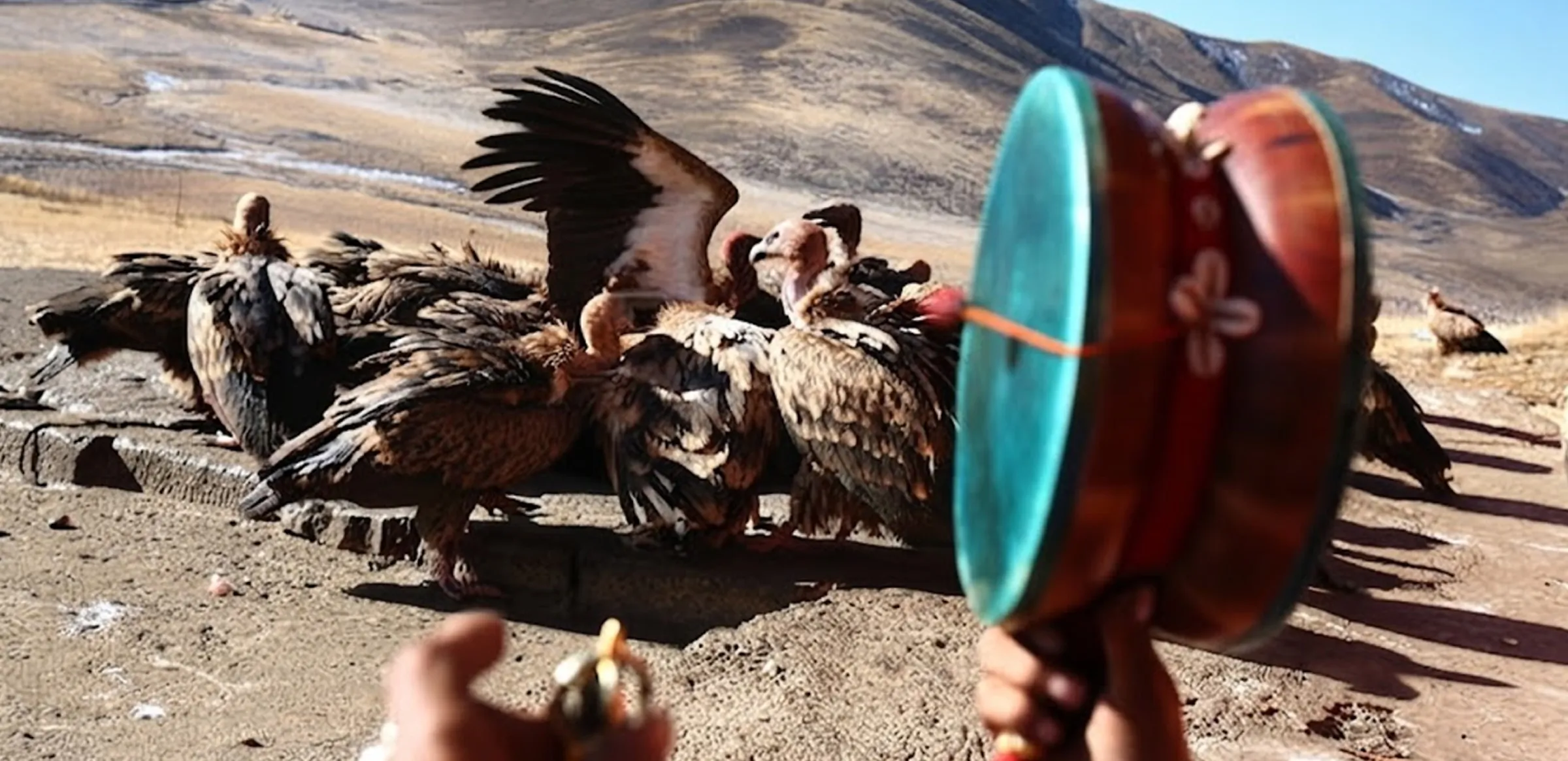
The Sky burial ritual, or jhator, is one of the unique funeral traditions performed by Tibetan Buddhists in Tibet and various Tibetan-influenced regions of Nepal, like Upper Mustang. This centuries-old practice is tied to ideas like impermanence, compassion, and also the natural cycle of life and death. Sky burial ritual highlights death as a new beginning or part of transition and gives the body to nature, considering the act of generosity. Upper Mustang, the Last Forbidden Kingdom of Nepal, follows and keeps the sky burial rituals alive from generations, which is rarely seen by outsiders. This unique funeral tradition is considered highly spiritual and has great cultural values.
In this blog, we provide information about what the sky burial ritual is and how the Upper Mustang region of Nepal still performs the tradition. The history and origin of the tradition, cultural and spiritual importance, funeral process, and existing controversies or misunderstandings related to the tradition are also explained.
What Is the Sky Burial Ritual?
Sky burial ritual is a funeral practice where the corpse of a deceased individual is placed on a mountain to be eaten by scavenging animals like vultures, jackals, or crows or to be decomposed. The tradition is native to Tibet and is followed in the TIbetan influenced area of Nepal, including Upper Mustang, where it is known as jhator. Jhator, or giving alms to the birds, is deeply rooted in Vajrayana Buddhist practice, where the burial locations are known as Charnel grounds. In this practice, the deceased physical body of a human is regarded as an empty vessel, and feeding it to nature is viewed as charity.
Sky Burial Practice in Upper Mustang
The sky burial ritual, called Jhator, originated in Tibet more than a thousand years ago. The tradition became part of Tibetan Buddhism as Buddhist teachings influenced it about impermanence and compassion. Besides religious belief and teaching, the himalayan atmosphere and surroundings also supported the tradition, as the region has no access to burial grounds due to the icy surface and lacks wood for cremation due to the lack of wood or trees in the desert landscape. As time passes, the sky burial becomes more of a sacred ceremony that stands for generosity, where the body can return to nature after death.
Culture and traditions
The people of Upper Mustang have strong cultural bonds with Tibet, including celebration, religion, and ritual practices, including jhator. Sky burial is regarded as a sacred ritual performed following strict religious proceedings to respect the deceased individual and give deeper spiritual values to the community. In Upper Mustant the religion is carried under religious guidance and local families while following strict rules during each stage of the funeral. Visitors are supposed to respect these traditions and not treat them as tourist attractions.
Spiritual Beliefs
The tradition of sky burial has deep spiritual significance, as in Tibetan Buddhism, death is regarded as the beginning of another cycle of rebirth. It is believed that the human body is temporary, but the spirit of humans carries forward according to the Karma. The act of sky burial is regarded as a final and meaningful act of generosity of the deceased by feeding living beings and showing non-attachment to the physical world. The entire process is carried out by monks along with prayers and rituals that guide the deceased soul before rebirth.
How Is the Sky Burial Ritual Performed?
The sky burial ritual in the Upper Mustang region is performed following a strict spiritual and ritual process guided by Buddhist practitioners and monks. From preparation of the deceased body to transportation and dismemberment of the body, every phase is strictly followed according to ritual practices.
1. Preparation
The ceremony starts with the gathering of family members of the deceased and Buddhist monks who prepare for the process. Religious prayers and chanting along with purification rites are done to guide the soul peacefully. While the monks keep reciting mantras and rites, the body is carefully and respectfully wrapped for the transportation process.
2. Transportation
Following the prayers, the body is taken to a designated Charnel ground where the sky burial process begins. The procession is led by family members along with monks and designated attendants. They move with deep respect, maintaining calm and without showing any urgency.
3. The Summoning
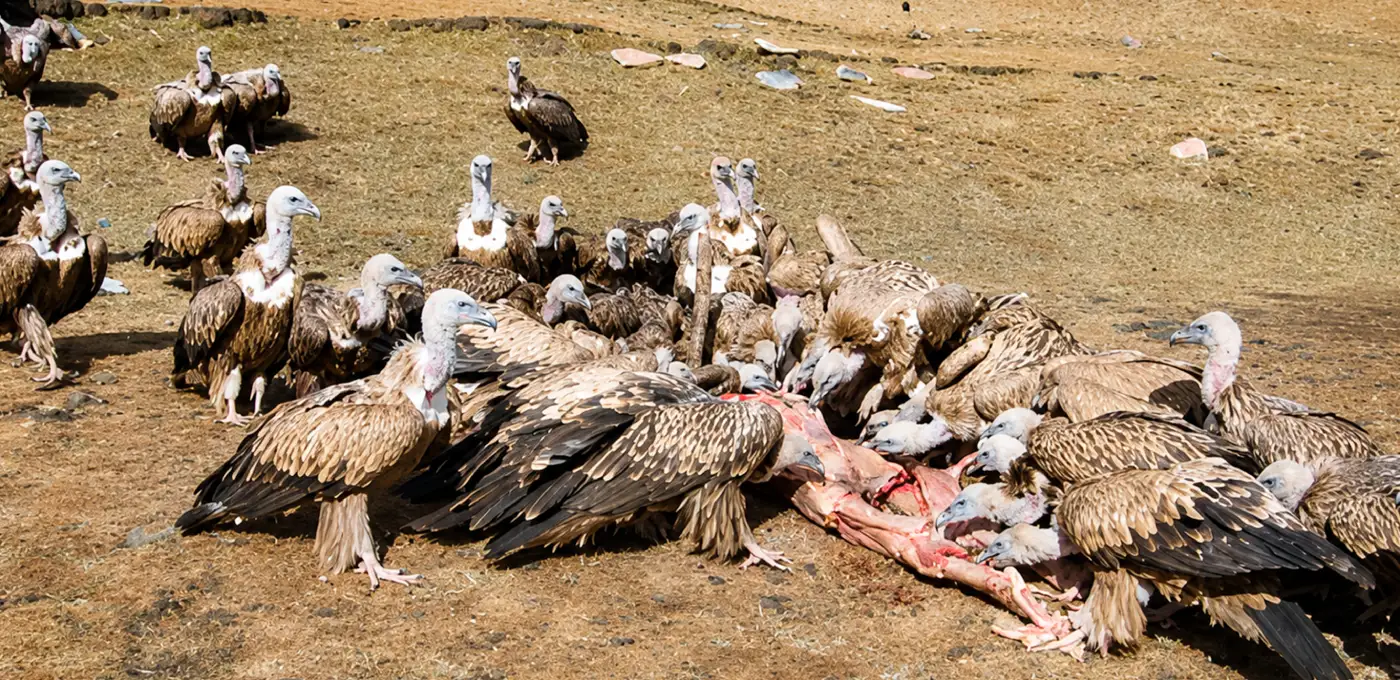
When the body reaches the ritual site, prayers and chantings are carried out to invite Himalayan vultures. In the Tibetan view these birds are treated like sacred participants, which symbolizes a natural transfer of life from one form to another.
4. Dismemberment
After the summoning process, a trained ritual specialist attends to the body using traditional religious customs so the vultures can consume it completely. This part is done respectfully, and it also follows ceremonies that have been established for generations, not improvised. The focus stays on compassion, generosity, and completing the deceased’s final offering to the natural world.
5. Completion
As the vultures finish consuming the body, concluding prayers are offered for the deceased. Family members and monks continue praying for favorable karma and for a peaceful rebirth. The ceremony marks the end of the body’s return to nature, while the soul keeps moving forward on its spiritual journey.
Controversies and Misunderstandings of Sky Burial Ritual
Sky burial tradition is often misunderstood by outsiders, mostly because of its unfamiliarity, misconceptions, and wrong interpretations. Many observe the culture as a shocking practice, creating controversies without understanding the practicality or deeper religious and philosophical value behind it.
But, in fact, the practice is grounded in compassion, care toward the natural world, and Buddhist teachings about impermanence. The culture is not intended for public spectacle, and neither are the communities also gently discourage photography, or even just watching from a distance. When travelling to Upper Mustang, it is important to follow local norms and practices, show respect to local customs and traditions, and avoid spectating such traditions, as it is not encouraged by the community.
Conclusion
The sky burial ritual in Upper Mustang is not just a unique funeral practice, but it is also a centuries-old tradition that follows Buddhist philosophy, cultural heritage, and consideration of the harsh himalayan environment. The ritual highlights compassion, generosity, and the natural turning of life, giving a unique perspective to death.
And while you cannot observe the ritual ceremony of sky burial during your visit in Upper Mustang, the region gives an opportunity to know the reason behind it. You can observe and witness other traditions, cultures, and festival celebrations like the Tiji Festival; visit ancient monasteries, and learn about Tibetan cultures and traditions. Visit Mountain Delights Treks & Expeditions to explore the Upper Mustang region of Nepal and to know about the unique cultures and traditions.




.webp)