- What is Jhinu Danda Hot Spring?
- Where Are Jhinu Danda Hot Springs Located?
- How to Reach Jhinu Dada Hot Spring?
- 1. During the Annapurna Base Camp Trek
- 2. From Pokhara
- 3. Other Trekking Routes
- Jhinu Danda Hot Springs Entry Fee
- What Can You Expect at the Hot Springs?
- Best Time to Visit Jhinu Danda Hot Springs
- Travel Tips for Visiting Jhinu Danda Hot Springs
- Can You Stay Overnight at Jhinu Danda?
- Nearby Attractions
- Conclusion
Your trek to the Annapurna Region doesn’t end after descending from the height. Nature has the best closure to your trip. You can rest your body by dipping in a natural mineral-rich hot spring, which has a comfortable temperature of 35 to 40 degrees Celsius. Outdoor natural hot springs also soothe your eyes with a scenic view of the rushing Modi River and beautiful hillside.
Whether you're planning the Annapurna Base Camp Trek or a shorter trek in the region, here's everything you need to know about the location, entry fee, and travel tips for visiting Jhinu Danda Hot Springs.
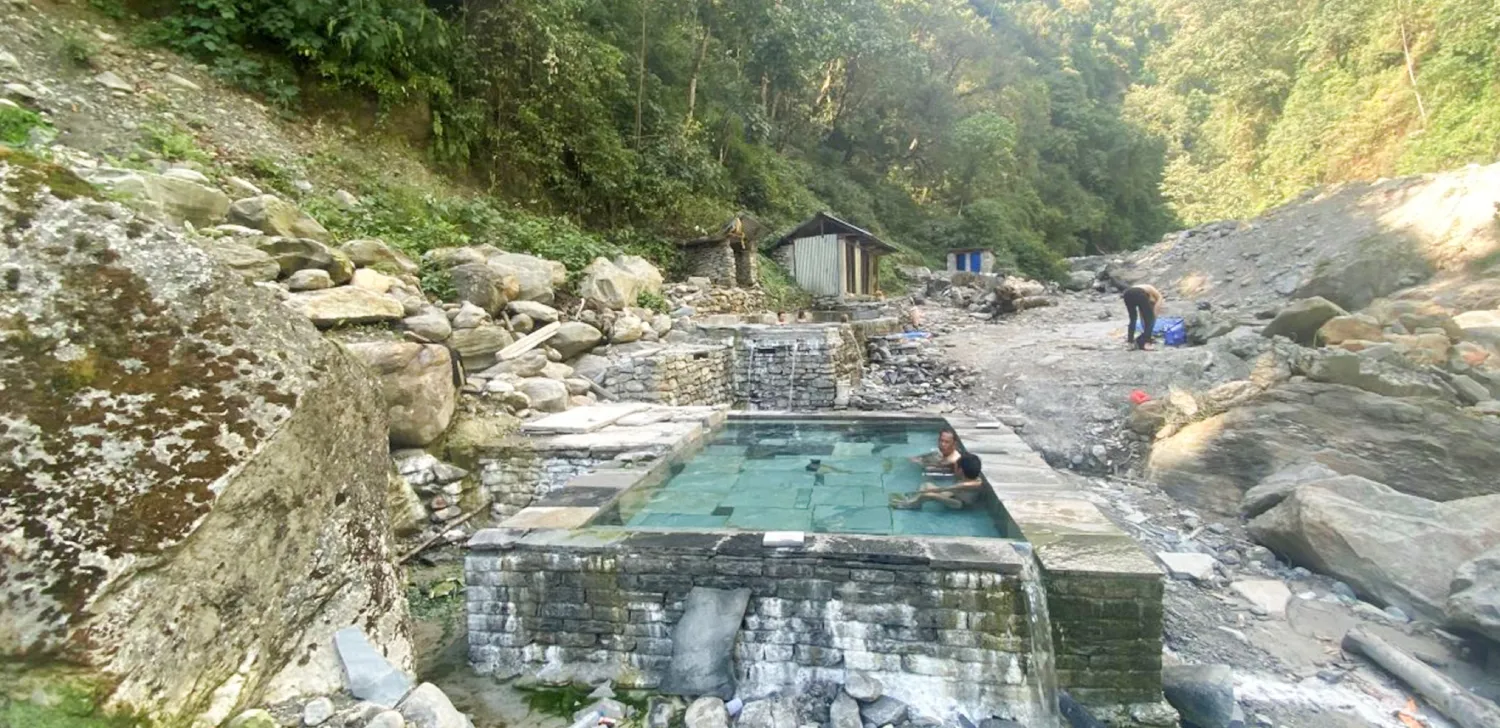
What is Jhinu Danda Hot Spring?
It is a natural hot water pool. Water gets heated by geothermal energy deep within the Earth. Then it continuously flows into the Jhinu Danda pools to constantly flush out old water with fresh, clean minerals. So water in the pool is constantly filtered by the natural system. It always remains fresh.
Jhinu Danda is a popular stop on Annapurna trekking routes. The village offers trekkers a relaxing break after days of walking through the hills. From Jhinu Danda, you can take a short downhill walk to the hot springs, where warm, mineral-rich water stays at around 35–40°C. The pools provide a peaceful place to rest tired muscles and enjoy the surrounding natural scenery. Jhinu Danda is commonly included in Annapurna Base Camp and other Annapurna region trekking itineraries, making it an ideal place to unwind during or after your trek.
Where Are Jhinu Danda Hot Springs Located?
Jhinu Danda Hot Springs are natural pools located along the banks of the Modi Khola River. It is a 15 to 20-minute steep walk from Jhinu Dada village, located in Kaski District of Gandaki Province. It is located in the Annapurna Region and sits at an altitude of approximately 1,780 metres (5,840 feet).
How to Reach Jhinu Dada Hot Spring?
Jhinu Dada isn’t a standalone destination. You can visit Jhinu Dada while travelling to the following destinations;
1. During the Annapurna Base Camp Trek
While returning from Annapurna Base Camp (ABC), descend from Chhomrong for about 1.5 to 2 hours to reach Jhinu Danda village. Then take a steep 20-to-30-minute walk down stone stairs through the forest to reach the natural hot spring pools right by the Modi Khola river. Jhinu Danda is the end of your trek, or you can also continue to trek to local villages. After spending time there, you can directly take your vehicle or local bus to Pokhara.
2. From Pokhara
Most Annapurna treks begin with a drive from Pokhara to the trailhead, such as Nayapul, Siwai, or Ghandruk, depending on your itinerary. From there, you continue on foot through villages and forests until reaching Jhinu Danda.
3. Other Trekking Routes
Besides the Annapurna Base Camp Trek, Jhinu Danda can also be included in several other Annapurna trekking routes, including:
-
Short Annapurna village treks
-
Custom trekking itineraries in the Annapurna region
Jhinu Danda Hot Springs Entry Fee
The hot springs charge a small entrance fee for the maintenance of the place.
|
Visitor Category |
Entry Fee |
|---|---|
|
Nepali Citizens |
NPR 150 |
|
SAARC Nationals |
NPR 200 |
|
Foreign Nationals |
NPR 300 |
What Can You Expect at the Hot Springs?
The Jhinu Danda Hot Springs feature several stone pools filled with naturally heated water. The pools are located beside the Modi Khola River.
Facilities include:
-
Multiple hot spring pools
-
Separate changing rooms
-
Basic toilets
-
Seating areas nearby
-
Small local shops selling snacks and drinks
The atmosphere is generally calm, although it can become busy during the peak trekking seasons.
Best Time to Visit Jhinu Danda Hot Springs
The temperature of the hot spring water is comfortable throughout the year. So, you can visit any time of the year to enjoy natural spring water. Plan your visit to Jhinu Danda Hot Spring while planning for the best time to trek.
-
Spring (March to May): Spring offers pleasant temperatures, colourful rhododendron forests, and clear mountain views. It is one of the best seasons for trekking in the Annapurna region.
-
Autumn (September to November): Autumn is the most popular trekking season in Nepal. Stable weather and excellent visibility make it an ideal time to visit both Annapurna Base Camp and Jhinu Danda Hot Springs.
-
Winter (December to February): The weather is colder, making the warm water even more refreshing after trekking. Some higher-altitude trails may experience snowfall, but the hot springs remain a popular stop.
-
Monsoon (June to August): Heavy rainfall can make trails muddy and slippery, while rivers become stronger. Although the hot springs remain open, trekking during the monsoon requires extra caution.
Travel Tips for Visiting Jhinu Danda Hot Springs
A little preparation can make your visit more enjoyable.
-
Carry a towel and a change of clothes.
-
Bring sandals or flip-flops for walking around the pools.
-
Keep valuables secure and avoid leaving belongings unattended.
-
Visit in the morning or late afternoon to avoid larger crowds.
-
Remember to stay hydrated while in the pool.
-
Be careful while walking on the steep stone steps leading to the pools.
-
Help keep the area clean by disposing of waste responsibly.
Can You Stay Overnight at Jhinu Danda?
Yes. Jhinu Danda has several teahouses and lodges offering comfortable overnight accommodation for trekkers. Most lodges provide simple rooms, hot meals, and friendly hospitality.
Many trekkers choose to spend the night here, enjoy the hot springs in the evening, and continue their journey back to Pokhara the following day.
Nearby Attractions
A visit to Jhinu Danda is often combined with some of the Annapurna region's most popular destinations.
1. Annapurna Base Camp: One of Nepal's most famous trekking destinations, offering stunning views of Annapurna I, Machhapuchhre, Hiunchuli, and surrounding peaks.
2. Chhomrong Village: A beautiful Gurung village that serves as an important stop on the Annapurna Base Camp Trek.
3. Ghandruk Village: Known for its traditional stone houses, Gurung culture, and beautiful mountain scenery.
4. Modi Khola River: The fast-flowing river beside the hot springs adds to the peaceful atmosphere and scenic beauty.
5. Annapurna Conservation Area: Nepal's largest protected area, home to diverse wildlife, forests, waterfalls, and stunning Himalayan landscapes.
Conclusion
A dip in the Jhinu Danda Hot Springs is one of the most rewarding ways to end your Annapurna trek. After days of walking, the warm mineral-rich water helps you relax. The peaceful riverside setting lets you enjoy nature one last time before returning home. Whether you're trekking to Annapurna Base Camp or exploring the lower Annapurna region, make sure to include Jhinu Danda in your itinerary. It is the perfect place to rest, refresh, and complete your Himalayan adventure on a memorable note.
If you're planning an Annapurna trek, Mountain Delights offers expertly guided trekking packages that include a visit to the famous Jhinu Danda Hot Springs. Get in touch with our team and let us help you plan an unforgettable journey in the Himalayas.



.webp)