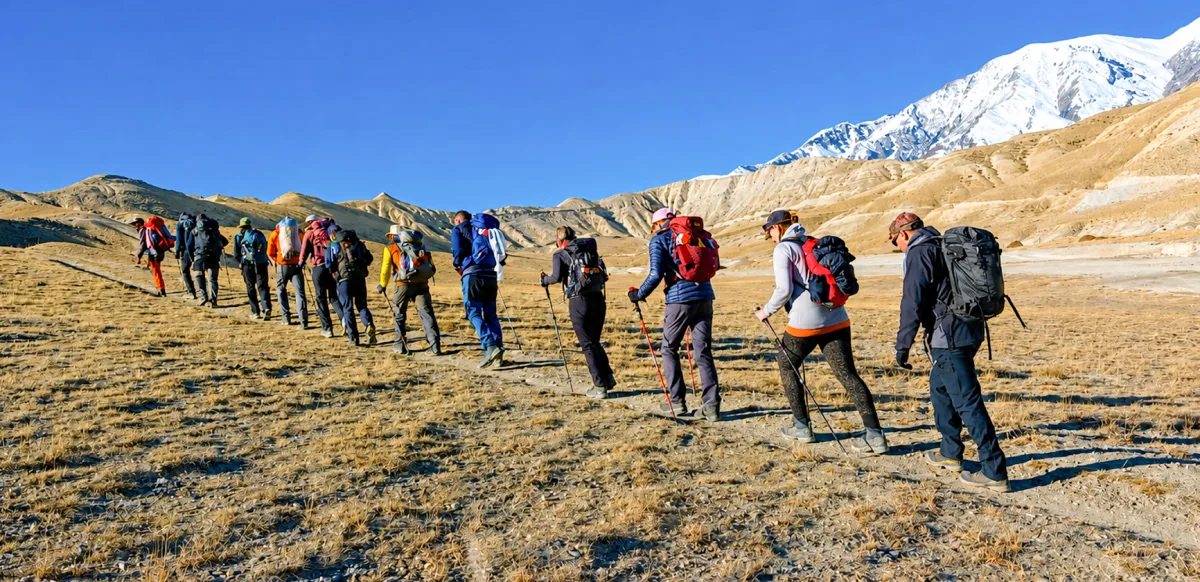
- About Upper Mustang Trek
- What Makes the Upper Mustang Trek Challenging?
- 1. High Altitude
- 2. Long Walking Days
- 3. Rocky and Uneven Trails
- 4. Strong Winds and Weather
- 5. Remote Location
- Upper Mustang Trek Difficulty by Terrain and Trail
- How Can You Combine Jeep and Trek in Upper Mustang?
- How Fit Do You Need to Be for Upper Mustang?
- Altitude and Acclimatization in Upper Mustang
- How to Prepare for the Upper Mustang Trek
- Is Upper Mustang Trek Suitable for Beginners?
- Upper Mustang Trek Difficulty: Final Verdict
The Upper Mustang Trek is considered a moderate-level trek in Nepal. You don’t have to worry about acquiring climbing and mountaineering skills. Keeping yourself in good physical shape and training your body with regular physical exercise will definitely help.
It takes you through one of the most remote and culturally fascinating regions of the country, with the route reaching an elevation of more than 4000m. It is known for its desert-like landscapes, ancient monasteries, traditional villages, caves, and Tibetan-influenced culture and traditions.
With proper acclimatization and an itinerary designed for you, the Upper Mustang Trek is achievable for both experienced trekkers and fit beginners.
About Upper Mustang Trek
Depending on your itinerary, you may walk for around 5 to 7 hours a day. While road access now extends toward Lo Manthang, the traditional trekking route still involves several days of walking through rocky trails, valleys, mountain passes, and traditional villages.
Most of the challenge comes from walking at high altitude for several consecutive days. The remote location also means that you should be prepared for simpler accommodation and fewer facilities than you would find in cities or more developed trekking areas.
What Makes the Upper Mustang Trek Challenging?
Several factors contribute to the difficulty of the Upper Mustang Trek.
1. High Altitude
Altitude is one of the biggest challenges. Upper Mustang sits at a high elevation, with many parts of the trek above 3,000 meters and some routes reaching above 4,000 meters. As you gain altitude, the air contains less oxygen, which can make walking more tiring. Proper acclimatization is therefore important.
2. Long Walking Days
You will spend several hours walking each day. Even when the trail is not particularly steep, walking for multiple days can cause tiredness. Good cardiovascular fitness and strong legs can make a significant difference.
3. Rocky and Uneven Trails
The Upper Mustang landscape is dry and rough. Trails can include rocky, dusty, and uneven sections with uphill and downhill sections. Some sections may feel particularly tiring because of the combination of uneven terrain and altitude.
4. Strong Winds and Weather
Upper Mustang lies in the rain shadow of the Annapurna and Dhaulagiri ranges, giving the region a dry, desert-like landscape. However, strong winds can occur, particularly later in the day. Weather can also change quickly in the mountains, so carrying appropriate layers and rain and wind protection is important.
5. Remote Location
Upper Mustang is one of Nepal's more remote trekking destinations. Facilities are limited in comparison to popular trekking routes such as the Annapurna region's lower trails. This means trekkers need to be more prepared with clothing, medication, water, and other essentials.
Upper Mustang Trek Difficulty by Terrain and Trail
The terrain changes throughout the trek. You can expect a combination of relatively easy walking through villages and valleys and more demanding sections involving climbs and descents.
Some trails pass along dry hillsides and rocky landscapes, while others follow river valleys. You may also cross mountain passes depending on your itinerary. The changing scenery makes the trek rewarding, but the uneven terrain means comfortable and sturdy trekking shoes are essential.
How Can You Combine Jeep and Trek in Upper Mustang?
With roads now reaching major settlements in Upper Mustang, you can combine jeep rides with trekking. You can use a jeep to cover some road sections and walk the more scenic parts of the route.
For example, you can take a jeep to Kagbeni and begin trekking from there toward Lo Manthang, walking through villages, valleys, and rocky trails. Once in Lo Manthang, you can use a jeep to visit farther sites such as Chhoser and explore the local area on foot.
This option is useful if you want the experience of trekking Upper Mustang while reducing some of the longer walking sections.
How Fit Do You Need to Be for Upper Mustang?
You do not need to be an athlete to complete the Upper Mustang Trek. However, you should have a reasonable level of physical fitness.
Before the trek, it is useful to build your stamina through:
-
Regular walking or hiking
-
Uphill and downhill walks
-
Stair climbing
-
Cardiovascular exercises
-
Leg-strengthening exercises
If you already enjoy hiking, you will have an advantage. Beginners can also take on the trek if they train beforehand and follow a suitable itinerary.
Altitude and Acclimatization in Upper Mustang
Altitude is an important consideration on the Upper Mustang Trek. Moving to higher elevations too quickly can increase the risk of acute mountain sickness (AMS). Common symptoms can include headache, dizziness, nausea, tiredness, and difficulty sleeping.
A well-planned itinerary allows your body time to adjust to increasing altitude. Trekkers should walk at a comfortable pace, stay hydrated, get enough rest, and avoid rushing toward the height. If symptoms become severe or worsen, descending to a lower altitude is important. Your guide can help monitor your condition and make decisions about the itinerary when necessary.
How to Prepare for the Upper Mustang Trek
Good preparation can make the trek much more comfortable. Start training several weeks before your trip. Focus on stamina rather than only strength because you will be walking for several hours on consecutive days.
You should also prepare suitable trekking equipment, including:
-
Comfortable and durable trekking shoes
-
Warm and lightweight layers
-
Windproof and waterproof outerwear
-
Sun protection, including sunglasses and sunscreen
-
A reusable water bottle
-
Personal medication and a basic first-aid kit
-
A suitable backpack
Because Upper Mustang is dry and receives strong sunlight, staying hydrated and protecting yourself from the sun are particularly important.
Is Upper Mustang Trek Suitable for Beginners?
Yes, the Upper Mustang Trek can be suitable for beginners. You do not need previous high-altitude trekking experience or technical climbing skills. However, beginners should not underestimate the trek. The combination of altitude, long walking days, rugged terrain, and remote conditions can be challenging.
With proper physical preparation, a gradual itinerary, appropriate equipment, and an experienced guide, first-time trekkers can enjoy the journey safely and comfortably.
Upper Mustang Trek Difficulty: Final Verdict
So, how difficult is the Upper Mustang Trek? Overall, it is a moderate trek that requires good preparation but does not demand technical mountaineering skills. The biggest challenges are high altitude, long walking days, uneven terrain, strong winds, and the remote nature of the region. If you prepare your fitness, allow enough time for acclimatization, and travel with a reliable trekking team, the challenges become much easier to manage.
For trekkers looking for a Himalayan adventure that combines diverse terrain, ancient villages, Sherpa culture, and a remote trekking experience, Upper Mustang is well worth the effort. Ready to explore the hidden kingdom of Upper Mustang? Plan your trek with Mountain Delights and experience this unique Himalayan region with an experienced local trekking team.



.webp)